By News.AambuBlog.com | Washington, D.C. | Updated: April 28, 2026
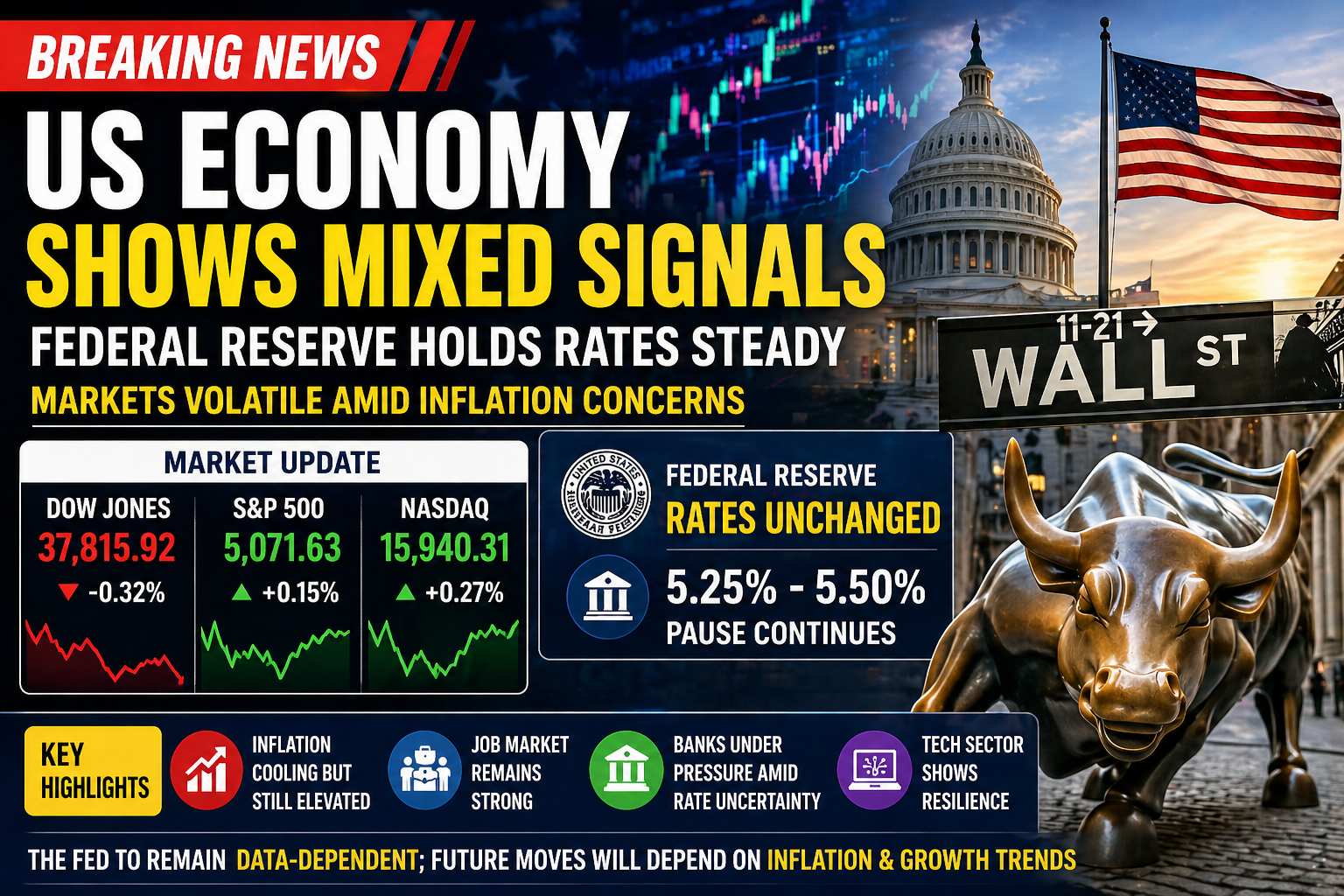
The United States economy is currently navigating a complex phase marked by mixed economic signals, fluctuating markets, and cautious policy decisions. In a closely watched move, the Federal Reserve has decided to keep interest rates unchanged, signaling a wait-and-watch approach amid ongoing inflation concerns and global uncertainties.
This decision has had an immediate impact on financial markets, with major indices showing volatility as investors assess the future direction of monetary policy.
📊 Stock Market Reaction: Volatility Returns
Following the announcement by the Federal Reserve, US stock markets experienced noticeable fluctuations.
Key indices such as the Dow Jones Industrial Average, S&P 500, and NASDAQ Composite moved between gains and losses throughout the trading session.
Technology stocks showed resilience, while banking and energy sectors faced pressure due to uncertainty around future rate hikes and economic growth.
💰 Why Did the Fed Hold Interest Rates?
The decision to pause rate hikes reflects the central bank’s attempt to balance inflation control with economic stability.
According to the Federal Reserve:
- Inflation is gradually easing but remains above target
- Economic growth is slowing but still stable
- Employment levels remain strong
Officials emphasized that future decisions will depend on incoming economic data.
📉 Inflation Trends and Consumer Impact
Inflation has been a major concern for the US economy over the past few years. While recent data shows signs of cooling, prices for essential goods and services remain high.
Consumers continue to face:
- Higher food and grocery prices
- Elevated housing costs
- Increased borrowing expenses
The pause in rate hikes may provide temporary relief, but long-term inflation control remains a priority.
🏦 Banking Sector Under Pressure
US banks have been under scrutiny amid concerns over liquidity and rising interest rates.
Higher rates typically benefit banks by increasing lending margins. However, they also pose risks:
- Reduced loan demand
- Increased default risk
- Pressure on smaller regional banks
Investors are closely monitoring the health of the banking system as economic conditions evolve.
💻 Tech Sector Shows Strength
The technology sector continues to be a bright spot in the US economy. Companies focused on artificial intelligence, cloud computing, and digital services are attracting strong investor interest.
Major tech firms have reported steady growth, driven by innovation and global demand. The ongoing AI boom is expected to further support the sector.
🌍 Global Impact of US Economic Policy
Decisions made by the Federal Reserve have far-reaching effects on global markets.
A stable interest rate environment in the US can:
- Influence capital flows into emerging markets
- Affect currency exchange rates
- Impact global trade dynamics
Countries like India closely monitor US policy changes due to their potential economic impact.
📈 Employment Market Remains Strong
Despite economic uncertainties, the US labor market has shown resilience.
Key highlights:
- Unemployment remains low
- Job creation continues in key sectors
- Wage growth remains steady
However, some industries have started to slow hiring, indicating a possible shift in the job market.
🔮 Future Outlook: What Lies Ahead?
Economists remain divided on the future direction of the US economy.
Positive indicators:
- Strong labor market
- Stable consumer demand
- Resilient tech sector
Risks:
- Persistent inflation
- Global geopolitical tensions
- Potential slowdown in economic growth
The next few months will be crucial in determining whether the US economy can achieve a soft landing.
🧾 Conclusion
The US economy is currently in a transitional phase, balancing growth and stability amid global challenges. The decision by the Federal Reserve to hold interest rates steady reflects cautious optimism, but uncertainties remain.
For investors, businesses, and policymakers, staying informed and adaptable will be key to navigating the evolving economic landscape.
❓ FAQs
1. Why did the Federal Reserve keep interest rates unchanged?
To balance inflation control with economic growth and stability.
2. How did stock markets react?
Markets showed volatility, with mixed performance across major indices.
3. Which sector is performing well?
The technology sector is showing strong growth due to AI and innovation.
4. What is the future outlook?
The economy may remain stable but faces risks from inflation and global factors.