By News Desk | April 30, 2026
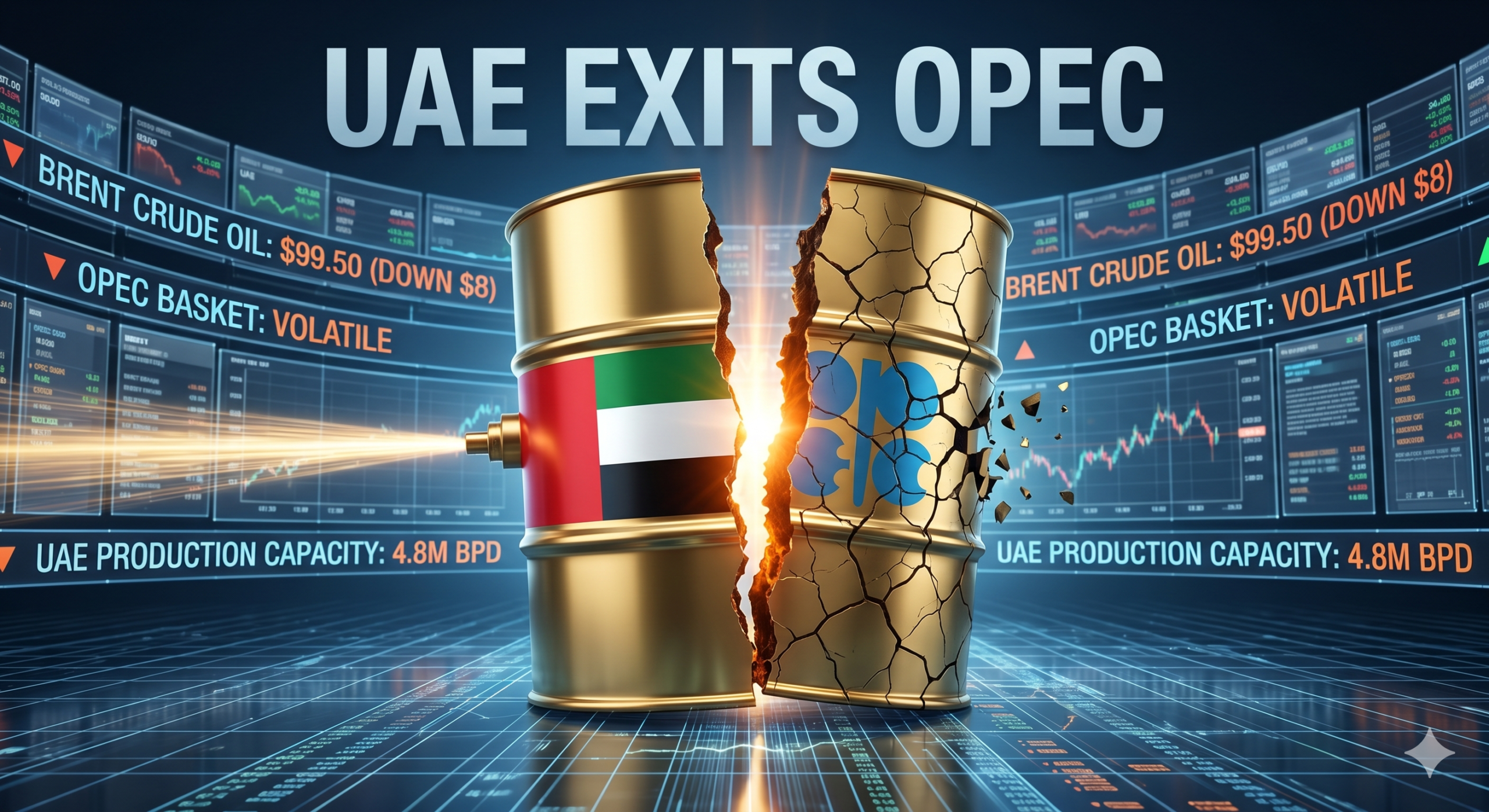
In a move that has sent shockwaves through the global energy sector, the United Arab Emirates (UAE) has officially confirmed its decision to exit the Organization of the Petroleum Exporting Countries (OPEC) and the broader OPEC+ alliance. The exit, which was formally announced on April 28, will take effect starting tomorrow, May 1, 2026.
This decision marks the end of nearly six decades of UAE membership in the cartel and signals a major shift in the geopolitical landscape of the Middle East.
1. The Rationale: National Interest Over Quotas
The UAE’s Ministry of Energy and Infrastructure stated that the decision follows a comprehensive review of the country’s long-term production capacity and economic vision.
- Capacity Growth: The UAE has invested billions into expanding its production capacity to 5 million barrels per day (bpd) by 2027. Under OPEC+ quotas, much of this capacity remained unused, limiting the country’s return on investment.
- Flexibility: By exiting the group, Abu Dhabi gains the freedom to set its own production levels, allowing it to respond more dynamically to global demand and market price fluctuations.
2. Impact on Global Oil Prices
Market reaction was immediate. Following the confirmation, oil prices showed significant volatility.
- Price Drop: Brent crude prices dipped as traders speculated on a potential “supply surge” from the UAE once it is no longer bound by cartel restrictions.
- OPEC’s Grip Weakens: Analysts warn that the loss of a key member like the UAE significantly weakens OPEC’s ability to control global prices, especially at a time when the US has also ramped up its domestic production.
3. The Geopolitical Ripple Effect
The UAE’s exit is seen as a strategic pivot towards a more independent foreign and economic policy.
- US Relations: The move is being viewed favorably in Washington, as it could lead to more stable and potentially lower energy prices in the long run.
- Middle East Dynamics: While the UAE remains a close ally of Saudi Arabia, this exit highlights a growing divergence in how the two nations view the future of the global energy transition.
Detailed Q&A: The UAE-OPEC Split
Q1. Will the UAE immediately flood the market with oil? No. UAE officials have clarified that they will bring additional production to the market in a “gradual and measured” manner. The goal is to maximize long-term revenue, not to crash global prices.
Q2. Is this the end of OPEC? While the exit of a top-three producer is a major blow, OPEC still controls a significant portion of global supply. However, this move may encourage other members like Iraq or Kazakhstan, who have also struggled with quotas, to reconsider their membership.
Q3. How will this impact petrol prices in India? In the medium to long term, increased production from a major supplier like the UAE is likely to keep global oil prices stable or lower. This is positive news for India’s oil marketing companies and could lead to a reduction in fuel prices at the pump.
Copyright: © news.aambublog.com (2026)