By News.AambuBlog.com | London | Updated: April 28, 2026
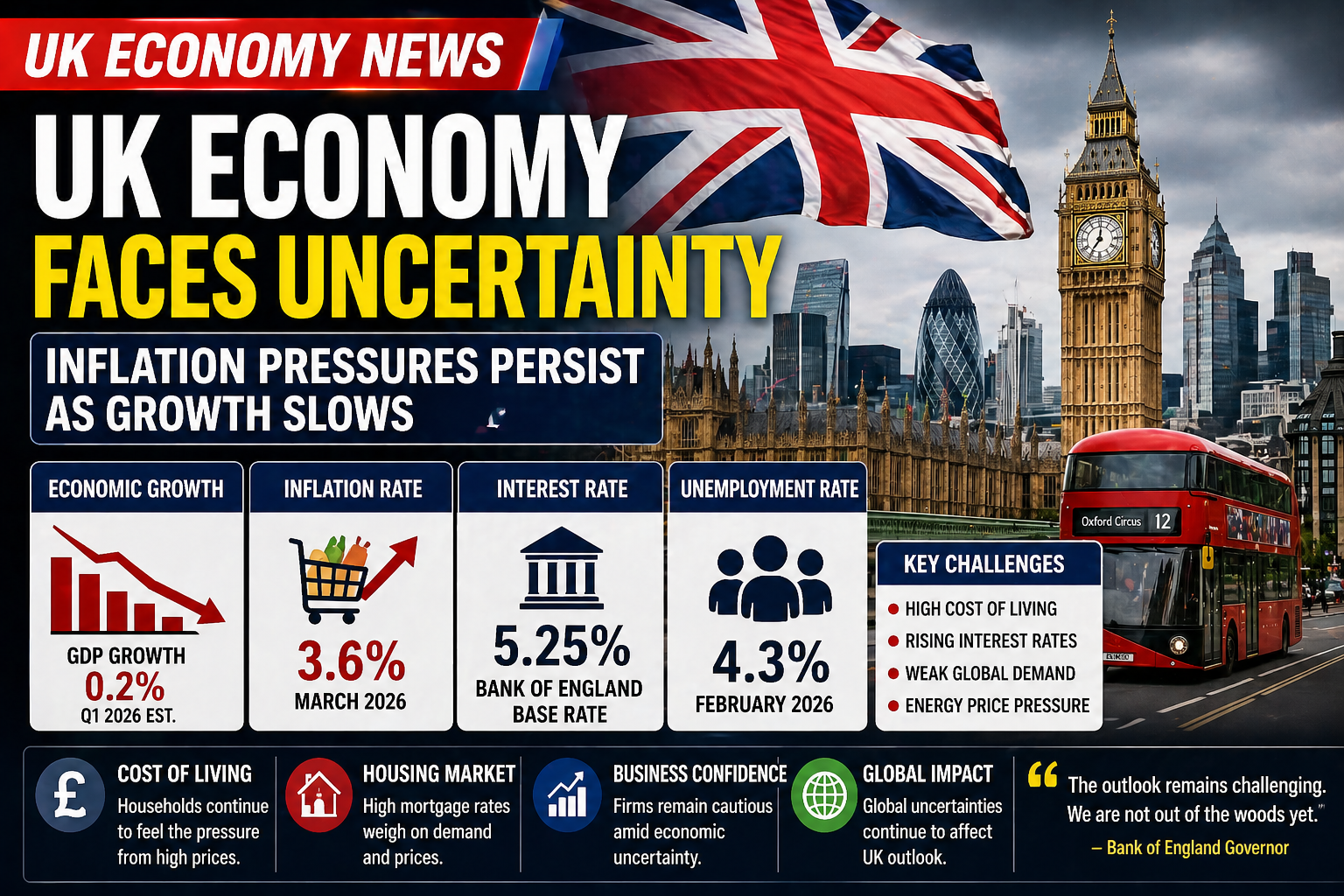
The United Kingdom is currently navigating a challenging economic landscape as persistent inflation, slowing growth, and global uncertainties continue to impact the country’s financial outlook. Policymakers and investors are closely watching developments as the economy shows signs of strain despite efforts to stabilize conditions.
Recent economic data suggests that while inflation has moderated slightly, it remains above the target set by the Bank of England, raising concerns about long-term economic stability.
📊 Economic Growth Slows Down
The UK economy has shown signs of slowing growth in recent months. Key sectors such as manufacturing, construction, and retail have reported weaker performance, reflecting reduced consumer demand and higher operational costs.
According to analysts, factors contributing to the slowdown include:
- High interest rates
- Rising cost of living
- Global economic uncertainty
Businesses are becoming more cautious, delaying investments and expansion plans.
💷 Inflation Remains a Major Concern
Inflation continues to be one of the biggest challenges for the UK economy. Although there has been some easing, prices for essential goods and services remain elevated.
Consumers are facing:
- Higher food prices
- Increased energy bills
- Rising housing costs
The Bank of England has maintained a tight monetary policy to control inflation, but this has also contributed to slower economic growth.
🏦 Interest Rates and Monetary Policy
The Bank of England has kept interest rates at elevated levels in an effort to curb inflation. While higher rates help control price rises, they also increase borrowing costs for businesses and consumers.
This has led to:
- Reduced consumer spending
- Lower housing demand
- Pressure on small businesses
Investors are closely monitoring future policy decisions, as any changes could significantly impact the market.
🏠 Housing Market Under Pressure
The UK housing market has been particularly affected by rising interest rates. Mortgage costs have increased, making it more difficult for buyers to enter the market.
Key trends include:
- Decline in property transactions
- Stabilization or slight drop in house prices
- Reduced demand from first-time buyers
Experts believe that the housing sector may take time to recover fully.
💼 Labor Market Shows Mixed Trends
The UK labor market presents a mixed picture. While unemployment remains relatively low, job growth has slowed in several sectors.
Some industries are facing:
- Hiring freezes
- Reduced job openings
- Wage pressures
At the same time, certain sectors like healthcare and technology continue to show demand for skilled workers.
🌍 Global Factors Impacting the UK
The UK economy is also influenced by global developments, including:
- Rising oil prices
- Geopolitical tensions
- Economic conditions in Europe and the US
As a major global financial hub, London remains sensitive to changes in international markets.
📉 Stock Market and Business Sentiment
The UK stock market has experienced volatility as investors react to economic data and policy decisions.
Companies across sectors are facing:
- Increased costs
- Lower profit margins
- Uncertain demand outlook
Business confidence remains cautious, with many firms focusing on cost management and efficiency.
🔮 Future Outlook for the UK Economy
Economists suggest that the UK economy may continue to face challenges in the near term.
Positive factors:
- Strong financial sector
- Gradual easing of inflation
- Government support measures
Risks:
- Persistent inflation
- High borrowing costs
- Global economic slowdown
The path to recovery will depend on effective policy measures and global economic conditions.
🧾 Conclusion
The United Kingdom is currently dealing with a complex mix of economic challenges, including inflation, slow growth, and global uncertainties. While efforts by the Bank of England aim to stabilize the situation, the road ahead remains uncertain.
For businesses, investors, and consumers, adapting to these changing conditions will be essential. The coming months will play a crucial role in shaping the future direction of the UK economy.
❓ FAQs
1. Why is the UK economy slowing down?
Due to high interest rates, inflation, and reduced consumer spending.
2. What is the role of the Bank of England?
The Bank of England controls interest rates to manage inflation and economic stability.
3. How is inflation affecting people?
It increases the cost of living, including food, energy, and housing expenses.