By News Desk | April 30, 2026
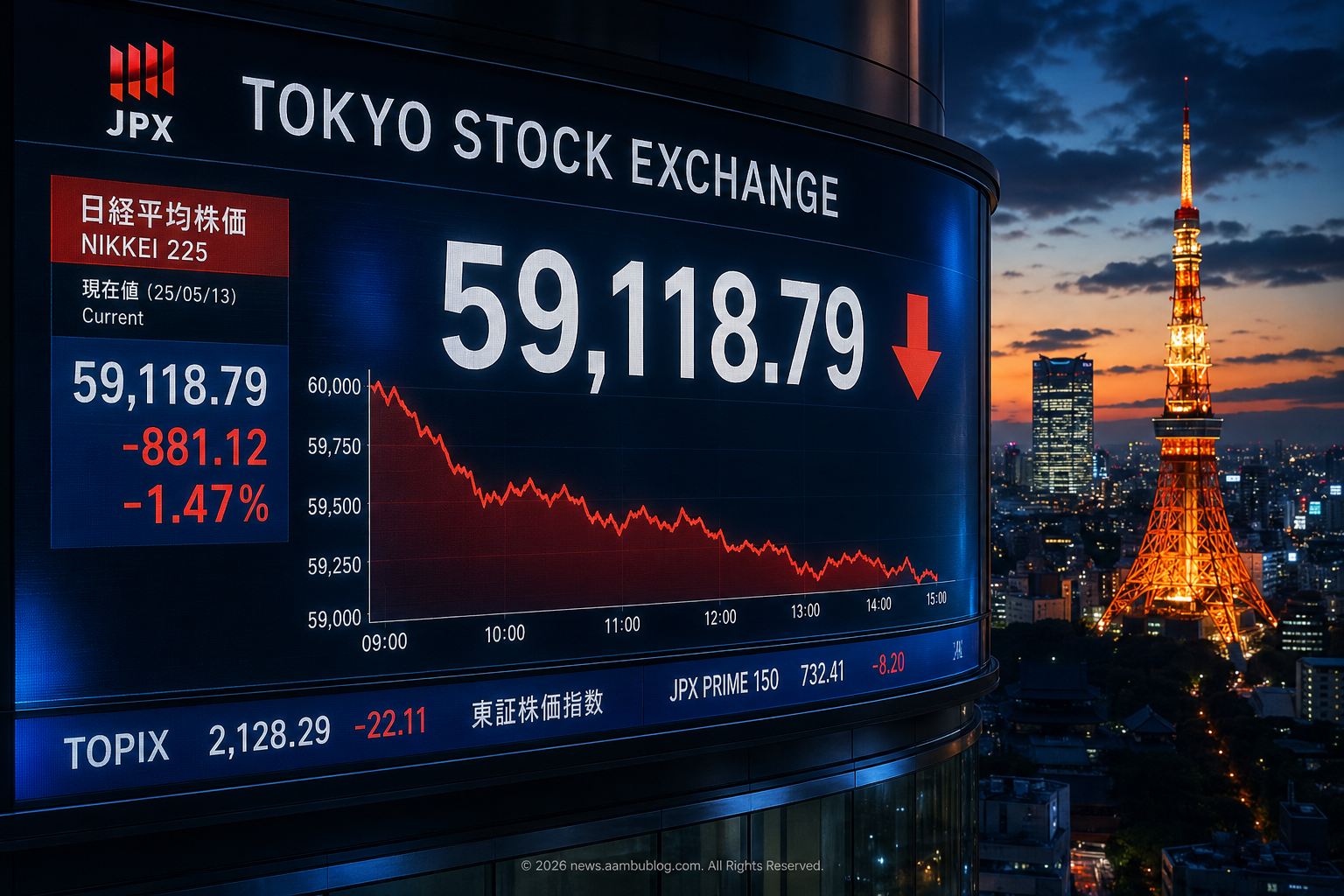
Japan’s economy is facing a “double blow” today as the stock market reopened after a holiday. The benchmark Nikkei 225 Index has tumbled over 1%, slipping below the psychological mark of 60,000 to reach around 59,300. This sharp decline is driven by two major factors: the ongoing US-Iran naval blockade in the Strait of Hormuz and unexpectedly weak industrial production data released this morning.
1. Oil Dependency Rattles Investors
With Brent Crude oil prices hovering near $120 per barrel due to the prolonged Middle East conflict, Japan—which imports nearly 90% of its energy—is feeling the heat.
- Corporate Impact: Major manufacturing and logistics companies are seeing their profit margins squeezed by rising fuel and electricity costs.
- Stock Losers: Heavyweights like SoftBank Group (-3.1%), Mitsubishi Heavy (-5%), and Mitsubishi UFJ (-2.5%) led the decline as investors moved to safer assets.
2. Weak Industrial Production (March Data)
Japan’s Ministry of Economy, Trade, and Industry (METI) released verified data today showing a significant slowdown in factory output.
- Second Monthly Decline: Industrial production in March grew by a meager 0.5%, much lower than the expected 1.1%. This marks the second consecutive month of weakening growth.
- Chemicals & Fuels Hit: The decline was steepest in the chemical sector, with Polyethylene production down 27% due to supply chain disruptions caused by the Middle East crisis.
3. Political Pressure: PM Takaichi’s Stance
In a press conference today, Prime Minister Sanae Takaichi urged citizens to remain prepared for economic volatility while maintaining a strong stance on national energy security. The government is reportedly considering a fresh stimulus package to support businesses affected by the high import costs of raw materials and fuel.
Detailed Q&A: Japan’s Economic Outlook
Q1. Why is the 60,000 mark for Nikkei significant? The 60,000 level is a major psychological and technical barrier for the Tokyo stock market. Slipping below this suggests a shift from “Bullish” (optimistic) to “Bearish” (pessimistic) sentiment among global investors regarding Japan’s recovery.
Q2. How long will the industrial output stay weak? Analysts suggest that as long as the Strait of Hormuz remains blocked and oil prices stay above $110, Japan’s manufacturing sector—especially chemicals and automobiles—will continue to face production delays and high costs.
Q3. Is the Yen also affected? Yes. The high cost of oil imports is widening Japan’s trade deficit, putting additional downward pressure on the Japanese Yen against the US Dollar.
Copyright: © news.aambublog.com (2026)