By News.AambuBlog.com | Tokyo | Updated: April 28, 2026
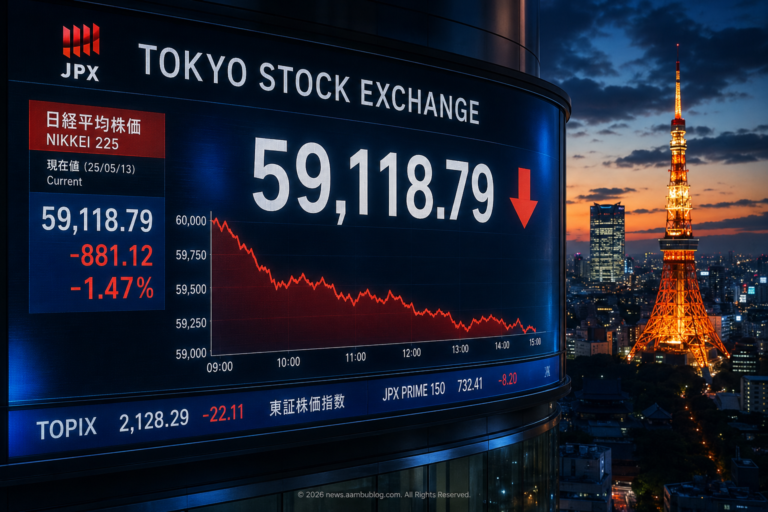
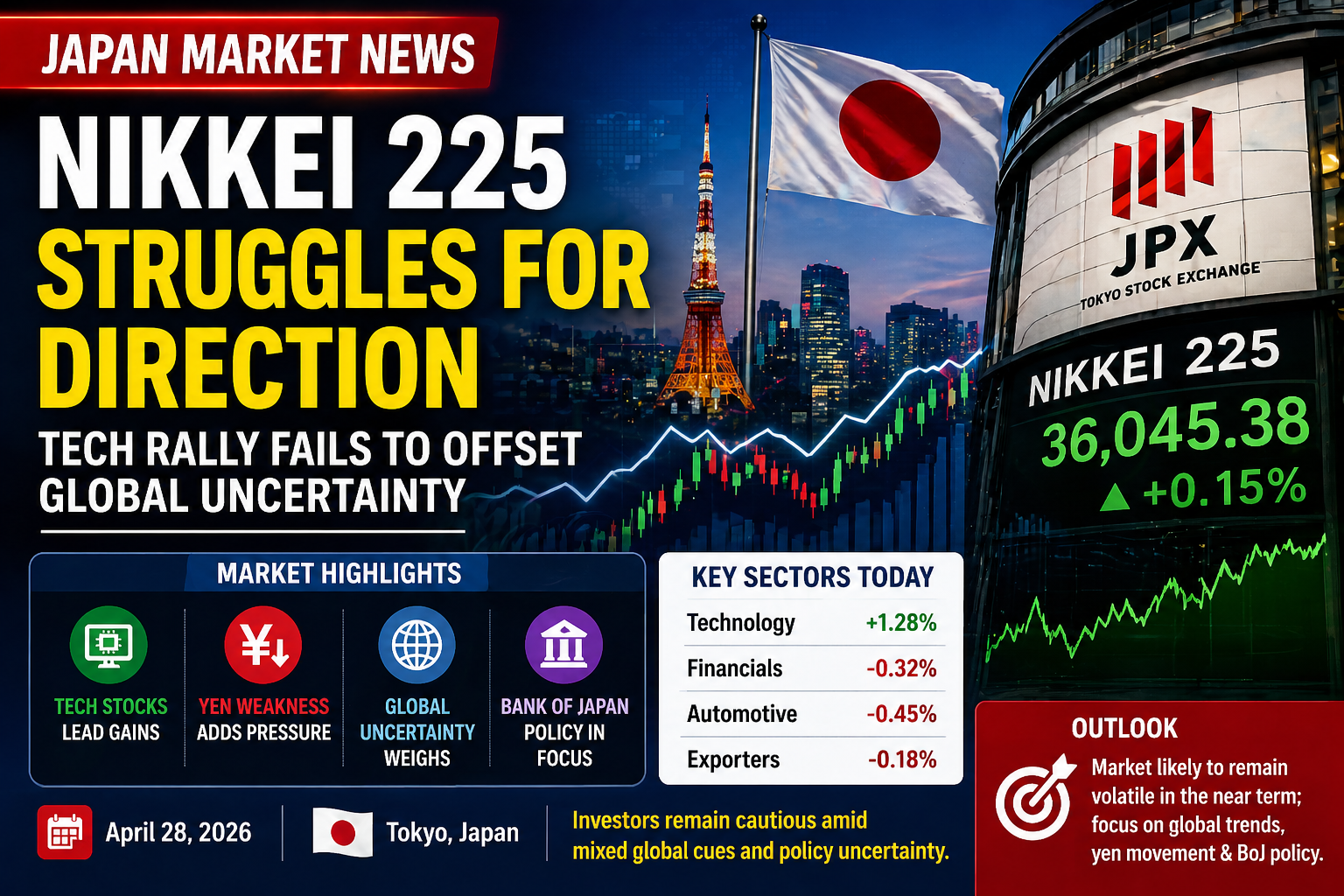
Japan’s stock market showed mixed signals today as the benchmark Nikkei 225 struggled to maintain a clear direction amid global economic uncertainty. Despite a strong rally in technology stocks, broader market weakness and cautious investor sentiment kept gains limited.
The Japanese market is currently navigating a complex environment shaped by global geopolitical tensions, currency fluctuations, and shifting monetary policies.
📊 Market Performance Overview
The Nikkei 225 ended the session with marginal movement, reflecting indecision among investors.
Key observations:
- Tech stocks showed moderate gains
- Export-oriented companies faced pressure
- Financial stocks remained volatile
Meanwhile, the broader TOPIX index also displayed a mixed trend, highlighting uneven sector performance.
💻 Tech Sector Leads the Gains
Technology companies were among the top performers in today’s session, supported by strong global demand for semiconductors and digital services.
Major players such as Sony Group Corporation and SoftBank Group recorded gains, driven by positive investor sentiment around innovation and future growth prospects.
The global AI boom continues to support technology stocks, as companies invest heavily in next-generation technologies.
💱 Yen Weakness Adds Complexity
The Japanese yen remained under pressure against the US dollar, adding another layer of complexity to market dynamics.
A weaker yen typically benefits export-driven companies by making Japanese goods cheaper overseas. However, it also increases the cost of imports, particularly energy and raw materials.
Currency volatility has made investors cautious, as sudden fluctuations can significantly impact corporate earnings.
🌍 Global Factors Weigh on Sentiment
Global developments continue to influence Japan’s stock market. Concerns over rising oil prices, geopolitical tensions, and slowing economic growth in major economies have created uncertainty.
Investors are closely watching:
- US Federal Reserve policy decisions
- China’s economic recovery
- Middle East geopolitical situation
These factors are shaping market sentiment and limiting aggressive buying.
🏦 Bank of Japan Policy Outlook
The Bank of Japan remains a key focus for investors. Unlike many other central banks, Japan has maintained an ultra-loose monetary policy to support economic growth.
However, there is growing speculation that the central bank may gradually adjust its policies in response to inflationary pressures.
Any shift in policy could have a significant impact on the stock market, currency, and overall economic outlook.
🚗 Export Sector Under Pressure
Japan’s export-driven industries, including automobiles and electronics, faced mixed performance.
Companies like Toyota Motor Corporation saw fluctuating stock movements as global demand uncertainty and currency volatility affected investor confidence.
Supply chain challenges and rising input costs are also impacting profitability.
📉 Investor Sentiment Remains Cautious
Market participants are adopting a cautious approach, focusing on risk management rather than aggressive expansion.
Key concerns include:
- Global recession fears
- Rising energy costs
- Uncertain demand outlook
This cautious sentiment is reflected in lower trading volumes and selective buying.
🔮 Future Outlook for Japan Markets
Analysts believe that Japan’s stock market may remain range-bound in the near term.
Positive factors:
- Strong tech sector growth
- Continued global demand for innovation
- Potential benefits from a weaker yen
Negative factors:
- Global economic slowdown
- Geopolitical risks
- Policy uncertainty
The direction of the market will largely depend on global developments and domestic policy decisions.
🧾 Conclusion
Japan’s stock market is currently at a crossroads, balancing between growth opportunities in the technology sector and challenges posed by global uncertainty.
While the Nikkei 225 continues to show resilience, sustained growth will depend on external factors such as global demand, currency stability, and central bank policies.
For investors, staying informed and adopting a balanced strategy will be crucial in navigating the evolving market landscape.
❓ FAQs
1. Why is the Nikkei 225 struggling today?
Due to global uncertainty, currency volatility, and cautious investor sentiment.
2. Which sector performed best?
The technology sector showed strong performance.
3. How does the yen affect the market?
A weaker yen supports exports but increases import costs.
4. What is the future outlook?
The market may remain volatile and range-bound depending on global factors.