The US Bureau of Economic Analysis (BEA) and the Federal Reserve released critical updates today, April 9, 2026, painting a picture of an economy at a crossroads. While the recent ceasefire in West Asia has provided a temporary market rally, the underlying economic data suggests that the “soft landing” for the American economy is facing significant turbulence.
1. GDP Release: A Sharp Slowdown in Q4 2025
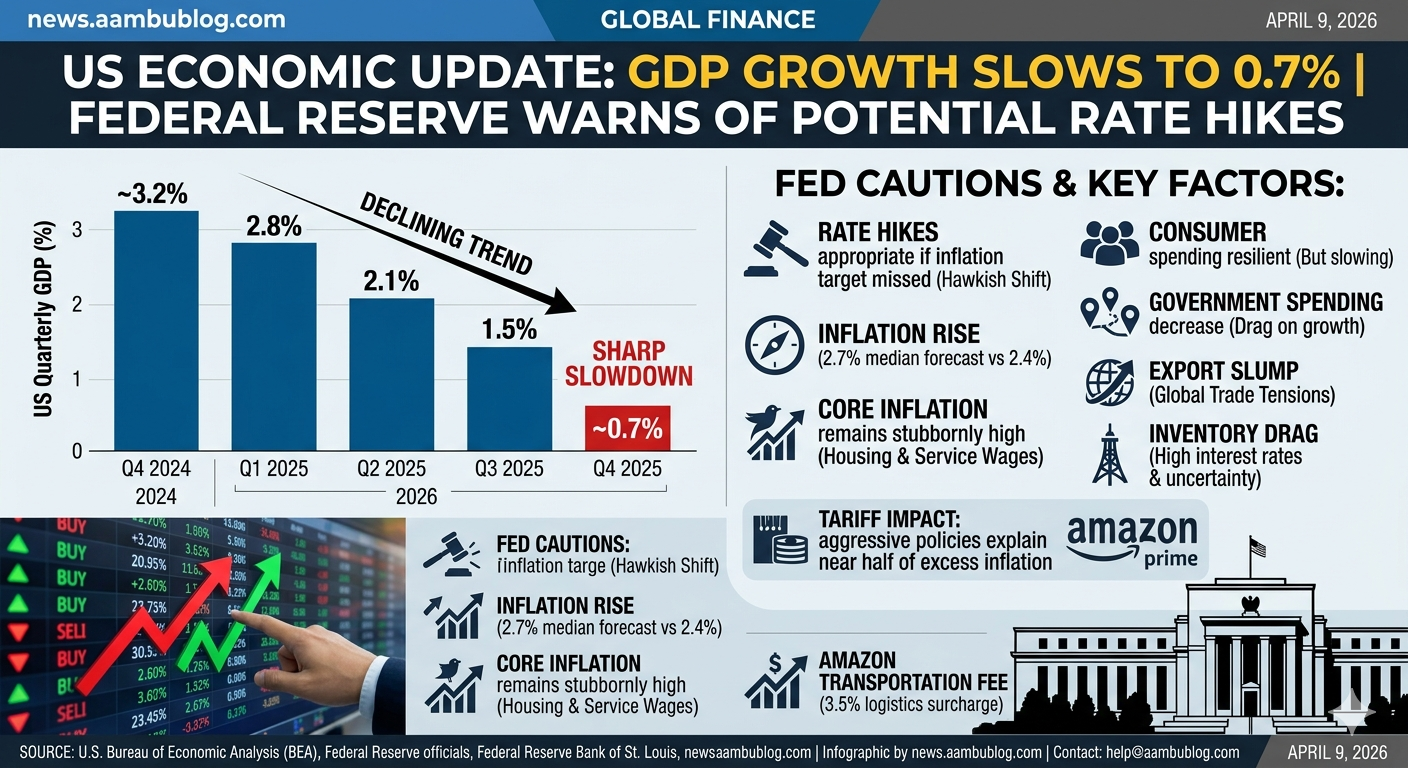
The BEA’s final estimate for the fourth quarter of 2025 confirms a significant cooling of the American economy.
- The Number: Real GDP increased at an annual rate of 0.7%, a massive drop from the 4.4% growth seen in the third quarter.
- Consumer vs. Government: While consumer spending remained resilient, the growth was dragged down by a sharp decrease in government spending and a slump in exports due to global trade tensions.
- Inventory Drag: High interest rates have forced businesses to cut back on inventories, further slowing the headline growth figure.
2. Inflation “Stickiness”: Fed Shifts to a Hawkish Tone
Despite the ceasefire bringing oil prices down to $95/barrel, the Federal Reserve is not ready to declare victory over inflation.
- Inflation Projections: The Fed has raised its median 2026 inflation forecast to 2.7%, up from the previous estimate of 2.4%.
- The “2% Target” Struggle: Policymakers noted that while energy prices have dipped, “core” inflation (excluding food and energy) remains stubbornly high due to rising housing costs and service sector wages.
- The Warning: Federal Reserve Bank of Cleveland President Beth Hammack stated today that “rate hikes could be appropriate” if inflation doesn’t move closer to the 2% target soon—a major shift from the rate-cut hopes of earlier this year.
3. The “Tariff Tax” Factor
A new internal study by the Federal Reserve Bank of St. Louis has highlighted a growing concern for US consumers:
- Impact of Tariffs: Analysts estimate that the aggressive tariffs implemented over the last year explain nearly half of the “excess inflation” currently seen in the US.
- Supply Chain Fees: Logistics giants like Amazon have already introduced a 3.5% transportation fee to cover rising costs, which is being passed directly to consumers in the form of higher prices for daily goods.
4. Market Reaction: A Tale of Two Realities
- The “Ceasefire” Surge: Wall Street saw a massive 1,100-point jump in the Dow Jones yesterday following the US-Iran truce news.
- The “Data” Reality Check: However, today’s GDP numbers and the Fed’s talk of rate hikes have tempered that enthusiasm, with tech stocks seeing a slight pullback as investors realize that “higher-for-longer” interest rates are here to stay.
5. What it Means for Global Markets (India Impact)
- The Dollar Strength: The Fed’s hawkish stance is likely to keep the US Dollar strong. For India, this means the Rupee (INR) will continue to face pressure, making imports more expensive.
- Export Strategy: With US domestic growth slowing to 0.7%, Indian exporters may need to look at diversifying markets as American demand for luxury and non-essential goods cools down.
Frequently Asked Questions (FAQ)
Q1. Why is the Fed talking about rate hikes when GDP is so low?
The Fed’s primary mandate is “Price Stability.” Even if growth is slow, if prices are rising too fast, they will raise rates to prevent a 1970s-style inflation spiral.
Q2. How long will the 0.7% GDP growth impact the market?
Economists see this as a “one-off” dip caused by war-time uncertainty. If the 14-day ceasefire turns into a permanent peace, growth is expected to rebound to 2.4% by late 2026.
Q3. Will Amazon’s 3.5% fee affect international sellers?
Yes, third-party sellers on the platform are already adjusting their pricing globally to accommodate these new logistics surcharges.
For more daily financial analysis: help@aambublog.com