Welcome to your daily global update. Today, we turn our lens to South Korea, the technological and cultural powerhouse of East Asia. The nation is dominating headlines with major advancements in artificial intelligence, significant movements in the entertainment industry, and crucial domestic economic shifts. Here are the top five news stories coming out of Seoul today.
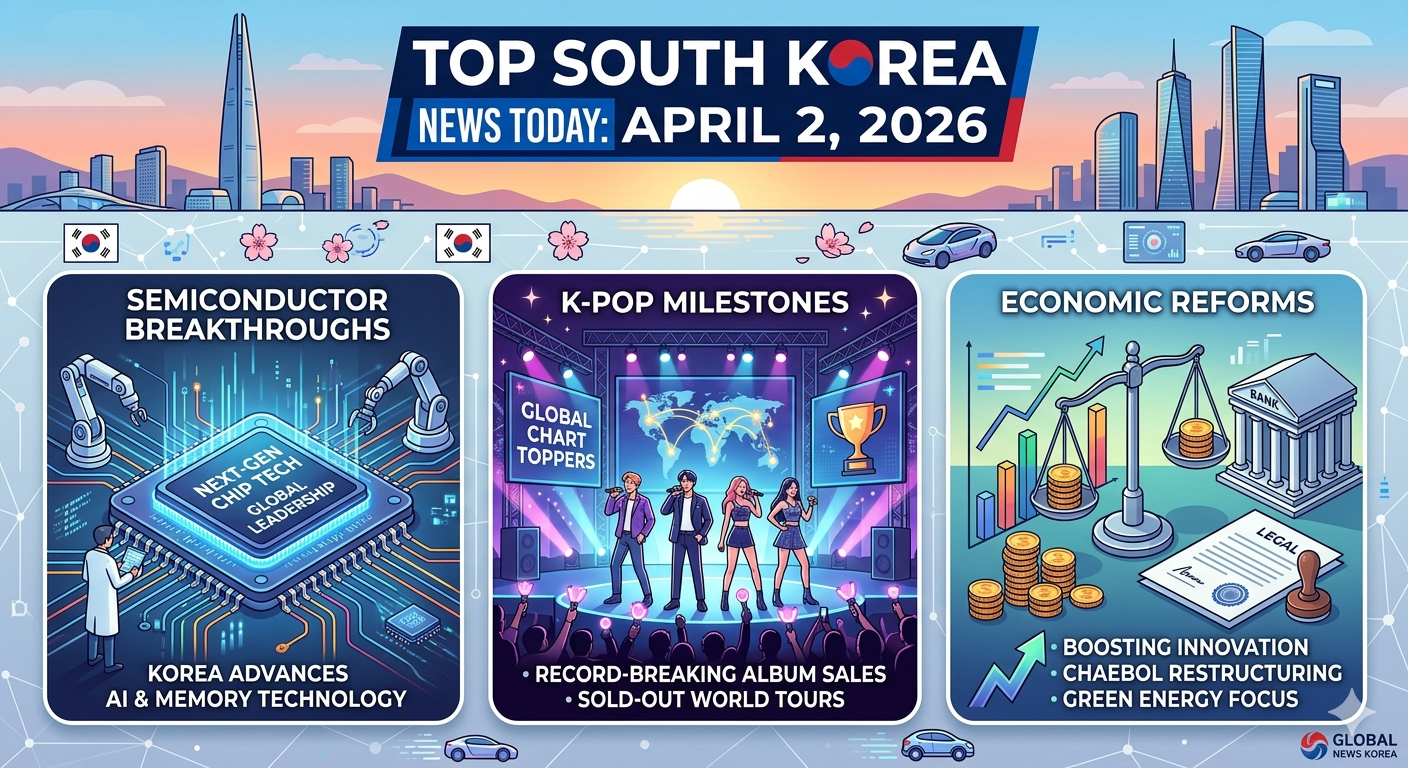
1. Samsung Unveils Next-Gen AI Memory Chips
In a massive move for the global tech sector, Samsung Electronics has officially unveiled its new generation of High Bandwidth Memory (HBM) chips optimized for heavy AI processing.
- The Breakthrough: These new HBM4 chips offer a 50% increase in data processing speed while reducing power consumption by 30% compared to previous models.
- Why it Matters: This announcement cements South Korea’s leading position in the AI semiconductor supply chain, critical for fueling the current global generative AI boom.
2. BTS Announces Final Dates for “Reunion” World Tour
Global cultural icons BTS have thrilled fans worldwide by announcing the final leg and cities for their highly anticipated “reunion” tour, marking their first full-group live performances since completing mandatory military service.
- The Scale: The tour will culminate in massive stadium shows across Asia, Europe, and the Americas, including a final, consecutive five-night stand at the Seoul Olympic Stadium.
- Cultural Impact: Industry analysts predict this tour will generate billions of dollars in economic activity through ticket sales, merchandise, and tourism.
3. South Korea Eases Visa Rules to Attract Global Talent
To combat a shrinking workforce and boost the domestic tech ecosystem, the Ministry of Justice has announced significant changes to foreign visa regulations.
- The New Visas: The government is introducing specialized “E-7-AI” visas for skilled AI professionals and expanding the “digital nomad” visa program.
- The Goal: Korea aims to attract 100,000 top foreign professionals over the next three years, focusing on semiconductor engineering, data science, and biotechnology.
4. Presidential Task Force Targets “Corporate Value-Up”
The Yoon Suk-yeol administration has launched a new task force dedicated to the “Corporate Value-Up Program,” designed to boost the valuation of South Korean companies listed on the Korea Exchange (KRX).
- The Strategy: The initiative pushes large conglomerates (chaebols) and other major corporations to improve corporate governance, increase shareholder returns (dividends), and enhance transparency.
- Economic Boost: Analysts hope this will address the long-standing “Korea Discount” (where Korean stocks trade lower than global peers) and attract more foreign investment.
5. Government Increases Funding for Space and Biotech Startups
South Korea is aggressively investing in the industries of the future. The Ministry of Science and ICT has announced a 500 billion won ($370 million) fund specifically targeted at early-stage startups in the space exploration and biotechnology sectors.
- Future-Proofing: This investment is part of a broader strategy to decrease national reliance on manufacturing and ensure long-term, high-tech economic growth.
Frequently Asked Questions (FAQs)
Q1: Why are Samsung’s new HBM chips significant for the AI industry?
Ans: Artificial intelligence programs, especially large language models like ChatGPT, require massive amounts of data processing very quickly. Samsung’s HBM4 chips directly solve this bottleneck by providing faster data transfer and better power efficiency, enabling the next generation of AI advancement.
Q2: What is the “Korea Discount” on the stock market?
Ans: The “Korea Discount” refers to the phenomenon where South Korean stocks historically trade at lower valuations than similar companies in the US or Europe. This is often blamed on issues like complex chaebol ownership structures, lower shareholder returns (dividends), and perceived risks related to North Korea.
Q3: How will easing visa rules help South Korea’s economy?
Ans: Like Japan, South Korea faces a severe demographic crisis with a low birth rate and an aging population, leading to an upcoming labor shortage, especially in high-tech fields. By making it easier for foreign experts to live and work in Korea, the government hopes to maintain its competitive edge in technology and innovation.
Q4: Will BTS’s tour affect South Korea’s tourism numbers?
Ans: Absolutely. Pre-pandemic data showed that BTS contributed nearly $4 billion annually to the Korean economy, including attracting approximately one in every thirteen foreign tourists visiting the country. Their first post-service global tour is expected to create an even larger economic surge.