By Global News Desk | April 22, 2026
If you turn on any Japanese television network or pick up a newspaper like the Yomiuri Shimbun today, there is only one story dominating the headlines: The historic collapse of the Japanese Yen and the government’s desperate, last-minute intervention to save it.
After days of speculation, Japan’s Ministry of Finance officially stepped into the open markets this morning, triggering breaking news alerts across the country. Meanwhile, the economic reality is hitting the streets of Tokyo, with ordinary citizens facing sudden price hikes on daily necessities.
1. The Live TV Phenomenon: NHK’s Breaking Coverage
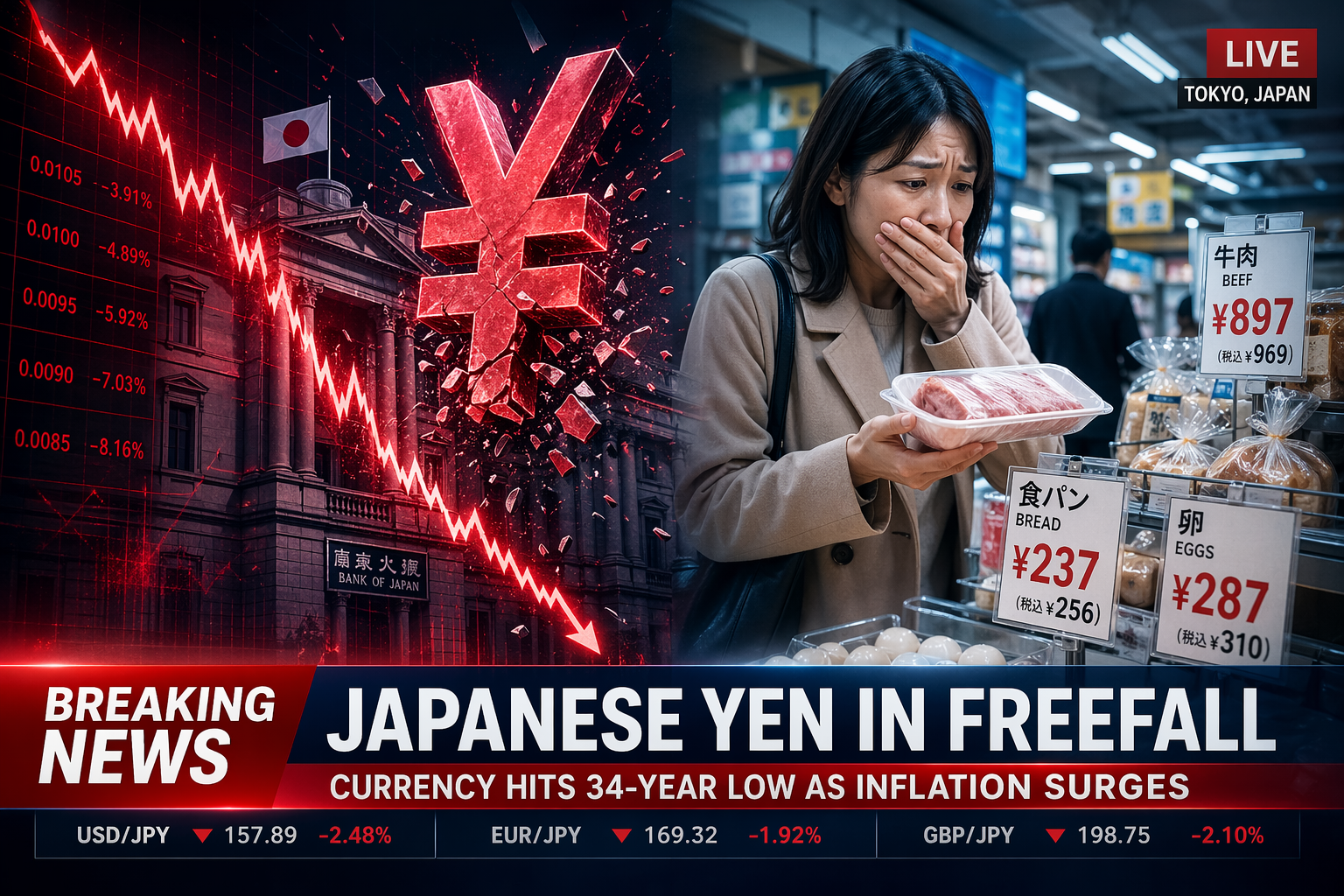
At exactly 10:00 AM JST today, standard television programming across Japan was interrupted. The national broadcaster, NHK, switched to live coverage of the currency markets, displaying flashing red tickers as the government began dumping billions of US dollars to buy back their own currency.
- The Intervention: Finance Minister Shunichi Suzuki held a live, emergency press conference, sternly warning speculators that Japan “will take decisive, unannounced actions against excessive currency moves.”
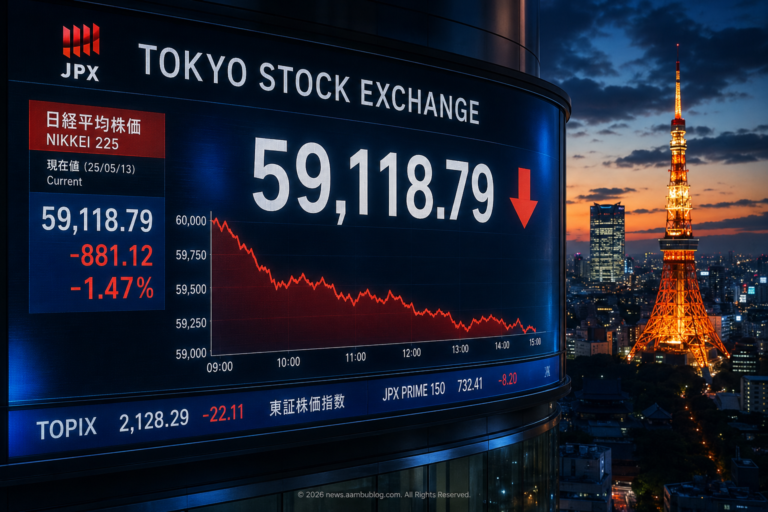
- The Market Shock: Within minutes of the TV broadcast, the Yen violently spiked, causing a temporary trading halt on the Tokyo Stock Exchange to prevent a total market panic.
2. The Supermarket Shock: Inflation Hits the Streets
While the financial jargon dominates the business segments, local Japanese news programs are focusing heavily on the “supermarket shock.”
- Import Costs: Because Japan imports the vast majority of its food and energy, the weak Yen has made everything exponentially more expensive. Morning talk shows are broadcasting live from Tokyo supermarkets, showing the prices of imported beef, cooking oil, and wheat products jumping almost overnight.
- Electricity Bills: Newspapers are running front-page graphics showing that household electricity bills are expected to surge by another 15% next month due to the high cost of imported liquefied natural gas (LNG).
3. The Political Fallout
The crisis has moved from the financial sector to the Prime Minister’s office. With national elections looming, public dissatisfaction is at an all-time high. The ruling party is currently holding emergency closed-door sessions, which reporters are covering live from outside the parliament building, debating whether to issue emergency cash handouts to low-income families to help them survive the inflation wave.
Detailed Q&A: The Japanese Yen Crisis Today
Q1. Why is this such a big deal on Japanese TV right now?
Japan has spent the last 30 years dealing with deflation (falling prices). For an entire generation of Japanese citizens, sudden and aggressive inflation is a completely new and terrifying experience, making it the most important daily news topic.
Q2. Did the government’s market intervention work?
In the short term, yes. The TV tickers showed the Yen strengthening immediately after the government started buying it. However, financial experts on morning news panels are warning that unless the Bank of Japan raises interest rates significantly, the Yen will eventually start falling again.
Q3. How does this affect tourism in Japan?
While it’s terrible for Japanese citizens, travel segments on TV are highlighting that Japan is currently experiencing an unprecedented boom in foreign tourism. Because the Yen is so weak, tourists from the US, Europe, and India are flooding the country, finding luxury hotels and goods to be incredibly cheap.