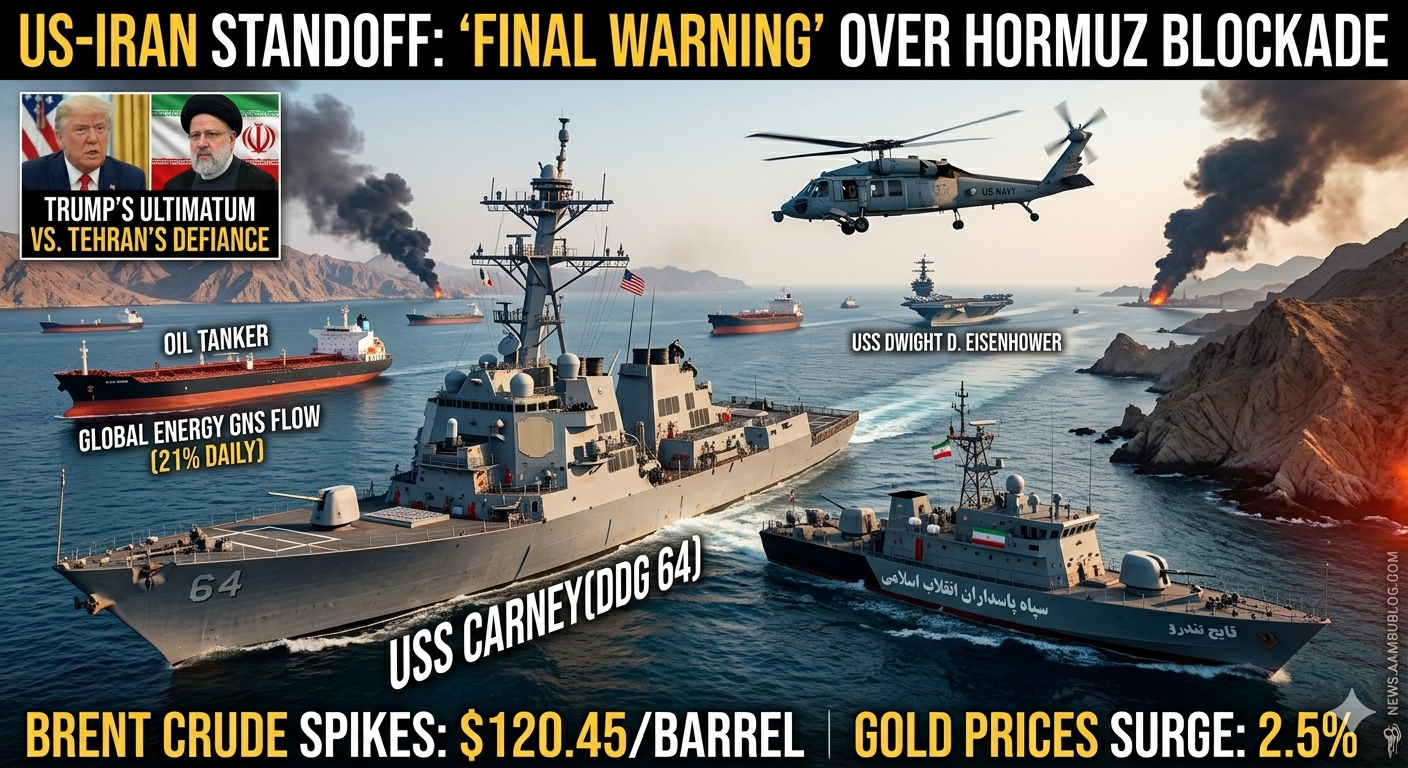
The world wakes up today to one of the most significant military and diplomatic escalations in recent memory. U.S. President Donald Trump has issued a “final warning” to the Iranian government, pushing the Middle East to the brink of a potential conflict. At the heart of this standoff is the Strait of Hormuz, a narrow but vital waterway that dictates the flow of the world’s energy.
The Spark: Detention of Tankers
The crisis reached a tipping point after reports confirmed that Iranian naval forces intercepted and detained two commercial oil tankers near the coast of the United Arab Emirates. Tehran cited “patrol rights” and violations of maritime law as the reason for the seizure.
However, Washington viewed this move as an act of aggression against global commerce. Speaking from the Oval Office, the President made it clear that the United States would no longer practice “strategic patience.”
”If the Strait of Hormuz is not kept open for the free flow of global commerce, the consequences for the Iranian regime will be historical and permanent. We are prepared for kinetic action to protect international waters.” — Official White House Statement
Why the Strait of Hormuz is a Global Chokepoint
To understand why this news is dominating headlines, one must look at the sheer economic power of this geographic location:
- 21% of Global Oil: Nearly one-fifth of the world’s total petroleum consumption passes through this strait every single day.
- LNG Dominance: Almost a third of the world’s liquefied natural gas (LNG) is shipped through this route.
- The 2-Mile Bottleneck: The shipping lane itself is only 2 miles wide in each direction, making it an extremely sensitive and easy-to-block “bottleneck” for global trade.
Immediate Global Consequences
The “Final Warning” has sent shockwaves through every major financial sector:
- Oil Markets: Brent Crude has already jumped to $120.45 per barrel, with experts predicting further hikes if the blockade continues.
- Gold Surge: Investors have rushed to safe-haven assets, causing gold prices to rise by 2.5% in a single trading session.
- Shipping Insurance: Premiums for cargo vessels entering the Persian Gulf have tripled, which will soon reflect in the price of imported electronics and consumer goods.
International Diplomatic Response
The G7 nations have called for an emergency virtual summit to discuss the release of strategic petroleum reserves to prevent a global recession. Meanwhile, the United Nations Secretary-General has urged “maximum restraint,” fearing that a miscalculation on either side could lead to a regional war that the global economy cannot afford.
Tehran, on the other hand, has dismissed the U.S. warning as “psychological warfare,” maintaining that they have the sovereign right to secure their territorial waters.
Frequently Asked Questions (FAQs)
1. What does “Kinetic Action” mean in this context?
In military terms, kinetic action refers to the use of lethal force, including airstrikes or naval engagements, as opposed to just economic sanctions or diplomacy.
2. Will this standoff lead to a third World War?
While the tension is at a historic high, most global powers are pushing for a diplomatic resolution to avoid a total collapse of the energy market.
3. How will this affect fuel prices in India and globally?
Since crude oil has hit the $120 mark, retail petrol and diesel prices are expected to rise significantly within the next 48 to 72 hours.
4. Why doesn’t the world use a different route for oil?
There are very few alternative pipelines, and none have the capacity to handle the massive volume of oil that currently moves through the Strait of Hormuz.