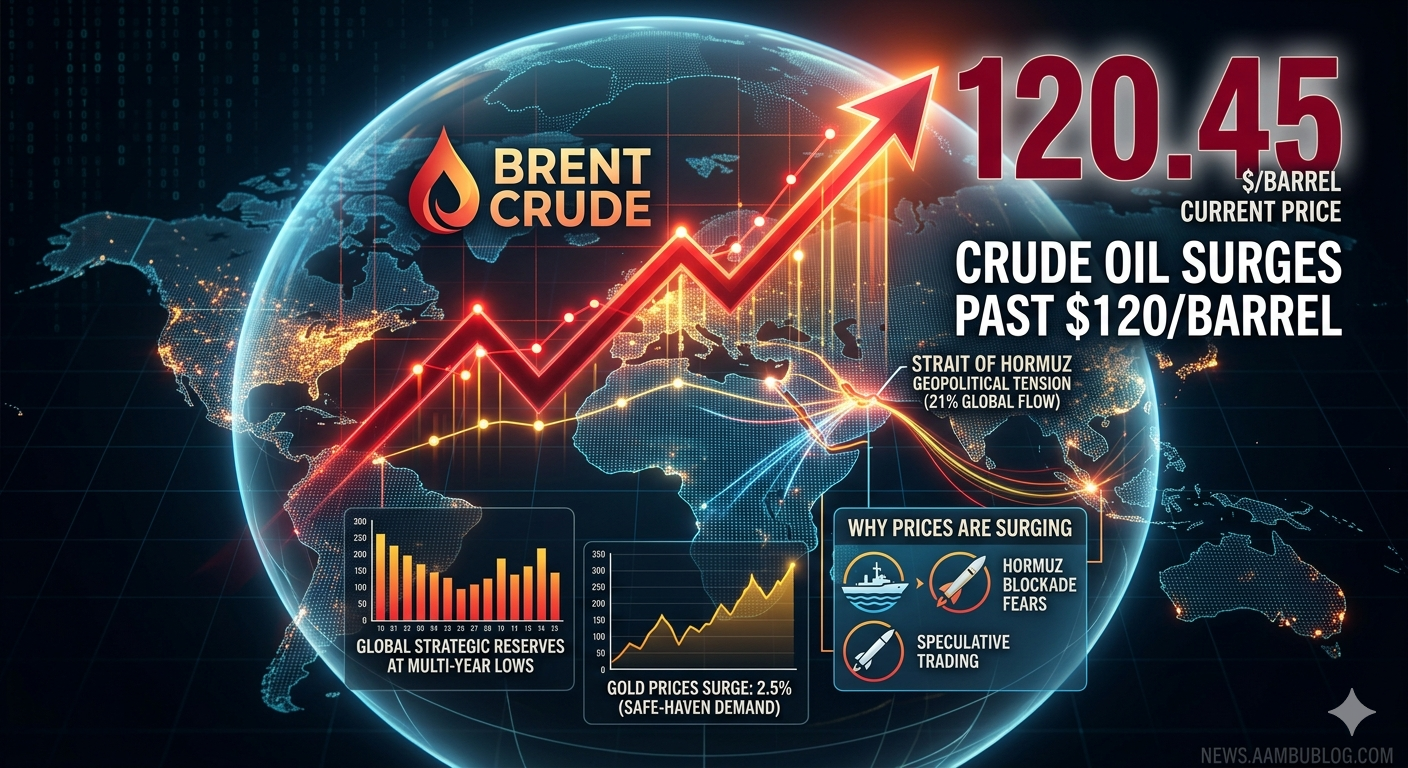
The global financial landscape has been shaken today as Brent Crude oil prices officially crossed the psychological barrier of $120 per barrel. This massive surge is a direct response to the escalating tensions in the Middle East, specifically the potential blockade of the Strait of Hormuz. For businesses and consumers alike, this mark signals the start of a period of high inflation and economic uncertainty.
The Trigger: Why are Prices Surging?
While the supply and demand for oil were relatively stable last month, the recent “Final Warning” issued by the U.S. toward Iran has changed everything. The energy market is currently driven by “Fear and Speculation.”
- The Hormuz Factor: With 21% of the world’s daily oil passing through the Strait of Hormuz, any threat to this route creates an immediate panic among buyers who are scrambling to secure stock.
- Low Strategic Reserves: Global oil inventories in several G7 nations are at multi-year lows. This means there is very little “buffer” to protect the world if supply is suddenly cut off.
- Speculative Trading: Hedge funds and large-scale investors are buying oil futures at record speeds, betting that the price could even hit $150 if a diplomatic solution is not found within the week.
Impact on Your Wallet and the Global Economy
Oil is the backbone of the global supply chain, and a price of $120+ per barrel has immediate ripple effects:
- Rising Inflation: When fuel becomes expensive, the cost of transporting groceries, electronics, and construction materials goes up. These costs are eventually passed on to the consumer.
- Travel Surcharges: The aviation sector is already reacting. Expect airlines to introduce “Fuel Surcharges” on international and domestic flights, making travel significantly more expensive.
- Manufacturing Slowdown: Industries that rely on high energy consumption, such as steel and chemicals, will face higher operational costs, potentially leading to a slowdown in industrial growth.
What the Experts are Saying
Economists at suggest that while $120 is a critical high, the market could stabilize if the G7 nations successfully release their Strategic Petroleum Reserves (SPR). However, if the military posturing in the Persian Gulf escalates into actual conflict, a surge beyond $140/barrel is not out of the question.
Frequently Asked Questions (FAQs)
1. Is $120 per barrel a record high?
It is not an all-time record, but it is the highest the market has seen in the last two years. Historically, sustained prices above $100 have often led to global economic recessions.
2. How soon will petrol/diesel prices change at the pump?
Oil marketing companies usually adjust retail prices within 48 to 72 hours of a sustained global price hike. You should expect an increase at the pump by this weekend.
3. Why is Gold also rising with Oil?
In times of war or high geopolitical tension, investors lose faith in paper currency and move their money into “Safe Haven” assets like Gold and Oil.
4. Can the G7 countries control the price?
They can influence it by releasing millions of barrels of oil from their emergency reserves to increase supply, but they cannot fully control it if a major shipping lane like Hormuz is blocked.
Editor’s Note: We will continue to track live updates on crude oil prices and their impact on the Indian stock market. Stay tuned for further analysis.