
Date: March 29, 2026
Category: Breaking News / West Asia Conflict / Aviation
The West Asia conflict has hit a new peak of intensity. Following a series of targeted attacks, Kuwait International Airport (KWI)—one of the region’s most critical aviation hubs—is currently struggling with severe infrastructure damage. This escalation marks a direct threat to civilian travel and global energy logistics.
1. The Attack: What Happened?
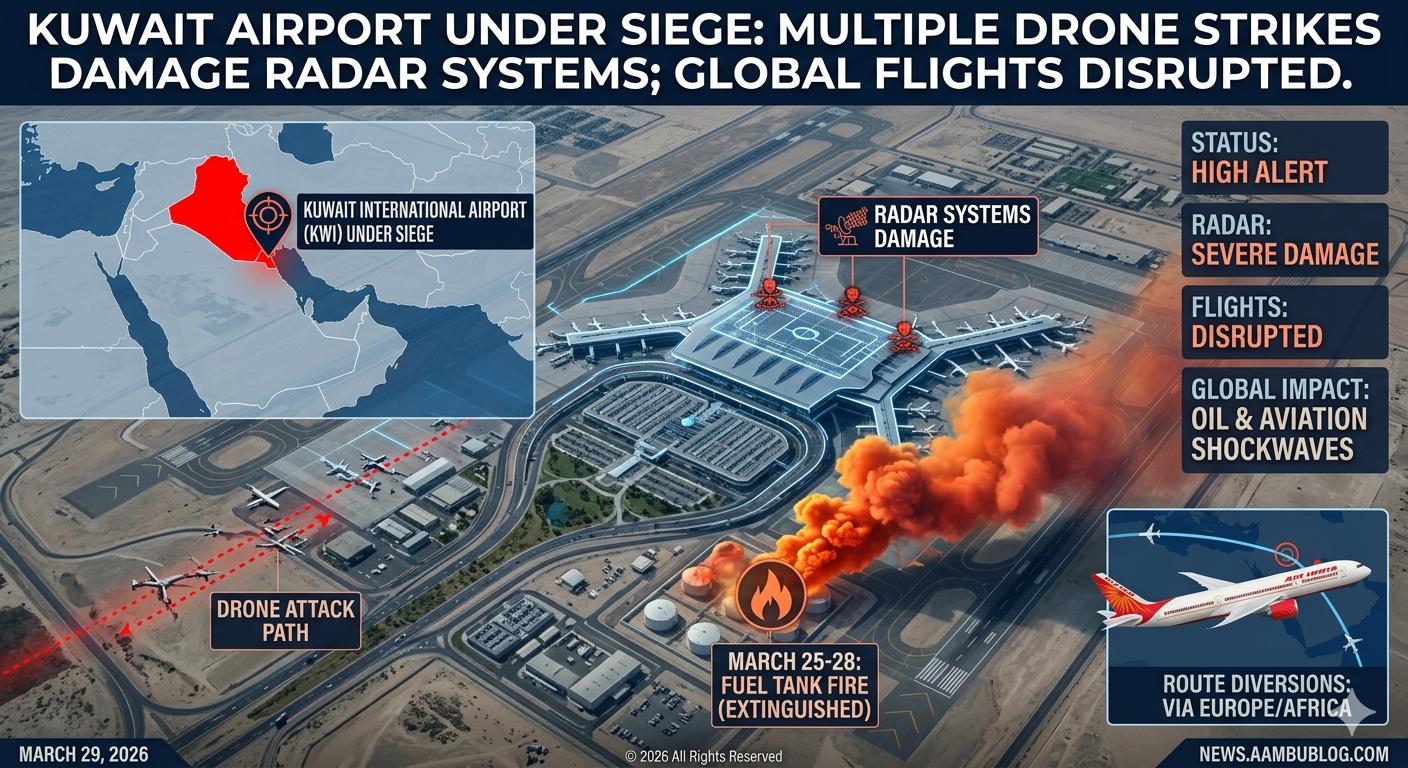
On the night of March 28-29, 2026, Kuwaiti Air Defenses intercepted over 15 hostile drones. However, several “suicide drones” managed to breach the perimeter:
- Radar Infrastructure: The airport’s primary radar system has suffered “significant and severe” damage. This has crippled the tower’s ability to manage high-volume air traffic.
- Fuel Depot Fire: A previous strike on March 25 had ignited a massive fire in the fuel storage tanks. It took emergency teams 58 consecutive hours of non-stop operations to finally extinguish the blaze yesterday.
- Casualties: Fortunately, the Civil Aviation Authority has confirmed zero human casualties, though material losses are estimated in the millions of dollars.
2. Who is Responsible?
The Kuwaiti government and the U.S. Central Command (CENTCOM) have officially blamed Iran and its regional proxies.
- The Motive: Analysts suggest the strikes are a “warning shot” to Gulf nations hosting U.S. military assets.
- Regional Context: This comes just as President Trump announced a 10-day “pause” on strikes against Iran’s energy plants, showing that proxy groups are still active despite high-level diplomacy.
3. Impact on Global Travel & India
The disruption at Kuwait Airport has sent ripples through the aviation industry:
- Flight Cancellations: Hundreds of flights to and from Europe, India, and Southeast Asia have been diverted or cancelled.
- Route Diversions: Indian carriers like Air India and IndiGo are now avoiding Kuwaiti airspace, leading to longer flight times (approx. 1.5 to 2 hours extra) and higher ticket prices.
- Jet Fuel Prices: With fuel tanks targeted, local jet fuel supply has tightened, which is expected to push global airfares up by 12-15% in the coming week.
📊 Editor’s Prediction
Safety First: We expect Kuwait to keep its airspace under “Restricted” status for at least the next 72 hours while mobile radar units are deployed. For Indian travelers, if you have a transit flight through the Gulf, re-check your status immediately. The situation remains “High Alert” as more U.S. Marines (USS Tripoli) arrive in the region.