The political atmosphere in Japan has reached a boiling point as Prime Minister Sanae Takaichi faces the largest public backlash of her administration. Thousands of citizens have taken to the streets of Tokyo to protest against a proposed revision of the country’s decades-old pacifist identity.
1. The Core Conflict: Article 9 of the Constitution
At the heart of the protests is Article 9 of the Japanese Constitution, which was established in 1947 after World War II.
- The Clause: Under Article 9, Japan officially renounces war as a sovereign right and forbids the maintenance of “war potential” (land, sea, and air forces).
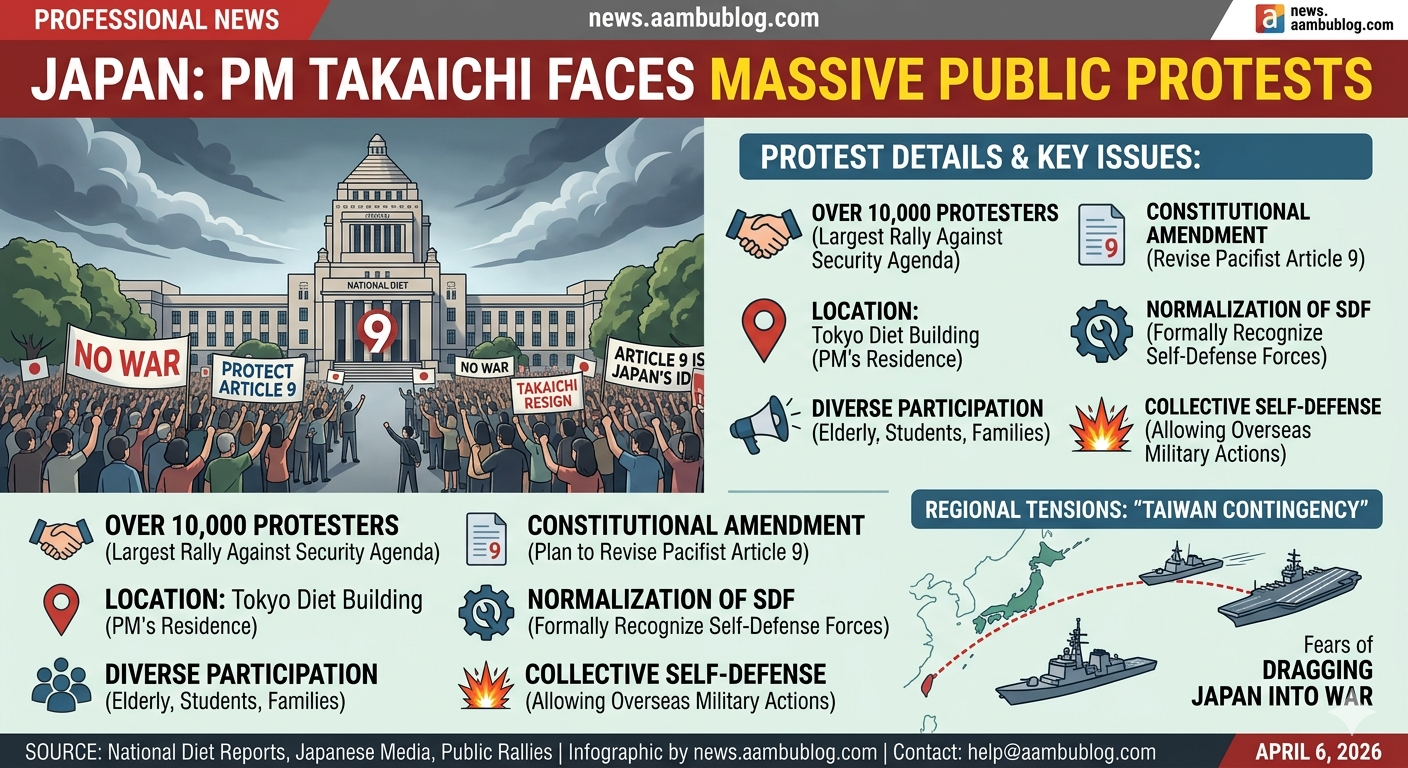
- The Revision: PM Takaichi, backed by a legislative supermajority, is pushing to amend this clause to officially recognize the Self-Defense Forces (SDF) as a formal military and allow for “collective self-defense” in regional conflicts.
- The Fear: Protesters argue that this “normalization” of the military will drag Japan into foreign wars, particularly regarding tensions in the Taiwan Strait.
2. Massive Protests in Tokyo
On Thursday night, more than 10,000 protesters gathered outside the National Diet (Parliament) and the Prime Minister’s official residence.
- Diverse Crowd: The rallies saw a mix of elderly citizens who remember the horrors of war, as well as university students concerned about a potential “military draft” in the future.
- Slogans: Placards reading “No War,” “Protect Article 9,” and “No Takaichi” dominated the skyline.
- Public Sentiment: While some polls show that 55% of Japanese citizens support stronger defense due to regional threats, the 45% who oppose it are becoming increasingly vocal and organized.
3. Deployment of Long-Range Missiles
The protests are not just about laws but also about hardware. The Takaichi government recently authorized the deployment of Type 12 surface-to-ship missiles in regions like Kumamoto and Okinawa.
- Zero Transparency: Residents in these areas have criticized the government for moving heavy military equipment into civilian neighborhoods without prior public meetings or safety explanations.
- Budget Concerns: While the government is doubling defense spending to 2% of GDP, many citizens are struggling with the rising cost of living and believe the money should be spent on social welfare instead.
4. Regional Geopolitics: The “Taiwan Contingency”
Takaichi has been very vocal about Japan’s role if a conflict breaks out between China and Taiwan.
- Direct Stance: She recently stated that Japan must consider the deployment of the SDF alongside U.S. forces if regional stability is threatened.
- Reaction: This “hardline” approach has drawn sharp criticism from Beijing and Seoul, with many Japanese citizens fearing that Japan is becoming a “frontline state” for U.S. interests.
Frequently Asked Questions (FAQ)
Q1. Who is Sanae Takaichi?
Sanae Takaichi is the Prime Minister of Japan and the leader of the Liberal Democratic Party (LDP). She is known for her conservative views and strong advocacy for enhancing Japan’s national security and military capabilities.
Q2. Will the Japanese Constitution really change?
Amending the constitution requires a two-thirds majority in both houses of Parliament followed by a National Referendum. While Takaichi has the parliamentary numbers, the public referendum remains a huge hurdle.
Q3. Why are young people joining the protests?
Many young Japanese people fear that changing the constitution is the first step toward re-militarization, which could lead to mandatory military service or Japan’s involvement in a major global conflict.