
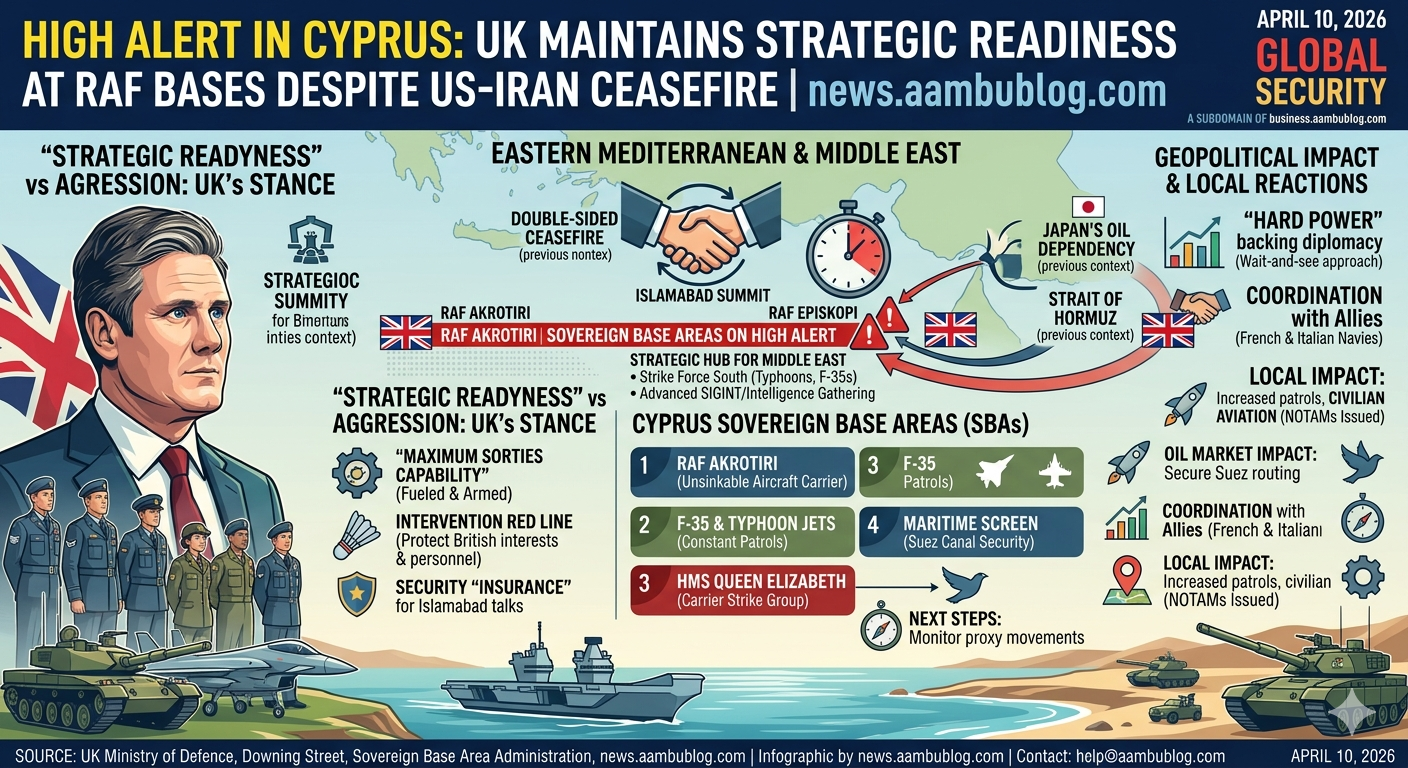
While the diplomatic world focuses on the peace talks in Islamabad, the British Royal Air Force (RAF) is taking no chances. Today, April 10, 2026, the UK Ministry of Defence confirmed that its sovereign base areas in Cyprus—RAF Akrotiri and RAF Episkopi—remain on “High Alert.” The decision underscores the British government’s cautious approach to the 14-day ceasefire, ensuring that “Strike Force South” is ready to respond if the truce collapses.
1. The Strategic Hub: Why Cyprus Matters
Cyprus serves as the UK’s unsinkable aircraft carrier in the Eastern Mediterranean.
- Proximity to the Conflict: From RAF Akrotiri, British Typhoon and F-35 fighter jets can reach the Middle East in less than an hour.
- Intelligence Gathering: The bases house advanced signals intelligence (SIGINT) facilities that are currently monitoring Iranian proxy movements in Lebanon and Syria 24/7.
- The “Islamabad Guard”: London has clarified that this alert level is intended to provide security “insurance” for the negotiators currently meeting in Pakistan.
2. “Operational Readiness” vs. Aggression
Prime Minister Keir Starmer addressed the House of Commons this morning, defending the decision to keep the bases battle-ready.
- The Directive: The RAF has been ordered to maintain “maximum sorties capability,” meaning aircraft are fueled and armed for immediate takeoff.
- The Red Line: The UK has warned that while it supports the ceasefire, it will intervene if British interests or personnel in the region come under direct threat from non-state actors (proxies).
3. Royal Navy Movements in the Mediterranean
The air alert is being mirrored at sea. The HMS Queen Elizabeth carrier strike group, currently positioned south of Cyprus, has moved into a “defensive screen” formation.
- The Goal: To protect the vital shipping lanes leading to the Suez Canal, which remain vulnerable despite the partial reopening of the Strait of Hormuz.
- Coordination with Allies: The UK is working closely with the French and Italian navies to maintain a continuous maritime presence in the region.
4. Local Impact in Cyprus
The high alert has led to increased security around the Sovereign Base Areas (SBAs), causing some disruption to local traffic and air corridors.
- Security Perimeters: Armed patrols have been doubled around the base fences, and non-essential visits to the facilities have been suspended.
- Civilian Aviation: While the Larnaca and Paphos international airports remain open, pilots have been issued “NOTAMs” (Notices to Airmen) regarding increased military activity in the vicinity.
Frequently Asked Questions (FAQ)
Q1. Are British forces involved in the current ceasefire negotiations?
The UK is not a direct party to the Islamabad Summit, but it is in “constant consultation” with the US delegation. The British military presence provides the “hard power” that backs up Western diplomacy.
Q2. What is RAF Akrotiri?
It is a permanent military base in Cyprus and is one of the most important strategic locations for the British Armed Forces outside of the United Kingdom.
Q3. How does this affect the 14-day ceasefire?
By maintaining a high alert, the UK is signaling to Iran and its proxies that any “cheating” or opportunistic attacks during the ceasefire will meet an immediate and heavy military response.
For more Defense & Security analysis: news.aambublog.com
Contact: help@aambublog.com