By Global Finance Desk | April 20, 2026
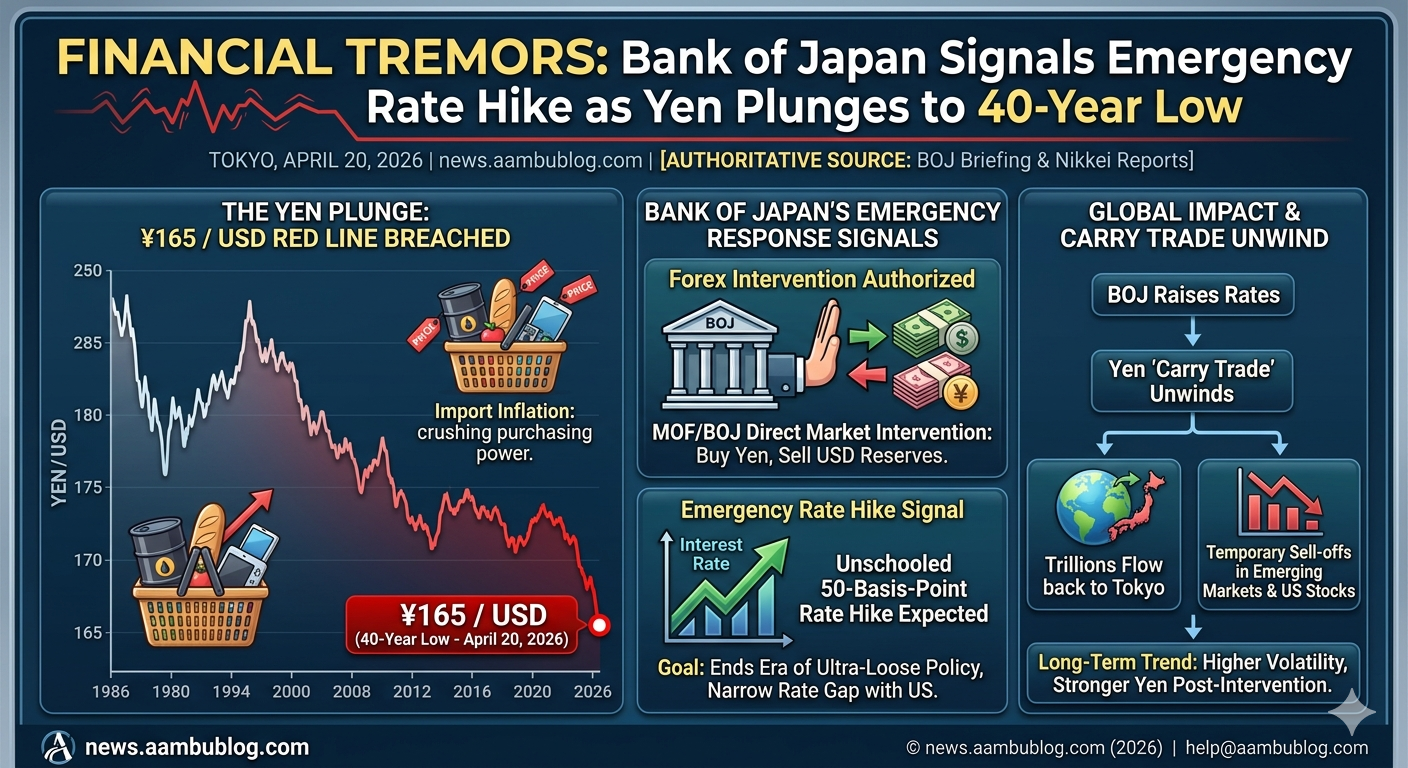
In a dramatic morning press conference in Tokyo today, the Bank of Japan (BOJ) dropped a massive bombshell on the global financial markets. Facing an unprecedented currency crisis, the central bank has officially signaled an “emergency” interest rate hike and authorized aggressive direct intervention in the foreign exchange (forex) market to rescue the plummeting Japanese Yen.
This aggressive move, breaking away from decades of ultra-loose monetary policy, is sending immediate shockwaves across Asian and European trading floors.
1. The Trigger: The ¥165 to USD Red Line
The panic in Tokyo began early this morning when the Yen breached the psychological barrier of 165 against the US Dollar in early Asian trading hours—its weakest level in nearly 40 years.
- Import Inflation: Japan imports roughly 90% of its energy and over 60% of its food. A historically weak Yen has caused domestic inflation to skyrocket, crushing the purchasing power of the average Japanese citizen.
- The BOJ’s Morning Statement: Governor Kazuo Ueda addressed the media at 9:00 AM JST, stating that the central bank “will no longer tolerate rapid, speculative currency moves” and is prepared to use “all available monetary tools” before the end of the week.
2. The Double-Barreled Strategy
To combat the currency collapse, Japan’s Ministry of Finance (MOF) and the BOJ are launching a coordinated two-step attack:
- Direct Market Intervention: The MOF has authorized the immediate dumping of tens of billions of US Treasury bonds to buy Yen in the open market.
- The Emergency Rate Hike: Financial analysts at Nomura and Mitsubishi UFJ now expect an unscheduled 50-basis-point interest rate hike to be announced by Friday, effectively ending the era of cheap Japanese money.
3. Global and Indian Market Impact
When the world’s third-largest economy tightens its belt, the ripple effects are global.
- The ‘Carry Trade’ Unwinds: For years, global investors borrowed cheap Yen to invest in high-yielding US and Indian assets. With Japan raising rates, trillions of dollars are expected to flow back to Tokyo, causing temporary sell-offs in US tech stocks and emerging markets.
- Impact on India: The Indian Rupee (INR) might face short-term volatility. However, a stronger Yen makes Japanese imports (like heavy machinery and electronics) more expensive for Indian businesses.
Professional Tip for Forex & Stock Investors
Do not attempt to “catch the falling knife” in USD/JPY currency pairs today. Market interventions by the Bank of Japan are notoriously swift and brutal. For equity investors, keep a close watch on Indian auto manufacturers with heavy Japanese partnerships (like Maruti Suzuki), as currency fluctuations will directly impact their quarterly import costs and profit margins.
Detailed Q&A: The BOJ Intervention
Q1. Why is the Japanese Yen crashing in the first place?
The crash is driven by the massive interest rate gap between the US and Japan. While the US Federal Reserve kept rates high to fight their own inflation, Japan kept rates near zero to stimulate growth. Investors naturally moved their money to the US for better returns, selling Yen and buying Dollars.
Q2. What does “direct market intervention” mean?
It means the Japanese government steps directly into the currency trading market. They use their massive foreign reserves (mainly US Dollars) to buy their own currency (Yen) in massive bulk. This sudden surge in demand instantly drives the price of the Yen back up.
Q3. Will this rate hike cause a global stock market crash?
A full crash is unlikely, but a significant “correction” is expected. Global hedge funds that borrowed cheap Yen will have to sell off some of their global stocks to cover their new, more expensive loans in Japan.
Q4. Has Japan done this before?
Yes, they intervened slightly in 2022 and 2024, but those were small moves compared to the massive, coordinated rate-hike strategy announced this morning.
Fact Sheet: Tokyo Market Action (April 20)
| Market Indicator | Status as of this Morning |
|---|---|
| Yen Status | Breached ¥165 / USD (40-Year Low) |
| BOJ Action | Emergency Rate Hike Signaled |
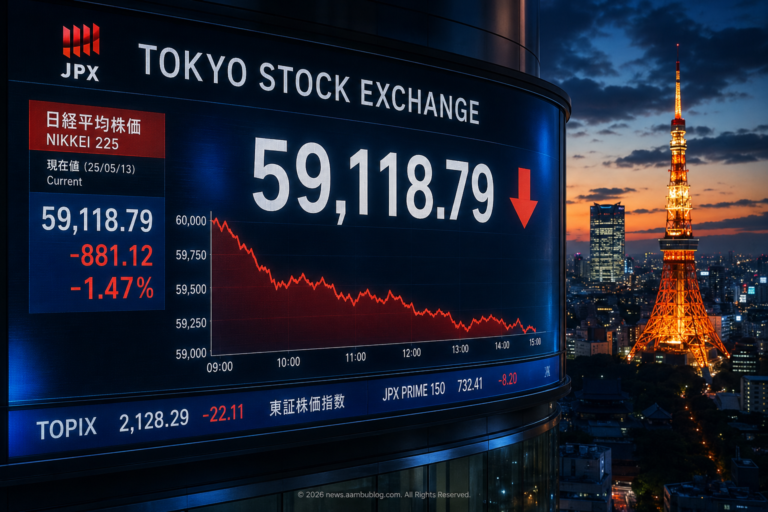
| Market Reaction | Nikkei 225 down 2.4% |
| Global Threat | Unwinding of Yen “Carry Trade” |
For real-time forex charts and global banking trends: news.aambublog.com
Contact: help@aambublog.com