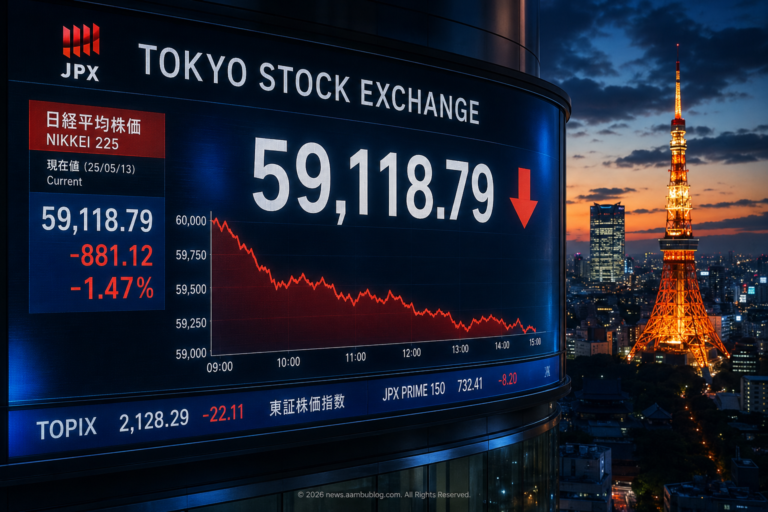
The Tokyo Stock Exchange witnessed a historic rally today, April 10, 2026, as the Nikkei 225 index surged to its highest level in two years. The surge comes on the heels of diplomatic breakthroughs in the Middle East, specifically news that the Strait of Hormuz is beginning to see a resumption of commercial shipping traffic following the US-Iran ceasefire.
1. The Numbers: A Massive Single-Day Jump
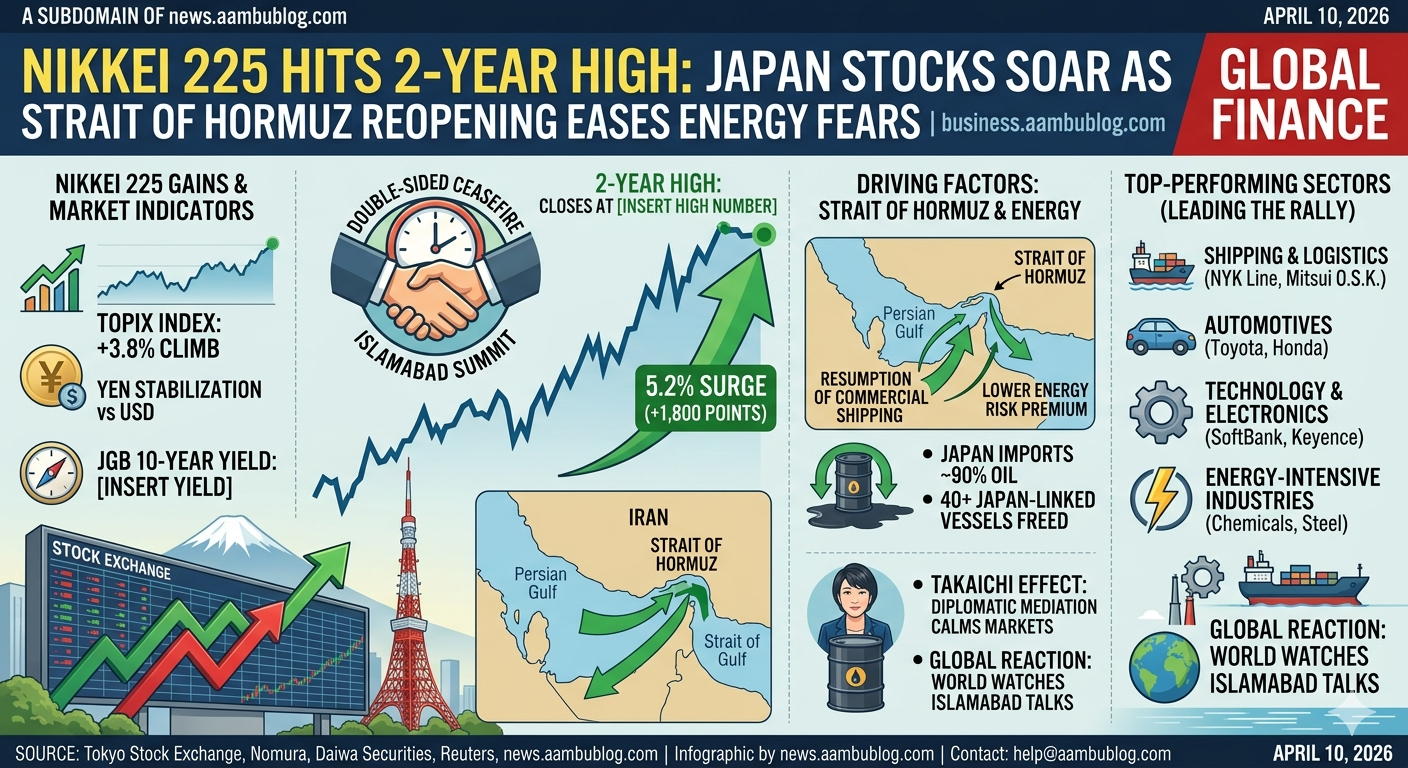
By the closing bell in Tokyo, the Nikkei 225 had gained over 1,800 points, closing at a level not seen since the global energy crisis began.
- The Surge: The index rose by 5.2%, led by heavy gains in manufacturing, shipping, and electronics.
- Broader Market: The TOPIX index also saw a significant rise, climbing 3.8% as investor sentiment shifted from “extreme caution” to “aggressive recovery.”
2. Why the Hormuz News is the Catalyst
For Japan, the Strait of Hormuz is the world’s most critical chokepoint.
- Energy Security: Japan imports nearly 90% of its oil through this narrow passage. The news that vessels are once again moving safely through the strait has dramatically lowered the “risk premium” on energy costs.
- Shipping Giants Rally: Shares of major Japanese shipping lines like Nippon Yusen (NYK Line) and Mitsui O.S.K. Lines saw double-digit growth as the cost of insurance and rerouting around Africa is expected to plummet.
3. Sector Highlights: Winners of the Day
The rally was broad-based, but three sectors stood out:
- Automotives: Giants like Toyota and Honda saw their stock prices jump as lower energy costs translate to cheaper manufacturing and logistics.
- Technology: SoftBank and other tech-heavy hitters benefited from the general “risk-on” mood in the global market.
- Energy-Intensive Industries: Chemical and steel manufacturers, which were previously struggling with high power costs, saw a massive influx of buyers.
4. The “Takaichi Effect” and the Yen
Prime Minister Sanae Takaichi’s recent diplomatic phone calls with Iran (the “Takaichi Doctrine”) have played a major role in calming the markets.
- Yen Stabilization: While the Yen remains relatively weak, it stabilized against the Dollar today, providing a “Goldilocks” environment for Japanese exporters who benefit from a weaker currency but were previously hurt by high import costs.
5. Analyst Outlook: Is the Bull Market Back?
Market analysts at Nomura and Daiwa Securities are cautiously optimistic.
- The “Islamabad Factor”: Much of the current rally depends on the outcome of the Islamabad Summit between VP J.D. Vance and Iranian officials.
- Corporate Earnings: If energy prices remain below $95/barrel, Japanese corporations are expected to post record earnings in the next quarter, potentially pushing the Nikkei even higher.
Frequently Asked Questions (FAQ)
Q1. What is the Nikkei 225?
It is the price-weighted stock index for the Tokyo Stock Exchange, representing Japan’s top 225 blue-chip companies. It is the primary indicator of the health of the Japanese economy.
Q2. How did the Strait of Hormuz impact Japanese stocks previously?
When the strait was blocked or threatened, oil prices spiked. Since Japan has almost no domestic oil, high prices acted like a “tax” on every Japanese company, causing stock prices to fall.
Q3. Will this rally affect the Indian stock market (Nifty/Sensex)?
Yes. Positive sentiment in Tokyo often spills over into other Asian markets. Furthermore, lower global oil prices are a massive positive for India’s economy as well.
For real-time market updates: news.aambublog.com
Contact: help@aambublog.com