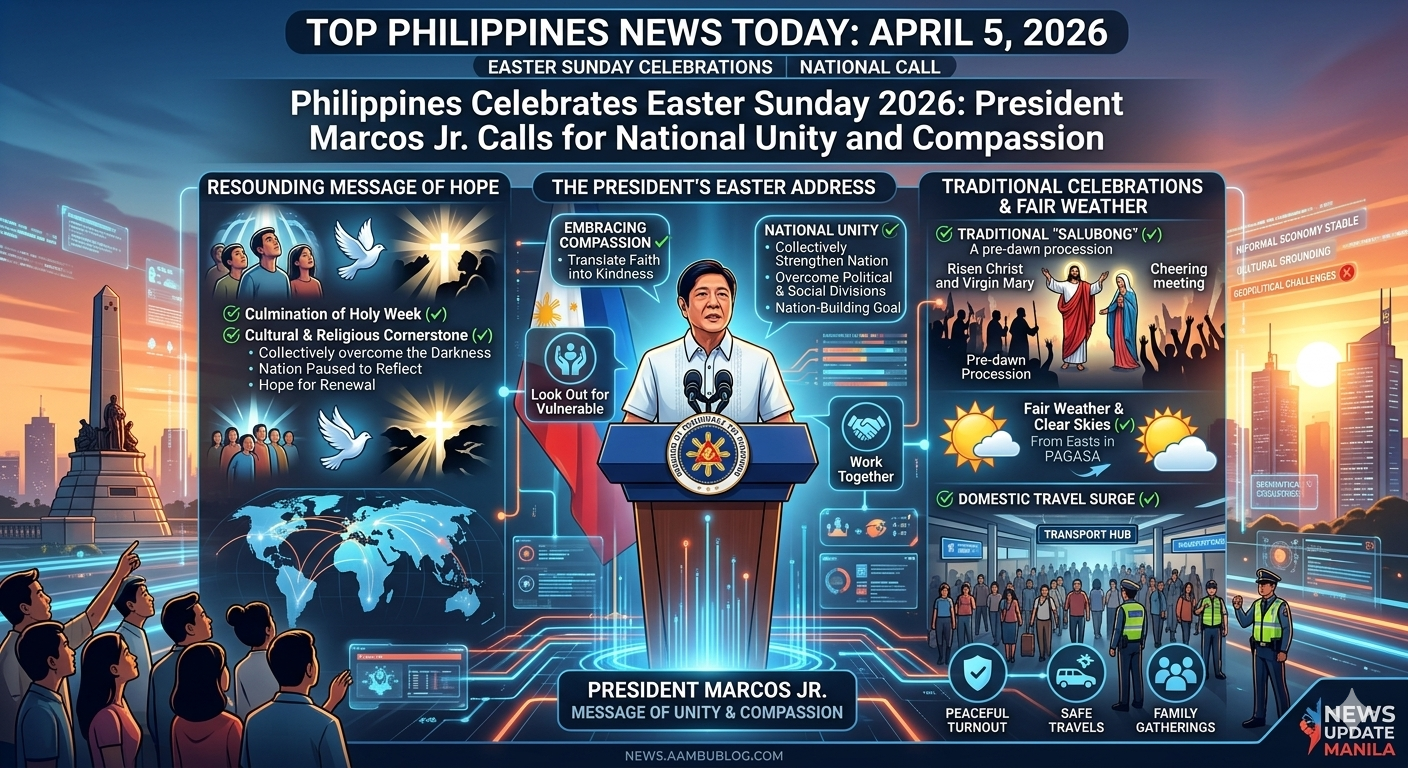
As the world navigates through complex geopolitical challenges, the Philippines paused this weekend to celebrate Easter Sunday with a resounding message of hope. In one of Asia’s predominantly Catholic nations, the culmination of Holy Week is not just a religious observance but a cornerstone of national culture.
This year, the festivities were highlighted by a special address from President Ferdinand R. Marcos Jr., who urged citizens to reflect on the season’s core values and channel them into nation-building.
Here is a detailed look at how the Philippines is celebrating Easter this April 5, 2026, and the key takeaways from the President’s national address.
The President’s Easter Message: A Call for Solidarity
In his official Easter Sunday message broadcasted nationwide, President Marcos Jr. focused heavily on the themes of renewal, hope, and collective strength.
- Embracing Compassion: The President called upon Filipinos to translate their faith into actionable kindness, urging citizens to look out for the vulnerable and marginalized within their communities.
- National Unity: Highlighting the global and domestic challenges of the past year, Marcos Jr. emphasized that the “triumph of light over darkness” celebrated on Easter should inspire the nation to overcome political and social divisions. He asked the public to work together toward a more unified and prosperous Philippines.
Traditional ‘Salubong’ and Nationwide Festivities
Across the archipelago, millions of Filipinos began their Sunday before dawn to participate in the traditional Salubong.
- The Ritual: This pre-dawn procession vividly reenacts the meeting of the resurrected Jesus Christ and his mother, the Virgin Mary. Parishes from Manila to Mindanao saw massive, peaceful turnouts as communities gathered under the early morning sky.
- Family Gatherings: Following morning masses, the day transitioned into a time for grand family feasts, marking the end of the strict fasting and abstinence observed during the 40 days of Lent.
Fair Weather and the Great Exodus
Adding to the festive spirit, the national weather bureau (PAGASA) reported clear skies and fair weather across most of the country, providing perfect conditions for outdoor celebrations and family travel.
- Travel Surge: The Easter weekend also marks the peak of the annual domestic travel surge. Millions of Filipinos who traveled to their home provinces for Holy Week are now beginning their massive exodus back to Metro Manila and other major urban centers, prompting heavy deployments of traffic enforcers and transport security to ensure safe travels.
A Beacon of Stability
While international news is currently dominated by conflicts in the Middle East and economic shifts in the West, the Easter celebrations in the Philippines offer a moment of cultural grounding. The government’s emphasis on unity serves as a steadying anchor for the nation as it moves into the second quarter of 2026.
Frequently Asked Questions (FAQs)
Q1: What is ‘Salubong’ in the Philippine Easter tradition?
Ans: Salubong is a traditional Filipino pre-dawn Easter Sunday procession. It involves two separate processions—one carrying the statue of the resurrected Christ and the other carrying a mourning Virgin Mary—which eventually meet, symbolizing their reunion after the resurrection.
Q2: What was the main theme of President Marcos Jr.’s 2026 Easter address?
Ans: The President’s core message centered on national unity, hope, and compassion. He urged Filipinos to overcome divisions and practice actionable kindness to help build a stronger, more united nation.
Q3: Why is Easter such a major holiday in the Philippines?
Ans: The Philippines is one of the most predominantly Catholic nations in the world (with over 80% of the population identifying as Catholic). Therefore, Holy Week and Easter Sunday are deeply ingrained in the country’s religious, cultural, and social fabric.
Q4: How does Easter affect travel in the Philippines?
Ans: Holy Week triggers one of the largest domestic travel movements in the country, known as the “exodus.” Millions leave major cities like Manila to spend the long weekend in their home provinces, leading to packed airports, bus terminals, and seaports.
Author: News.aambublog.com Editor
Category: World News / Southeast Asia
Read Time: 4 Minutes
Tips for your blog: * Internal Linking: Link this article to your other recent world news posts to keep readers engaged with global events.