By Global News Desk | Tokyo | April 11, 2026
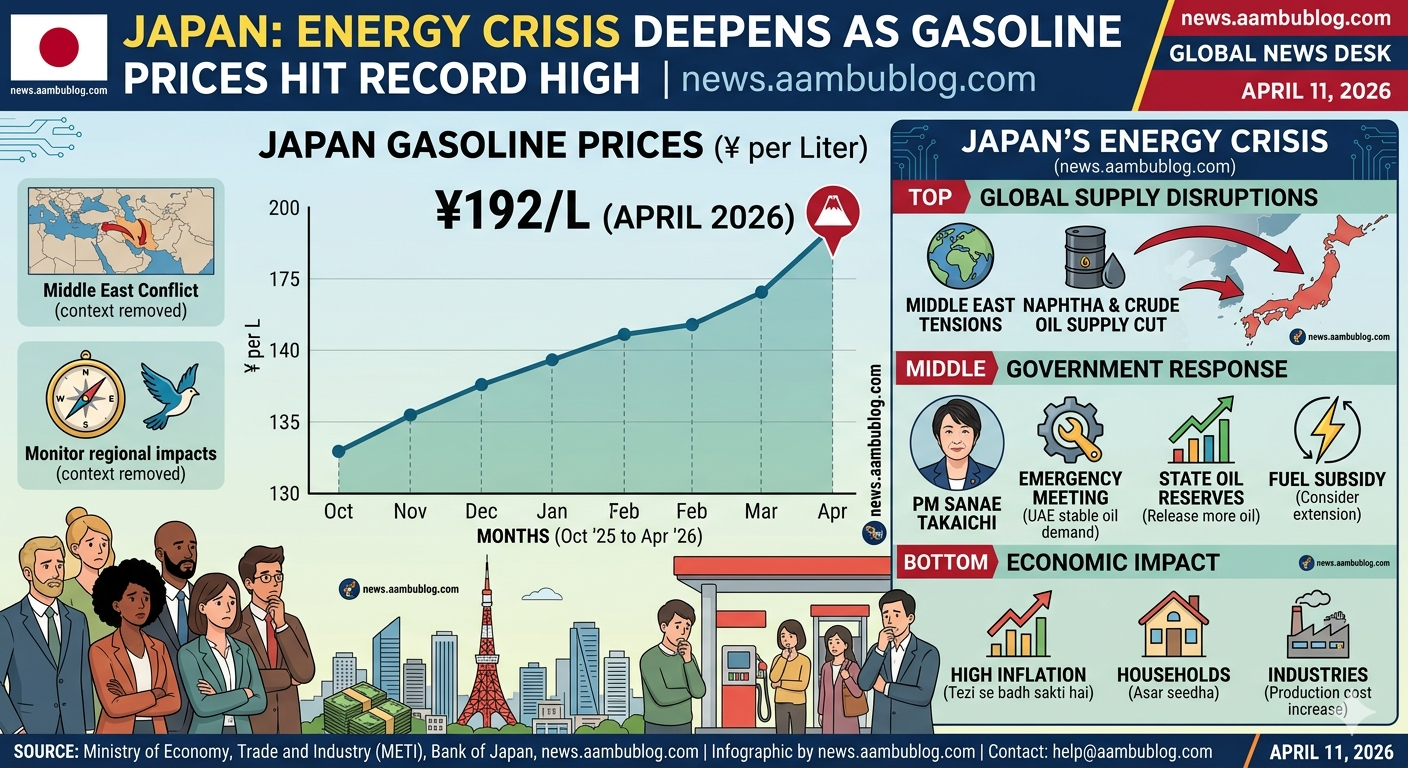
Japan, the world’s fourth-largest economy, is facing a severe energy emergency. As of this week, the nationwide average price for regular gasoline reached a historic peak of ¥190.80 per liter, sent soaring by the ongoing conflict in the Middle East and the effective closure of the Strait of Hormuz.
Despite aggressive government intervention, the cost of living for Japanese households is rising at its fastest pace in decades.
1. Why Prices are Skyrocketing
Japan is almost entirely dependent on imported crude oil, with over 95% of its supply originating from the Middle East.
- The Hormuz Blockage: The primary cause is the disruption in the Strait of Hormuz, through which nearly 74% of Japan’s oil passes. With tankers unable to transit safely, supply has plummeted.
- Global Crude Spike: International crude oil futures have crossed record levels due to the U.S.-Iran conflict, directly impacting retail pumps in Tokyo, Osaka, and beyond.
- Subsidy Exit: Earlier this year, the government began phasing out long-standing fuel subsidies, though they have now been forced to reintroduce them to prevent a total economic collapse.
2. PM Sanae Takaichi Announces Emergency Oil Release
In a decisive move today, Prime Minister Sanae Takaichi held a ministerial meeting to address the shortage.
- State Reserves: The government has approved the release of an additional 20 days’ worth of oil from national strategic stockpiles. This is the second such release since the conflict began in February.
- Current Buffer: Japan currently holds roughly 230 days of oil in reserve. The PM stated that while the situation is critical, there is enough supply to prevent a complete blackout in the short term.
- Diversification: Japan is urgently seeking alternative routes, including securing oil from Saudi Arabia’s Red Sea coast (Yanbu) to bypass the troubled Strait of Hormuz.
3. Impact on Japanese Households
The crisis is hitting the average citizen hard. In some prefectures like Yamagata, prices have even touched ¥198.50 per liter.
- Transportation Costs: Logistics companies are increasing surcharges, leading to higher prices for food and daily essentials.
- Inflation Pressure: The Bank of Japan is closely monitoring the situation as inflation threatens to stay well above the 2% target, potentially forcing a shift in monetary policy.
4. Government Targets ¥170 Ceiling
The Ministry of Economy, Trade, and Industry (METI) has resumed a massive subsidy program, providing roughly ¥30.20 per liter to petroleum suppliers.
- The Goal: The administration aims to stabilize retail prices back down to the ¥170 per liter mark within the next two weeks.
- The Cost: Economists estimate that if global oil prices remain at these levels, the subsidy program could cost the Japanese government over ¥300 Billion per month.
Global Energy Stats (April 2026)
| Metric | Current Status |
|---|---|
| Average Gasoline Price (Japan) | ¥190.80 / Liter |
| Government Target Price | ¥170.00 / Liter |
| National Oil Reserves | 230 Days Remaining |
| Middle East Dependency | 95% of Total Crude |
Quick FAQ: Japan Fuel Crisis
Q1. Is there a petrol shortage in Japan?
While prices are at a record high, there is no widespread shortage at pumps yet, thanks to the release of state strategic reserves.
Q2. When will prices come down?
The government expects the new subsidies to reflect at the pump within 7 to 14 days, aiming for a reduction toward the ¥170 level.
Q3. How is this affecting Japan’s economy?
High fuel costs are driving up “Imported Inflation,” making electricity, gas, and groceries more expensive for everyone.
For real-time energy updates and global market analysis: news.aambublog.com
Contact: help@aambublog.com