In a high-stakes diplomatic move, Japanese Prime Minister Sanae Takaichi held a 25-minute emergency phone call with Iranian President Masoud Pezeshkian on Wednesday, April 8, 2026. This move comes immediately after the historic 14-day ceasefire between the United States and Iran, brokered by Pakistan.
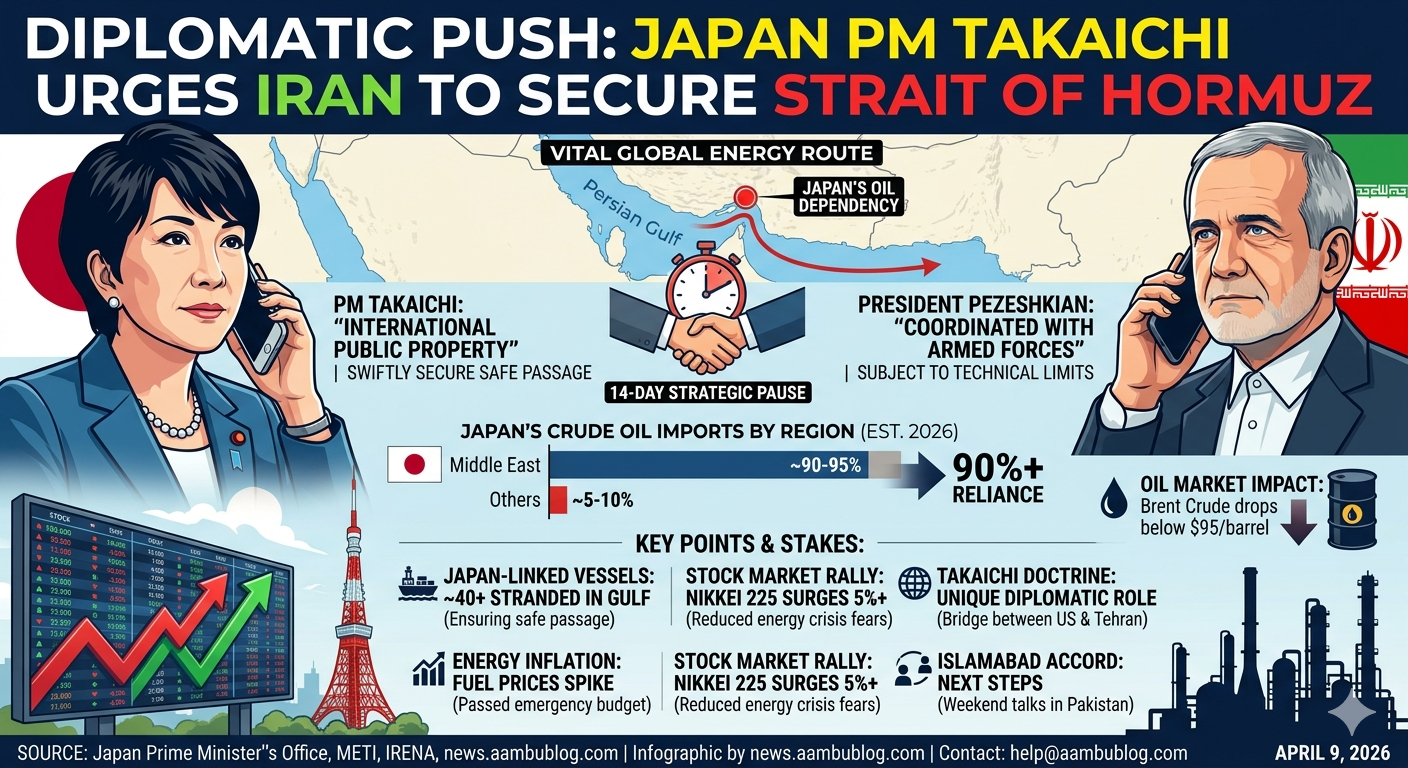
Japan, which relies on the Middle East for over 90% of its crude oil imports, is leading the international effort to ensure that the current “pause” in fighting translates into a secure global energy supply.
1. “A Global Public Property”: Japan’s Stern Message
Prime Minister Takaichi did not mince words during her conversation with the Iranian leader.
- The Arterial Link: She emphasized that the Strait of Hormuz is not just a regional waterway but a “vital artery of global logistics” and an “international public property.”
- Immediate Security: Takaichi urged the Iranian President to swiftly secure safe passage for ships of all nations, noting that over 40 Japan-linked vessels are currently stranded in the Persian Gulf due to the de facto blockade.
2. Navigating the Ceasefire Terms
While Japan has hailed the two-week ceasefire as a “positive move,” the government remains cautious.
- Iranian Conditions: During the call, President Pezeshkian indicated that safe passage would be possible for the next two weeks, but warned that it must be “coordinated with Iran’s Armed Forces” and would be subject to “technical limitations” (referring to sea mines).
- Final Agreement: Takaichi emphasized that a temporary truce is not enough; Japan is pushing for a Final Peace Agreement to be reached during the upcoming talks in Pakistan.
3. The Economic Stakes for Japan
The effective closure of the Strait since February has been a massive blow to the Japanese economy:
- Energy Inflation: Fuel prices in Tokyo and Osaka have spiked to record levels, forcing the government to pass an emergency stopgap budget earlier this month.
- Industrial Impact: Japanese manufacturing giants are facing rising shipping costs as they are forced to reroute goods around the Cape of Good Hope.
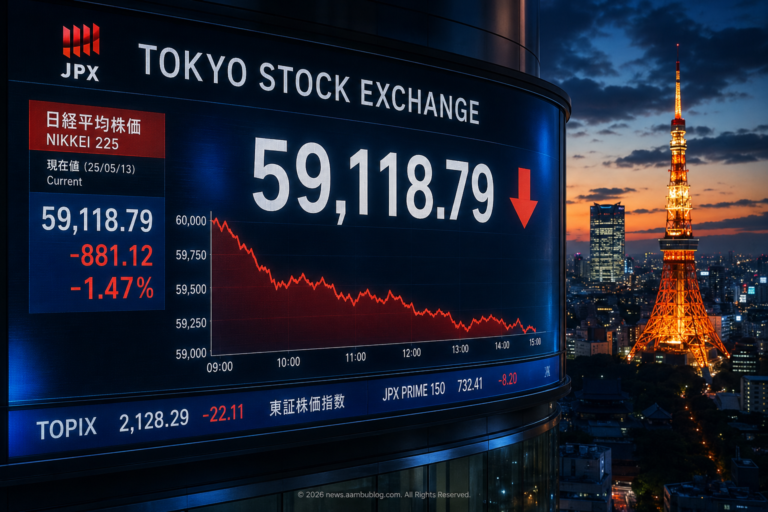
- Stock Market Reaction: Following the news of Takaichi’s diplomatic push and the US-Iran truce, the Nikkei 225 responded with a massive rally, closing up over 5% as investor fears eased.
4. Japan’s Role as an “Energy Bridge”
Unlike many Western nations, Japan has historically maintained a unique diplomatic relationship with Iran.
- The “Takaichi Doctrine”: The Prime Minister is using this relationship to act as a bridge between the Trump administration and Tehran.
- Collaborative Effort: Japan’s Chief Cabinet Secretary Minoru Kihara confirmed that Tokyo is working in “lock-step” with G7 partners to ensure that the Strait remains open once the 14-day window closes.
Frequently Asked Questions (FAQ)
Q1. Why is the Strait of Hormuz so important to Japan?
Japan is almost entirely dependent on energy imports. More than 90% of its oil travels through this narrow chokepoint. Any blockage effectively halts the Japanese economy.
Q2. Who is the Iranian President mentioned in the call?
Masoud Pezeshkian is the current President of Iran. He is currently navigating a delicate balance between domestic military pressure and international economic sanctions.
Q3. What was the outcome of the phone call?
Both leaders agreed to “keep in close communication.” While no permanent deal was signed, the call served as a critical verification that Iran is willing to allow Japanese and international ships to pass during the ceasefire.
Follow news.aambublog.com for more global diplomatic updates. Contact: help@aambublog.com