
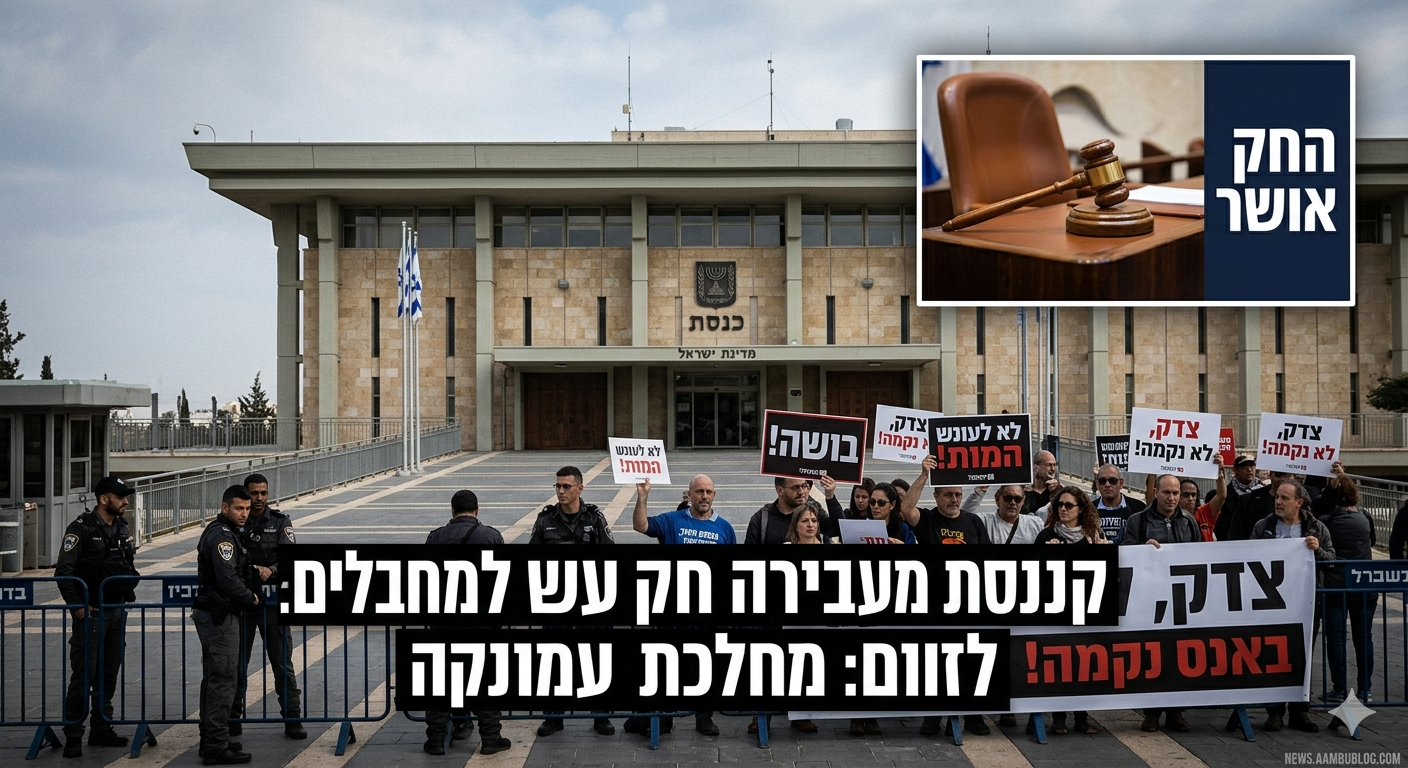
In a historic and highly contentious move, the Israeli Knesset has officially passed a new law permitting the use of the death penalty for individuals convicted of terrorist acts. This legislative milestone marks a fundamental shift in Israel’s penal code, which has rarely seen capital punishment since the nation’s establishment in 1948.
The Provisions of the Legislation
Introduced with the central aim of creating a powerful deterrent against militant attacks, the new law grants courts the authority to sentence to death any person convicted of a “fatal act of terrorism against Israeli citizens.” Prior to this enactment, the death penalty existed largely as a symbolic or theoretical possibility, primarily reserved for cases of Nazi war criminals, with the sole execution being that of Adolf Eichmann in 1962. The final vote passed 55-9, solidifying the hard-right coalition’s agenda.
A Hotly Debated Change
The law has deeply polarized both the Israeli domestic landscape and the international arena. Proponents of the legislation, led by members of the coalition government, argue it is a necessary instrument of national security and a justifiable means of justice for the families of terror victims. They contend that the severity of the punishment must match the severity of the crime to effectively deter future potential perpetrators.
Conversely, a wide spectrum of critics, including human rights organizations and legal experts, have raised significant ethical, legal, and strategic concerns. They argue that capital punishment violates fundamental human rights principles and internationally accepted democratic norms. Moreover, some security analysts suggest the death penalty may not be the effective deterrent its advocates claim, potentially leading to increased radicalization by creating “martyrs,” which could incite further violence rather than prevent it.
International and Regional Backlash
The Arab world immediately condemned the move. The Palestinian Authority labeled the law a “dangerous escalation” and an obstacle to any future peace dialogue. International organizations, including the United Nations and the European Union, have reiterated their categorical opposition to capital punishment, calling on Israel to reverse the decision. Within Israel, the political opposition warns that this step risks isolating the country internationally at a time of high geopolitical tension. The long-term impact on Israel’s judicial standing and international relations remains to be seen.
Frequently Asked Questions (FAQs)
1. When was the last time Israel executed someone?
The last execution carried out by the State of Israel was in 1962, following the conviction of Nazi war criminal Adolf Eichmann.
2. Is this law applicable to all criminal acts?
No. The scope of this new law is specifically restricted to acts of terrorism that result in the death of Israeli citizens. It does not apply to non-political criminal homicides.
3. What happens next?
The law is now active, but it faces imminent legal challenges. Human rights groups and opposition figures are preparing petitions for the Israeli Supreme Court, seeking to overturn the legislation on constitutional grounds.
4. How will this affect international relations?
The law has already drawn condemnation from key international allies. If implemented, it could complicate Israel’s diplomatic relations, particularly with the European Union and the United Nations, which staunchly oppose the death penalty.