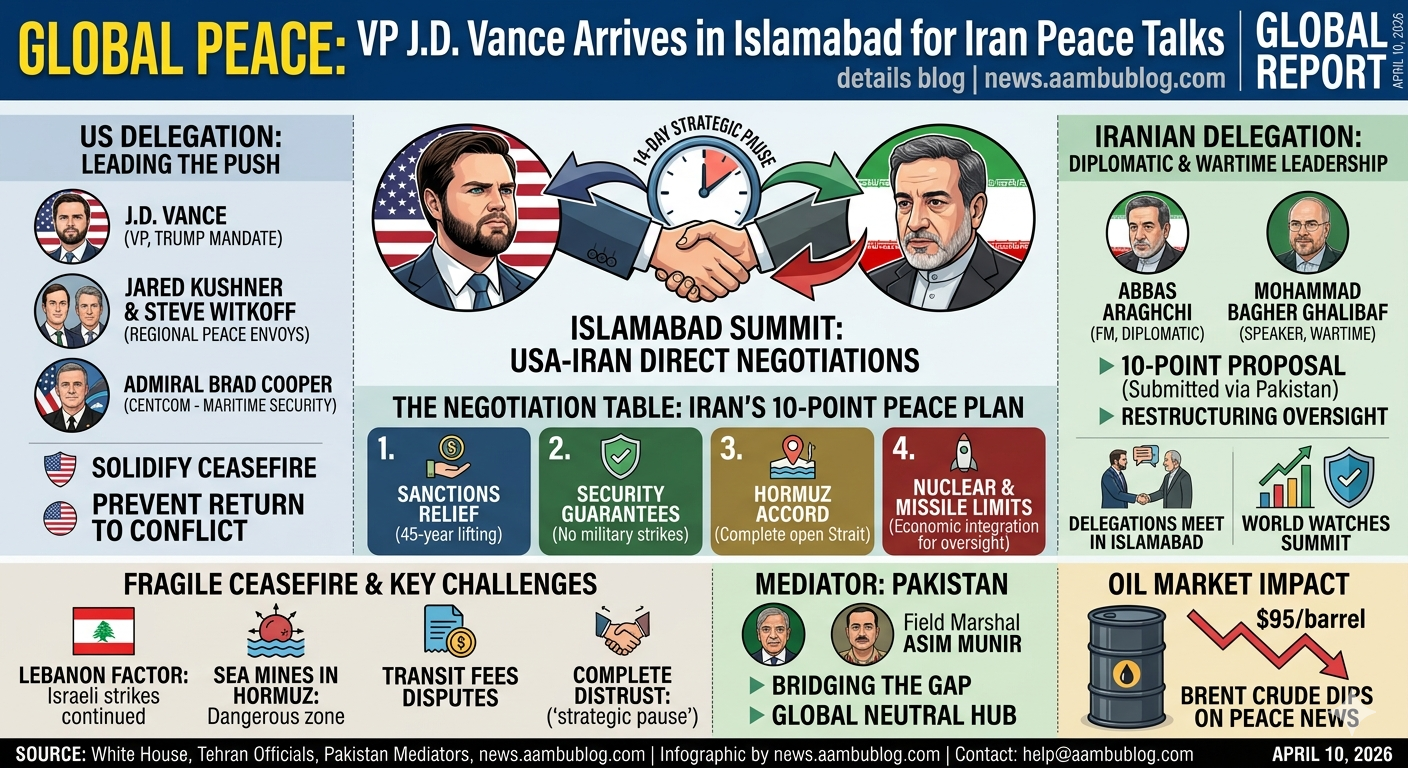
The eyes of the world are on Islamabad today, April 10, 2026, as the United States and Iran commence direct, in-person negotiations. Led by Vice President J.D. Vance, the American delegation seeks to solidify the “double-sided ceasefire” announced earlier this week and prevent a return to the devastating conflict that has shaken the Middle East.
1. The Delegation: Heavyweights at the Table
The White House has dispatched a high-powered team to ensure the success of these talks:
- J.D. Vance (Vice President): Leading the diplomatic push with a clear mandate from President Trump.
- Jared Kushner & Steve Witkoff: The architects of previous regional peace frameworks are present as special envoys.
- Admiral Brad Cooper (CENTCOM): Providing the necessary military and maritime security expertise.
On the Iranian side, the delegation is expected to be led by Foreign Minister Abbas Araghchi and Speaker of Parliament Mohammad Bagher Ghalibaf, representing both the diplomatic and wartime leadership of Tehran.
2. The Negotiating Table: Iran’s 10-Point Proposal
The foundation for today’s discussions is a 10-point peace plan submitted by Iran through Pakistani mediators. Key pillars of the proposal include:
- Sanctions Relief: A total lifting of US economic and secondary sanctions dating back 45 years.
- Security Guarantees: Explicit guarantees against future military strikes on Iranian soil.
- The Hormuz Accord: A framework for the “complete and safe opening” of the Strait of Hormuz, with tacit recognition of Iran’s role in managing transit security.
- Nuclear & Missile Limits: A restructured framework for oversight of Iran’s strategic programs in exchange for economic integration.
3. The Fragile Ceasefire: Challenges in the Background
Despite the optimism in Islamabad, the truce remains extremely precarious:
- The “Lebanon Factor”: Iran has accused Israel of violating the spirit of the ceasefire through “Operation Eternal Darkness” in Lebanon. The US has maintained that Lebanon was not part of the initial 14-day truce.
- Strait of Hormuz: While traffic has seen a slight uptick, the threat of sea mines and Iran’s demand for “transit fees” remain major points of contention.
- Deep Mistrust: Both sides have entered the room with what officials call “complete distrust,” emphasizing that this is a “strategic pause” rather than a final resolution.
4. Pakistan: The Global Neutral Hub
Pakistan’s role as the mediator has been instrumental. Prime Minister Shehbaz Sharif and Field Marshal Asim Munir have been credited with bridging the gap between Washington and Tehran, leveraging Pakistan’s unique ties with both nations to provide a secure environment for these historic talks.
Frequently Asked Questions (FAQ)
Q1. Why is the summit being held in Islamabad?
Pakistan has maintained a neutral stance throughout the conflict and shares a border with Iran while remaining a key US ally. This makes it the only viable neutral ground for direct talks.
Q2. What happens if the 14-day ceasefire expires without a deal?
If no “Phase 2” agreement is reached, both the US and Iran have indicated that they are prepared to resume military operations. President Trump has stated the truce is contingent on the permanent opening of global oil routes.
Q3. How are global oil markets reacting?
Brent Crude prices have already dipped below $95/barrel on the news of Vance’s arrival. A successful summit could see prices stabilize further, while a collapse in talks would likely cause an immediate spike.
For real-time updates on the Islamabad Accord: news.aambublog.com
Contact: help@aambublog.com