By Global Strategic Desk | April 18, 2026
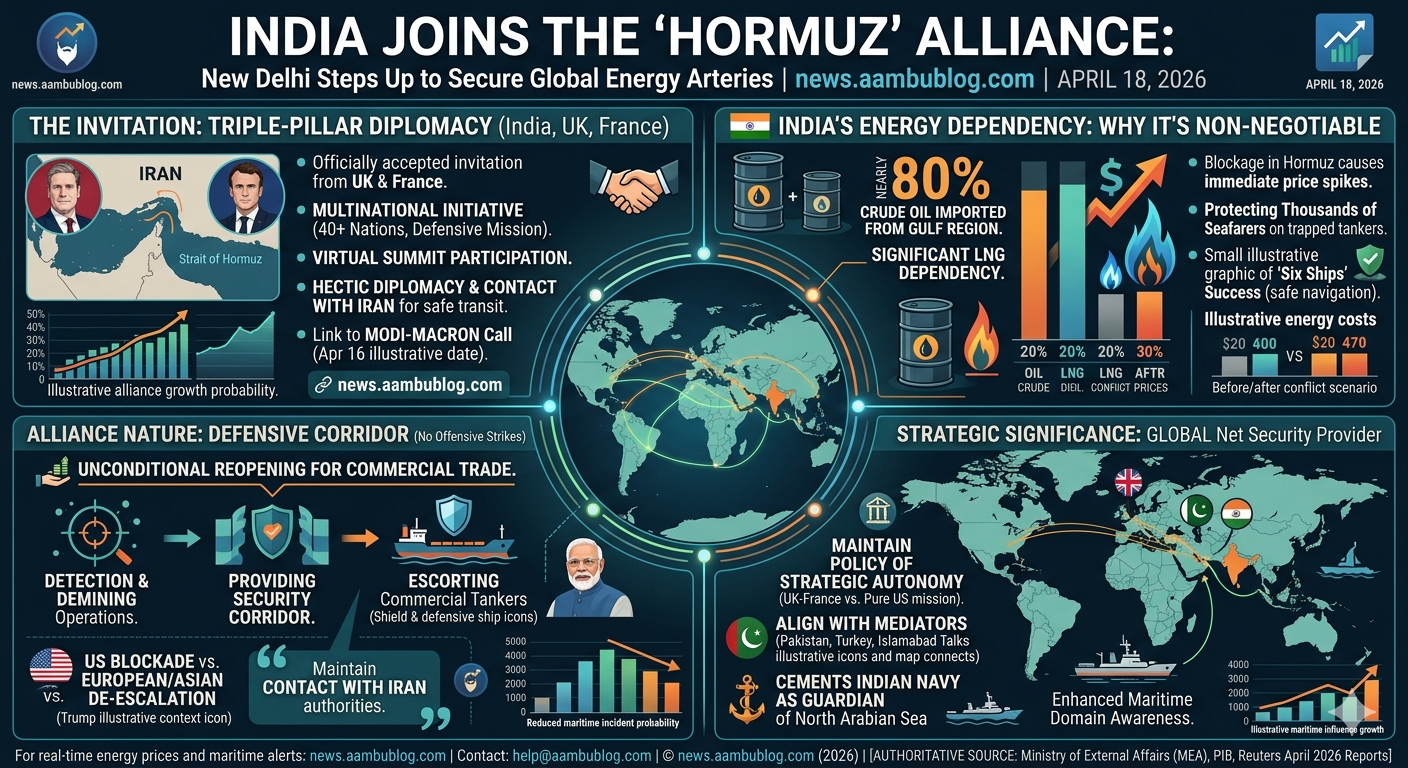
In a major diplomatic move that underscores India’s growing role as a “Net Security Provider” in the Indian Ocean Region, the Government of India has officially accepted an invitation from the United Kingdom and France to join a new multinational maritime initiative. This alliance is dedicated to ensuring the “uninterrupted navigation” and security of the Strait of Hormuz amidst the ongoing West Asia crisis.
1. The ‘Hormuz’ Invitation: A Triple-Pillar Diplomacy
The Ministry of External Affairs (MEA) spokesperson, Randhir Jaiswal, confirmed on Friday evening that India has been asked to contribute to a collaborative plan aimed at stabilizing the Persian Gulf.
- The Lead: The initiative is co-led by British PM Keir Starmer and French President Emmanuel Macron.
- The Summit: India is now part of a 40-nation virtual summit focused on maritime freedom.
- The Context: This follows a high-level phone call between PM Narendra Modi and President Macron on April 16, where both leaders agreed on the “urgent need” to restore safety for commercial shipping.
2. Why India’s Participation is Non-Negotiable
India’s entry into this alliance is driven by pure economic survival and strategic autonomy:
- Energy Dependency: India imports nearly 80% of its crude oil and a significant portion of its LNG from the Gulf region. Any blockage in the Strait of Hormuz leads to an immediate spike in petrol and diesel prices at home.
- Protecting Seafarers: Thousands of Indian seafarers work on international tankers currently trapped or under threat in the region.
- The ‘Six Ships’ Success: Using initial diplomatic channels, India has already managed to navigate six Indian-flagged vessels safely through the Strait over the last week. Joining the alliance formalizes this protection.
3. The Nature of the Alliance: Defensive and Diplomatic
Unlike traditional military blocs, the UK-France led initiative—tentatively called the “Strait of Hormuz Maritime Freedom of Navigation Initiative”—is being positioned as a strictly defensive mission.
- Demining Operations: The coalition is expected to focus on detecting and removing sea mines that have disrupted traffic.
- Tanker Escorts: Providing a “security corridor” for commercial vessels without engaging in offensive strikes.
- The ‘Trump’ Variable: While European and Asian nations move toward de-escalation, Donald Trump has stated that the U.S. blockade will continue until a “full deal” is signed. India’s presence provides a balancing act between the U.S. pressure and European diplomacy.
4. Strategic Significance: India as a Global Player
By joining this UK-France initiative rather than a purely U.S.-led mission, India is maintaining its policy of Strategic Autonomy.
- Mediation Hub: It aligns India with other mediators like Pakistan and Turkey, who are working on the diplomatic front in Islamabad.
- Maritime Authority: It cements the Indian Navy’s reputation as the primary guardian of the North Arabian Sea.
Quick FAQ: India & The Hormuz Alliance
Q1. Will the Indian Navy be deployed in the Strait?
While planning is underway, India is currently focusing on information sharing and diplomatic coordination. Any military deployment would likely be for defensive escorting of Indian-flagged tankers.
Q2. How does this affect India’s relationship with Iran?
India maintains “hectic diplomacy” with Tehran. The MEA clarified that India is in constant touch with Iranian authorities to ensure “safe transit,” positioning itself as a neutral party interested only in trade, not conflict.
Q3. Is this alliance different from the U.S. naval mission?
Yes. This initiative aims for unconditional reopening of the Strait for commercial trade, whereas the U.S. mission is tied to broader political and nuclear negotiations with Iran.
For real-time maritime alerts and oil price impact: news.aambublog.com
Contact: help@aambublog.com