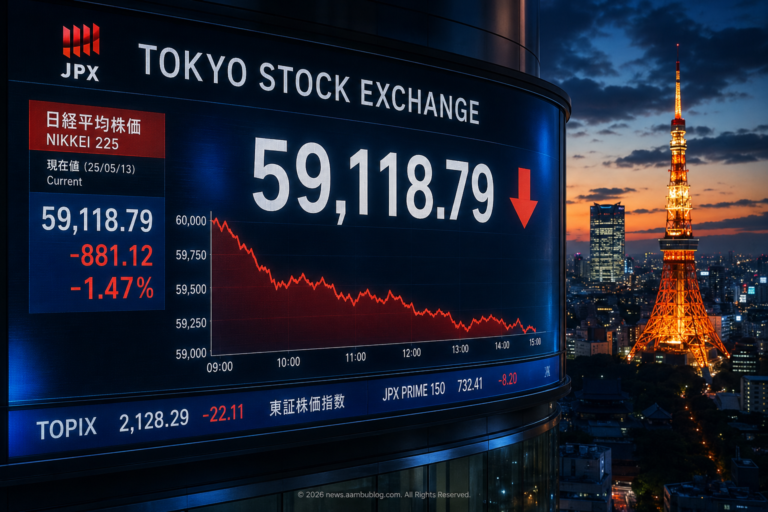

By Tokyo Bureau | April 25, 2026
In an unprecedented emergency press conference this morning, Bank of Japan (BoJ) Governor Kazuo Ueda shattered weeks of regulatory silence, sending shockwaves through global currency markets. Facing a relentless assault on the Yen, which had finally breached the “psychological floor” of 160 against the US Dollar, Governor Ueda confirmed that Tokyo is prepared to deploy “unlimited” financial bazookas to prevent a total currency collapse.
Ueda’s statement, moving beyond the traditional “watching with high urgency” rhetoric, was a calculated “Shock and Awe” tactic aimed directly at the algorithmic and human speculators who have been shorting the Japanese currency.
1. The ‘Forex Bazooka’ Unlocked: What ‘Unlimited’ Means
The defining moment of the conference was Ueda’s use of the term “Unlimited.”
- No Ceiling on Buying: When asked about the potential scale of the intervention, Ueda stated, “Our commitment to market stability is absolute. We will use every tool, in cooperation with the Ministry of Finance, and there is no ceiling to the amount of foreign currency reserves we are prepared to utilize.”
- Japan’s Ammunition: Japan holds $1.3 Trillion in foreign exchange reserves—the world’s second-largest stockpile. “Unlimited” suggests that the BOJ is willing to burn through a significant portion of this $1.3 Trillion to send USD/JPY spiraling downwards, liquidating billions in short positions.
2. The ‘Hormuz Trap’ and ‘Negative Supply Shock’
The current intervention is fundamentally different from previous ones because it is fighting a Real Economic Reality, not just speculation.
- The Energy Crisis: As detailed in our previous reports, the ongoing conflict and blockade in the Strait of Hormuz have pushed Brent Crude over $100. Japan must buy US Dollars to pay its soaring energy import bill.
- Mechanical Pressure: This constant, massive commercial demand for Dollars creates a natural, relentless downward pressure on the Yen. Speculators were betting that the BoJ could not fight this fundamental supply-demand imbalance forever. Ueda is now betting that they can.
3. Market Reversal: USD/JPY Liquidation
The impact of the word “Unlimited” was instantaneous.
- Immediate Drop: Within seconds of the news breaking, the USD/JPY pair, which was trading precariously at 160.05, collapsed to a low of 158.20, a massive 185-pip move.
- Speculator Uncertainty: The market is now terrified of “Gap Downs.” Any trader holding a leveraged position betting on a weak Yen could find themselves completely wiped out if the BoJ suddenly triggers a massive sell-off.
Detailed Q&A: The BOJ’s Unprecedented Gamble
Q1. Why is the word ‘Unlimited’ so significant in financial terms? In currency markets, intervention is usually a carefully guarded secret or measured in specific tranches (e.g., $10-20 Billion at a time). By saying “Unlimited,” Governor Ueda is signaling that the BoJ has removed all constraints. It’s like bringing a nuclear weapon to a gunfight; it forces every market participant to rethink their strategy.
Q2. What actually happens during a BOJ intervention? The BOJ will instruct commercial banks to sell a specific amount of US Dollar assets (like US Treasury Bonds) and simultaneously buy a massive volume of Japanese Yen on the spot market. This sudden, massive demand for Yen artificially drives up its price, “shocking” the market.
Q3. Is this a sustainable long-term strategy for Japan? No. It is a “holding action.” Selling forex reserves is an emergency measure. If the underlying cause (the Hormuz energy crisis) does not resolve, or if US interest rates remain high, Japan will eventually bleed too many reserves. The ultimate solution must be a cessation of the blockade, which would reduce Japan’s energy import costs.
Q4. How does this affect Indian tech/business bloggers? An intermediate weak Yen is actually good for India. Japanese tech and electronics imports become cheaper. However, if the BoJ’s intervention is too successful and the Yen becomes extremely strong, Japanese products in the Indian market might see a sudden price hike. Furthermore, global stability benefits India; a total Yen crash would disrupt global trade.
Copyright: © news.aambublog.com (2026)