By Global Strategic Desk | April 22, 2026
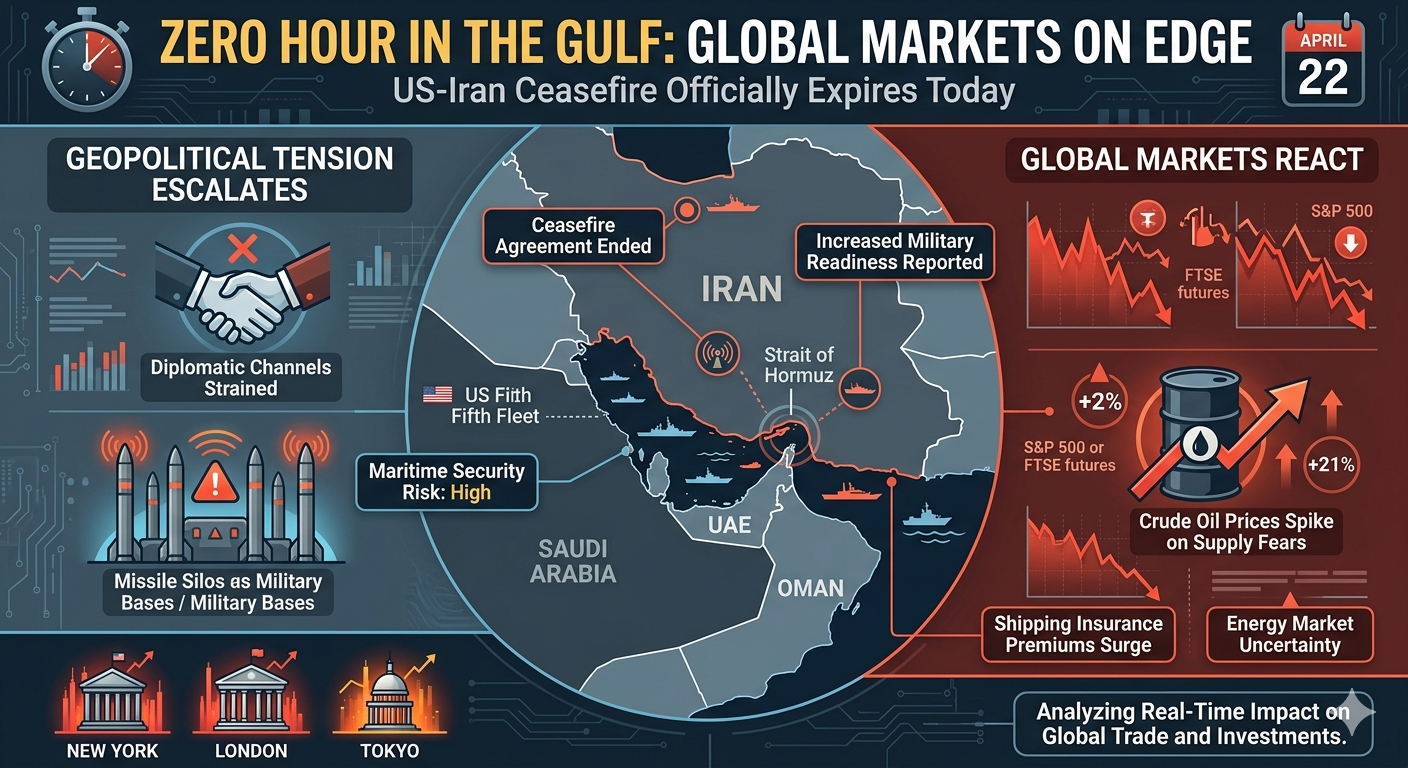
The clock has officially run out. Today, April 22, 2026, marks the expiration of the fragile two-week ceasefire between the United States and Iran. With peace talks in Islamabad having collapsed earlier this week over “excessive demands” and maritime disputes, the Persian Gulf is once again staring down the barrel of active military confrontation.
As diplomatic channels go dark, global financial markets, shipping conglomerates, and regional allies are bracing for the immediate fallout of what comes next.
1. The ‘Zero Hour’ Scenario: What Happens Now?
The expiration of the ceasefire removes the temporary safety net that was holding back direct hostilities in the region.
- US Naval Posture: The US Fifth Fleet, currently stationed in Bahrain, has reportedly moved to “Condition Alpha,” signaling maximum readiness. The Trump administration has warned that any Iranian attempt to disrupt commercial shipping will be met with overwhelming force.
- Iran’s Strait of Hormuz Threat: In retaliation to the continued US naval blockade and the recent seizure of an Iranian-flagged cargo vessel, Tehran’s Islamic Revolutionary Guard Corps (IRGC) has threatened to close the Strait of Hormuz entirely—a critical chokepoint through which 20% of the world’s daily oil consumption passes.
2. Immediate Economic Fallout
The mere anticipation of the ceasefire expiring has already sent shockwaves across global trading floors.
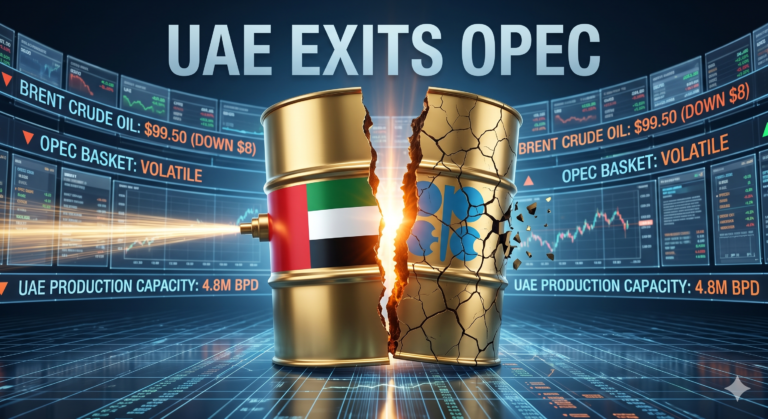
- Crude Oil Surge: Brent Crude futures spiked by nearly 4% in early Asian trading today, crossing the $112 per barrel mark. Analysts warn that an actual exchange of fire could push prices beyond $125 within 48 hours.
- Supply Chain Paralysis: Major international shipping firms have announced a temporary halt on all transits through the Gulf of Oman. War-risk insurance premiums for tankers have reached levels not seen since the Tanker War of the 1980s, threatening to drastically increase the cost of global logistics.
3. The Last-Minute Diplomatic Scramble
While public negotiations have failed, frantic “back-channel” diplomacy is still underway.
- Regional Mediators: Oman and Qatar are reportedly working around the clock to secure a 72-hour emergency extension to the ceasefire.
- The Sticking Point: The primary deadlock remains the seized Iranian cargo ship. Iran refuses to return to the negotiating table until the vessel is released, while the US insists on maintaining its maritime enforcement operations.
Detailed Q&A: The Ceasefire Expiration
Q1. Has either side fired any shots today?
As of this morning, no direct military engagements have been reported. Both sides appear to be engaged in a high-stakes standoff, waiting to see who makes the first move now that the truce has expired.
Q2. How does this impact Asian economies like India and Japan?
Asian economies are highly vulnerable because they rely heavily on Middle Eastern crude. India, having just completed a massive evacuation of its citizens, is now focusing on energy security. A prolonged conflict or a blocked Strait of Hormuz would cause massive import inflation for these nations.
Q3. Is there a possibility of an undeclared extension?
Yes. Sometimes, even when a formal ceasefire expires, both militaries enter an “undeclared pause” where they refrain from attacking while back-channel diplomats try to salvage a deal. However, this situation is incredibly volatile, and a single miscalculation by a patrol boat or drone could ignite a wider war.
Fact Sheet: The Gulf Crisis Dashboard (April 22)
| Metric | Current Status |
|---|---|
| Ceasefire Status | EXPIRED (As of 00:00 GMT, April 22) |
| Peace Talks | Suspended indefinitely |
| Brent Crude Price | Surging past $112 / Barrel |
| Strait of Hormuz | Open, but highly restricted |
| Key Mediators Active | Oman, Qatar |
For real-time geopolitical alerts and energy market tracking: news.aambublog.com
Contact: help@aambublog.com