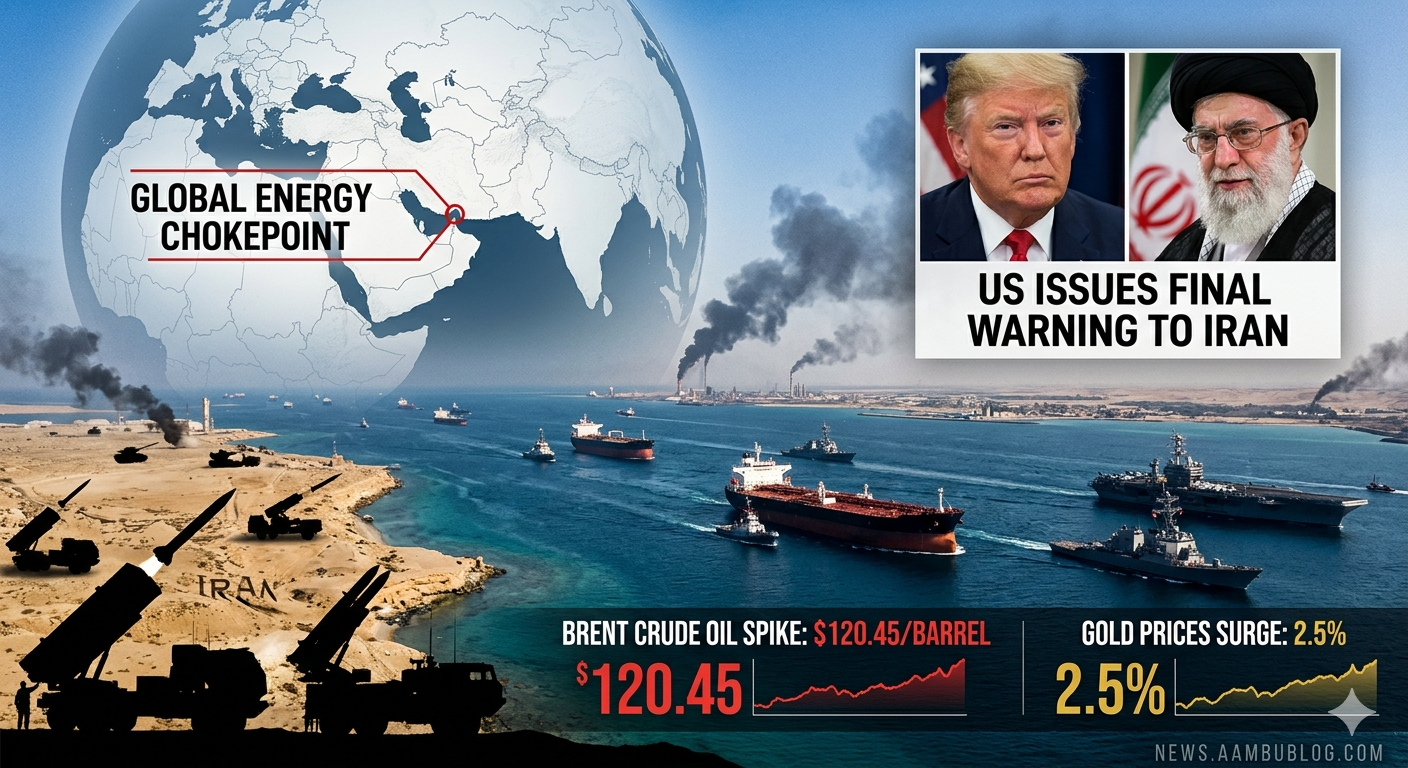
The geopolitical landscape shifted dramatically today as U.S. President Donald Trump issued a stern, “final warning” to the Iranian government. The ultimatum centers on the Strait of Hormuz, one of the world’s most critical maritime chokepoints, following a series of military and naval escalations in the Persian Gulf.
The Conflict Overview
Tensions reached a breaking point after reports surfaced that Iranian naval forces intercepted and briefly detained two commercial oil tankers near the UAE coast. In a televised address from the Oval Office, the President stated that the United States would initiate “devastating action” against Iran’s domestic energy infrastructure and military assets if international shipping lanes are not immediately cleared and kept secure for global trade.
”The era of strategic patience is over. If the Strait of Hormuz is not kept open for the free flow of global commerce, the consequences for the Iranian regime will be historical and permanent.” — Official Statement from the White House
Why the Strait of Hormuz Matters
The gravity of this situation lies in the sheer volume of global trade that passes through this narrow waterway. Approximately 21% of the world’s total petroleum consumption passes through this strait every single day. Furthermore, nearly a third of the world’s liquefied natural gas (LNG) originates from producers who rely on this specific route. Because the shipping lane is only 2 miles wide at its narrowest point, it is considered the world’s most sensitive economic bottleneck.
Current Economic Impact
The market reaction has been instantaneous and severe:
- Brent Crude: Oil prices spiked to $120.45 per barrel within hours of the President’s announcement.
- Gold Prices: Surged by 2.5% as investors rushed to move their capital into safe-haven assets.
- Shipping Insurance: Insurance premiums for cargo vessels operating in the Persian Gulf have tripled in the last 24 hours, adding massive costs to global logistics.
International Reactions
The G7 Bloc has called for an emergency virtual summit today to discuss global energy security and the potential release of strategic petroleum reserves to stabilize the market. Meanwhile, Iranian officials have dismissed the U.S. warning as “psychological warfare,” maintaining their right to patrol what they claim are their territorial waters. The United Nations Secretary-General has urged “maximum restraint” from both sides to avoid a full-scale military confrontation that could destabilize the entire global economy.
Frequently Asked Questions (FAQs)
1. Will this cause gas prices to rise immediately?
Yes, retail fuel prices usually reflect global crude spikes within 48 to 72 hours. A significant rise at the pump is expected globally by the upcoming weekend.
2. Is a military conflict inevitable?
Not necessarily. While military posturing is at its highest level in decades, diplomatic channels are still active behind the scenes. However, the risk of a miscalculation on either side remains high.
3. How does this affect global trade beyond oil?
Any blockage in the Strait of Hormuz delays the shipping of electronics, raw materials, and consumer goods. This leads to supply chain disruptions and higher inflation for everyday products.
4. What is the UN’s stand on this?
The United Nations is pushing for a diplomatic resolution, fearing that a war in the Middle East would lead to a global recession and a humanitarian crisis.