The modern geopolitical landscape of West Asia is currently dominated by a single, terrifying reality: the long-standing “shadow war” between Israel and Iran has exploded into a high-stakes, direct confrontation. This is no longer just a series of isolated proxy battles; it is a full-fledged crisis that threatens global stability, with massive implications for energy security and international trade.
As the conflict intensifies, News.aambublog.com provides a detailed breakdown of the recent escalations, the strategic motivations, and why this volatile situation matters profoundly for India.
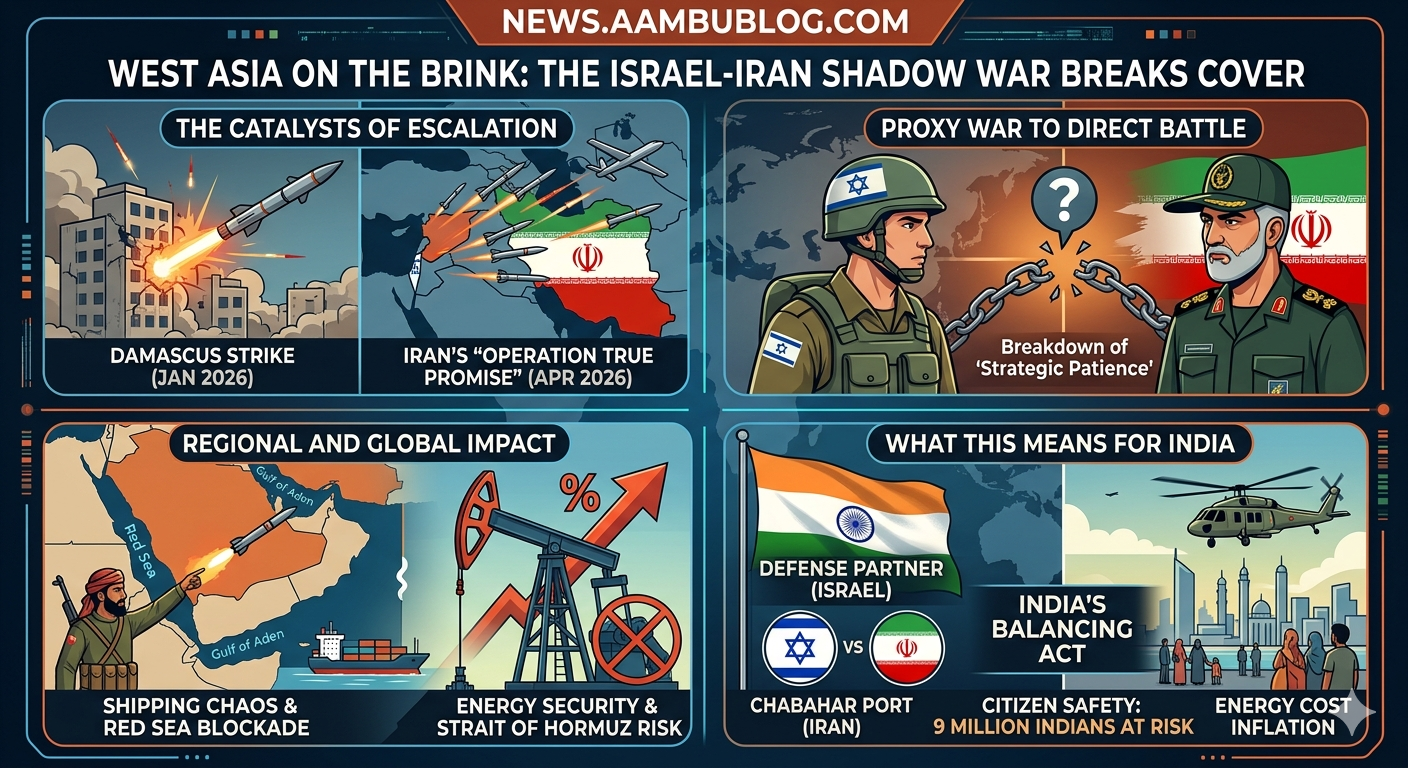
1. The Catalysts of Escalation
While tensions have existed for decades, the current crisis can be traced back to two crucial events in early 2026 that shattered the existing diplomatic boundaries:
- The Damascus Strike (January 2026): Israel launched a precise missile strike on an Iranian diplomatic compound in Damascus, Syria. The attack resulted in the assassination of several high-ranking officers of the Islamic Revolutionary Guard Corps (IRGC), including Major General Mohammad Reza Zahedi. Iran viewed this as a direct assault on sovereign territory, promising a “crushing response.”
- Iran’s Retaliatory “Operation True Promise” (April 2026): For the first time ever, Iran launched a massive, coordinated attack directly from its soil against Israel. Utilizing a synchronized barrage of over 300 drones, cruise missiles, and ballistic missiles, Iran aimed to overwhelm Israel’s advanced “Iron Dome” air defense system.
2. The Strategic Shift: Proxy War to Direct Battle
The significant change in West Asia is the breakdown of ‘Strategic Patience.’ For years, Iran fought Israel primarily through regional allies or “proxies”—Hezbollah (Lebanon), Hamas (Gaza), and the Houthis (Yemen).
Today, that strategy has evolved:
- Direct Deterrence: By launching attacks from its own territory, Iran is attempting to establish a new red line: that any attack on Iranian assets, anywhere, will be met with a direct strike on Israel.
- The Israeli Response: Israel, under a unity government, has adopted a policy of “calculated asymmetry.” Every Iranian action is met with a stronger, targeted counter-response, focusing on Iranian missile facilities, nuclear research centers, and IRGC intelligence hubs.
3. Regional and Global Impact
The Israel-Iran dynamic is not contained within the Levant; it is reshaping global alliances.
- Shipping Chaos: Houthi militants in Yemen, acting on Iran’s instructions, continue to target commercial shipping vessels in the Red Sea and the Gulf of Aden. This has effectively blocked the vital Suez Canal route, forcing global cargo to take the much longer and costlier path around Africa.
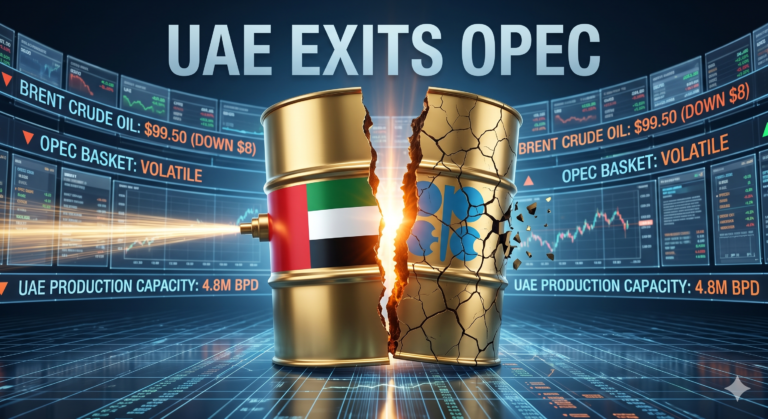
- Energy Security: The conflict puts critical oil and gas pipelines across the region at risk. Concerns about the potential blockade of the Strait of Hormuz—the narrow waterway through which 20% of the world’s global oil supply flows—have caused volatile spikes in oil prices, threatening inflation in energy-dependent nations.
4. What This Means for India
India has a difficult and essential balancing act to perform in this crisis. Both Israel and Iran are crucial strategic partners.
- Israel: India’s third-largest defense supplier and a vital technology partner.
- Iran: Historically a key energy supplier and a crucial partner for access to the Chabahar Port, which provides India with an overland trade route to Afghanistan and Central Asia, bypassing Pakistan.
A wider war would be a nightmare for India:
- Energy Costs: A spike in oil prices would widen India’s trade deficit and boost domestic inflation.
- Citizen Safety: Over 9 million Indian citizens live and work in the Gulf region. Any large-scale escalation would put them in harm’s way, potentially requiring a massive evacuation effort, or “Operation Ganga” style rescue mission, which would create a fiscal crisis.