Introduction
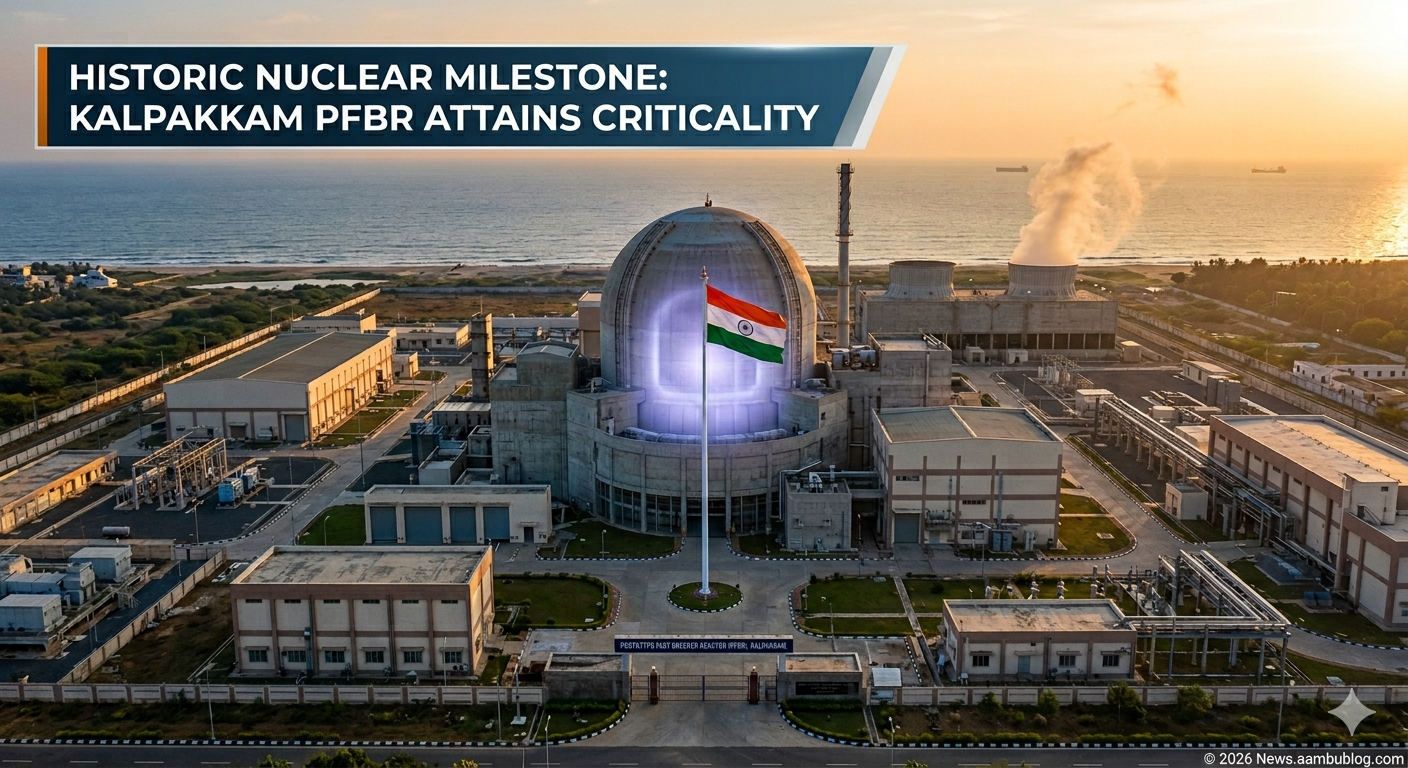
Welcome to today’s top national update. In a defining moment for India’s energy security and technological prowess, the Prototype Fast Breeder Reactor (PFBR) located in Kalpakkam, Tamil Nadu, has successfully reached “criticality.” This achievement is not just a scientific victory; it is a monumental leap forward in India’s ambitious three-stage nuclear power program. Here is a detailed breakdown of what this means for the country’s future.
1. What Does ‘Criticality’ Mean?
In nuclear physics, reaching “criticality” is the most crucial milestone for any reactor.
- The Definition: It is the exact point at which a nuclear reactor is able to sustain a controlled, self-sustaining nuclear chain reaction.
- The Significance: Reaching this stage means the reactor is now officially operational and ready to start generating power safely and consistently.
2. The Strategic Importance of the PFBR
The Kalpakkam reactor is not a standard nuclear plant; it is a “Fast Breeder Reactor” (FBR).
- Producing Its Own Fuel: Unlike traditional reactors, a breeder reactor is designed to generate more fissile material (nuclear fuel) than it consumes while producing energy.
- Stage Two of India’s Master Plan: This reactor marks the beginning of Stage II of India’s indigenous three-stage nuclear energy program, which was originally envisioned by Dr. Homi J. Bhabha.
3. A Massive Step Toward Energy Independence
This technological breakthrough directly impacts India’s geopolitical and economic standing.
- Reducing Import Reliance: Currently, India imports a significant amount of uranium to fuel its standard reactors. The success of the Fast Breeder Reactor drastically reduces this foreign dependence.
- The Thorium Dream: The ultimate goal (Stage III) is to utilize India’s massive, untapped reserves of Thorium. The Kalpakkam PFBR acts as the vital bridge that will eventually convert Thorium into usable nuclear fuel, securing India’s energy needs for centuries.
4. Economic and Environmental Impact
Beyond national security, this milestone aligns perfectly with India’s global commitments.
- Clean Energy Transition: As India targets a rapid transition away from coal and fossil fuels, nuclear energy provides a stable, zero-emission base-load power source.
- Net-Zero Goals: This reactor plays a critical role in helping India meet its aggressive target of achieving net-zero carbon emissions by the year 2070.
Frequently Asked Questions (FAQs)
Q1. What is the Kalpakkam Fast Breeder Reactor?
Ans: It is an advanced nuclear reactor in Tamil Nadu designed to produce more nuclear fuel than it consumes, making it highly efficient for long-term power generation.
Q2. What does it mean when a reactor achieves ‘criticality’?
Ans: Achieving criticality means the reactor has successfully started a controlled and continuous nuclear chain reaction, making it ready to generate power.
Q3. How does this benefit India’s economy?
Ans: By generating its own nuclear fuel, the reactor significantly reduces India’s need to import expensive uranium from other countries, saving billions in foreign exchange and boosting energy self-reliance.
Q4. What is India’s three-stage nuclear program?
Ans: It is a long-term strategy to achieve energy independence. Stage 1 uses natural uranium, Stage 2 uses fast breeder reactors (like Kalpakkam) to create new fuel, and Stage 3 aims to utilize India’s vast Thorium reserves.
Q5. Is nuclear energy from this reactor safe for the environment?
Ans: Yes, nuclear power generates large amounts of electricity without emitting greenhouse gases, making it a crucial component of India’s strategy to combat climate change and reach net-zero emissions.