
By City Weather Desk | April 20, 2026
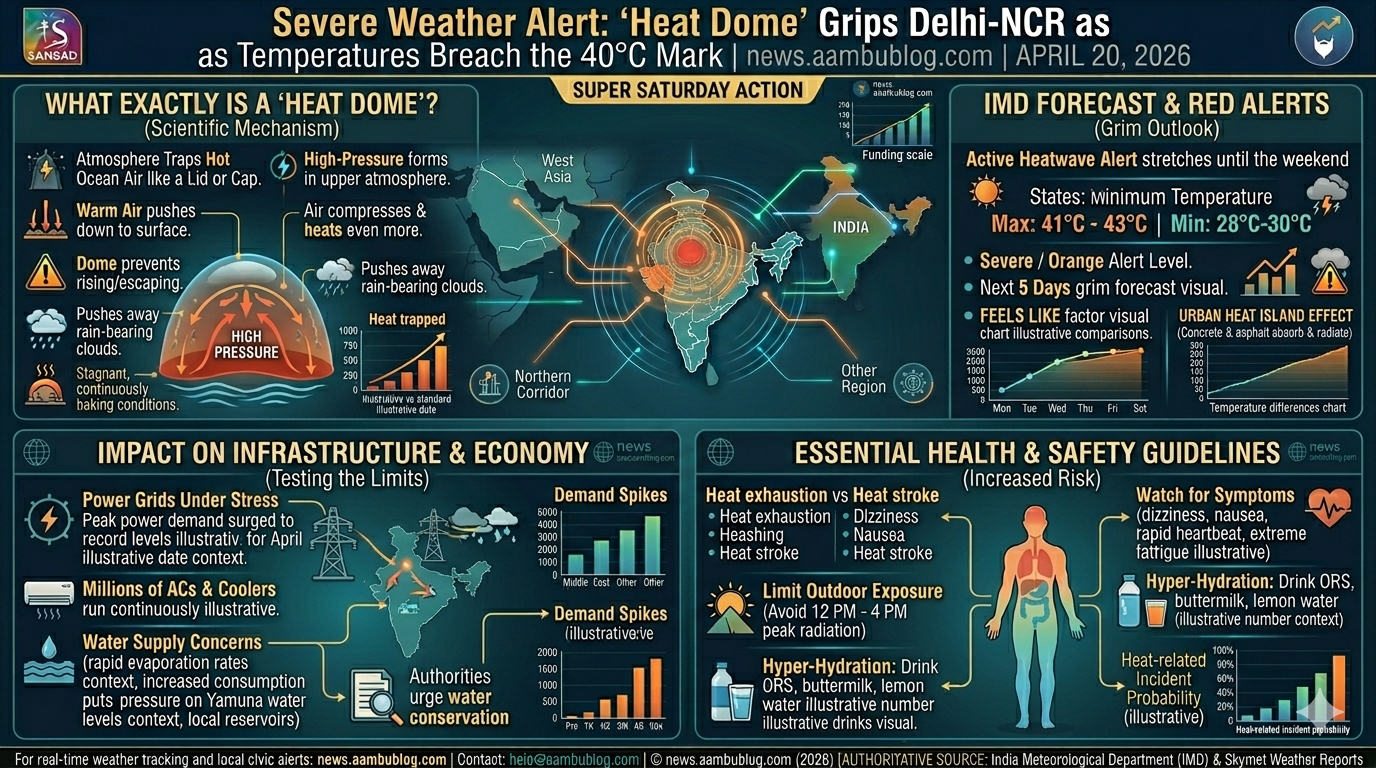
The national capital and its surrounding regions are currently baking under an intense and unforgiving heatwave. The India Meteorological Department (IMD) has issued a severe weather alert for Delhi-NCR, warning residents that the ongoing spike in temperatures is not just a standard summer day, but the result of a dangerous meteorological phenomenon known as a ‘Heat Dome’.
With temperatures already crossing the 40°C threshold earlier than usual, the city is bracing for a grueling week ahead.
1. What Exactly is a ‘Heat Dome’?
A “Heat Dome” occurs when the atmosphere traps hot ocean air like a lid or a cap.
- The Mechanism: A massive area of high-pressure forms in the upper atmosphere. This high-pressure system pushes warm air down toward the surface.
- The Trapping Effect: As the air is pushed down, it compresses and heats up even more. The “dome” prevents this hot air from rising and escaping, and it also pushes away any rain-bearing clouds, resulting in stagnant, continuously baking conditions.
2. IMD Forecast and Red Alerts
The meteorological department has painted a grim picture for the coming days:
- Next 5 Days: An active heatwave alert has been issued stretching until the weekend. Maximum temperatures are expected to hover between 41°C and 43°C, while the minimum temperatures will offer little to no relief at night.
- The “Feels Like” Factor: Due to localized urban heat island effects (where concrete and asphalt absorb and radiate heat), the “feels like” temperature in dense areas of Delhi, Gurugram, and Noida could easily cross 45°C.
3. Impact on Infrastructure and Economy
The sudden and severe rise in temperatures is already testing the limits of the city’s infrastructure:
- Power Grids Under Stress: As millions of ACs and coolers run continuously, Delhi’s peak power demand has surged to record levels for the month of April.
- Water Supply Concerns: The rapid evaporation rates and increased consumption are putting immense pressure on the Yamuna water levels and local reservoirs, prompting authorities to urge water conservation.
4. Essential Health & Safety Guidelines
This level of stagnant heat dramatically increases the risk of heat exhaustion and heatstroke. Health authorities recommend the following protocols:
- Limit Outdoor Exposure: Strictly avoid stepping out or doing heavy physical labor between 12:00 PM and 4:00 PM, which are the peak radiation hours.
- Hyper-Hydration: Drink water continuously even if you do not feel thirsty. Rely on ORS, buttermilk, and lemon water to maintain electrolyte balances.
- Watch for Symptoms: Be vigilant about symptoms like dizziness, nausea, rapid heartbeat, or extreme fatigue, which are early signs of heat-related illnesses.
Fact Sheet: Delhi-NCR Heatwave at a Glance
| Metric | Current Status (As of April 20) |
|---|---|
| Current Phenomenon | High-Pressure Heat Dome |
| Temperature Range | 40°C – 43°C |
| IMD Alert Level | Severe / Orange Alert |
| Expected Duration | Minimum 5 Days |
For real-time weather tracking and local civic alerts: news.aambublog.com
Contact: help@aambublog.com