In a development that has sent waves of relief across global markets, the United States and Iran have officially agreed to a two-week ceasefire, effectively immediately as of April 8, 2026. India has officially welcomed this breakthrough, calling it a vital step toward restoring global energy stability and “lasting peace in West Asia.”
1. The Breakthrough: A Last-Minute Deal
The ceasefire was announced just hours before a critical deadline set by U.S. President Donald Trump.
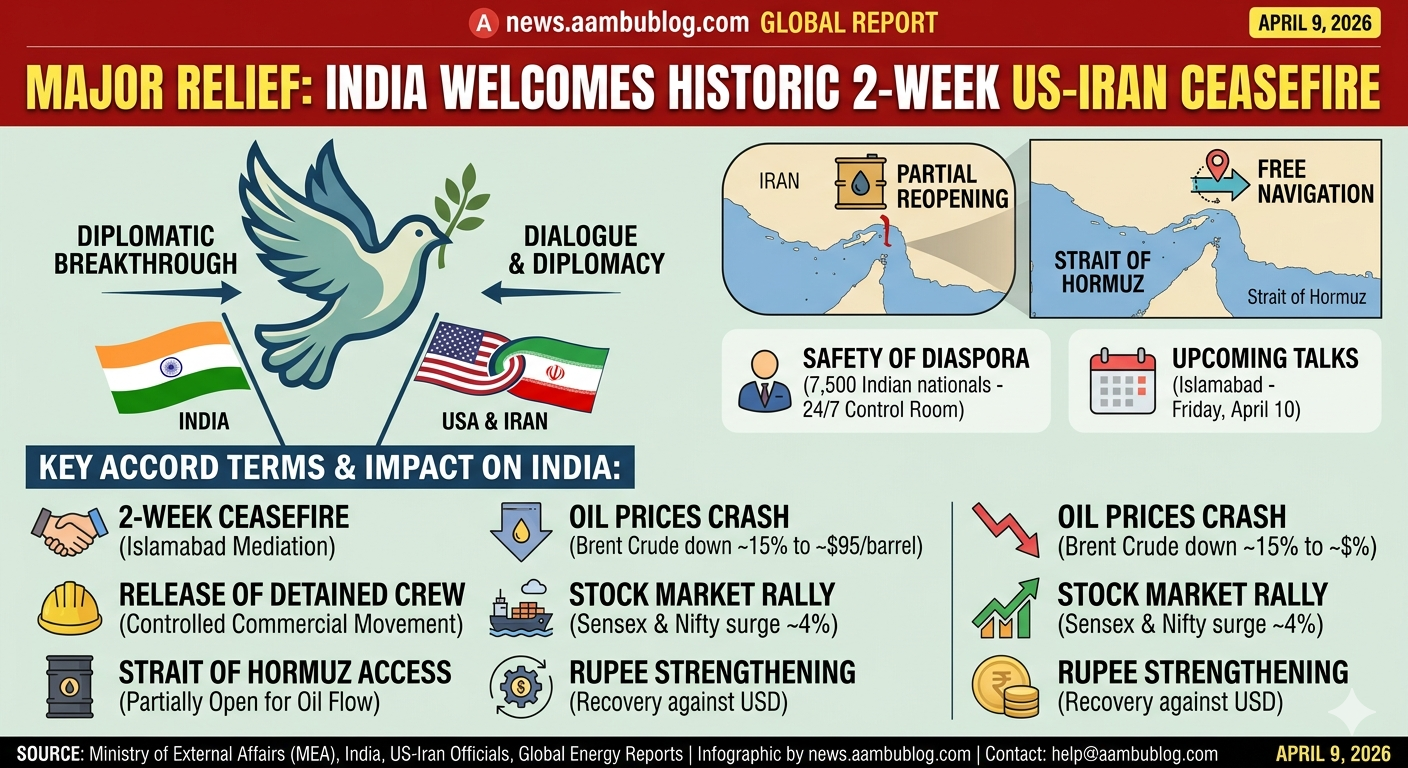
- The Terms: Both nations have agreed to a 14-day “strategic pause” in military hostilities.
- The Mediation: The deal was reportedly brokered by Pakistan, with high-level negotiations taking place in Islamabad.
- The Reopening: A core part of the agreement is the partial reopening of the Strait of Hormuz for commercial shipping, which has been under a “semi-blockade” since February 2026.
2. India’s Official Reaction
The Ministry of External Affairs (MEA) issued a carefully worded statement welcoming the de-escalation:
- “Dialogue and Diplomacy”: India emphasized that “de-escalation, dialogue, and diplomacy” are the only ways to end the conflict that has caused immense human suffering.
- Navigation Rights: India stressed the need for “unimpeded freedom of navigation” through the Strait of Hormuz to ensure the global flow of commerce.
- Safety of Diaspora: With roughly 7,500 Indian nationals still in Iran, the government continues to operate a 24/7 control room to ensure their safety and potential evacuation during this window.
3. Economic Impact: Oil Prices & Stock Market Surge
The news has had an immediate and dramatic impact on the Indian economy:
- Crude Oil Crash: Brent crude prices, which were nearing $110, crashed by nearly 15% to approximately $95 per barrel following the announcement.
- Stock Market Rally: Indian equity markets (Sensex and Nifty) surged by nearly 4%, led by oil marketing companies like HPCL, BPCL, and IOCL, which benefit from lower raw material costs.
- Rupee Strengthening: The Indian Rupee, which was under pressure, saw a recovery against the USD as the risk of a regional war subsided.
4. What Happens Next?
The ceasefire is only for 14 days, making the upcoming week critical:
- Islamabad Talks: Official diplomatic delegations from both the US and Iran are scheduled to meet in Islamabad on Friday (April 10) to discuss a long-term resolution.
- Infrastructure Assessment: Technical teams are expected to assess the damage to shipping lanes and energy infrastructure during this pause.
- Global Monitoring: The world remains cautious, as major disagreements regarding nuclear programs and regional proxy networks remain unresolved.
Frequently Asked Questions (FAQ)
Q1. Will petrol and diesel prices in India decrease immediately?
While global crude prices have fallen, domestic price changes usually take a few days to reflect at the pump as oil companies evaluate the sustainability of the price drop.
Q2. Why was Pakistan the mediator?
Pakistan shares a border with Iran and maintains a complex diplomatic relationship with the US, making it a neutral ground for these specific high-stakes talks.
Q3. Is the Strait of Hormuz fully open now?
It is “partially open” for controlled commercial movement. Full normalization will depends on the progress of the talks in Islamabad this Friday.
For real-time geopolitical analysis: help@aambublog.com