By Aambublog News Desk | Updated: 29 April 2026
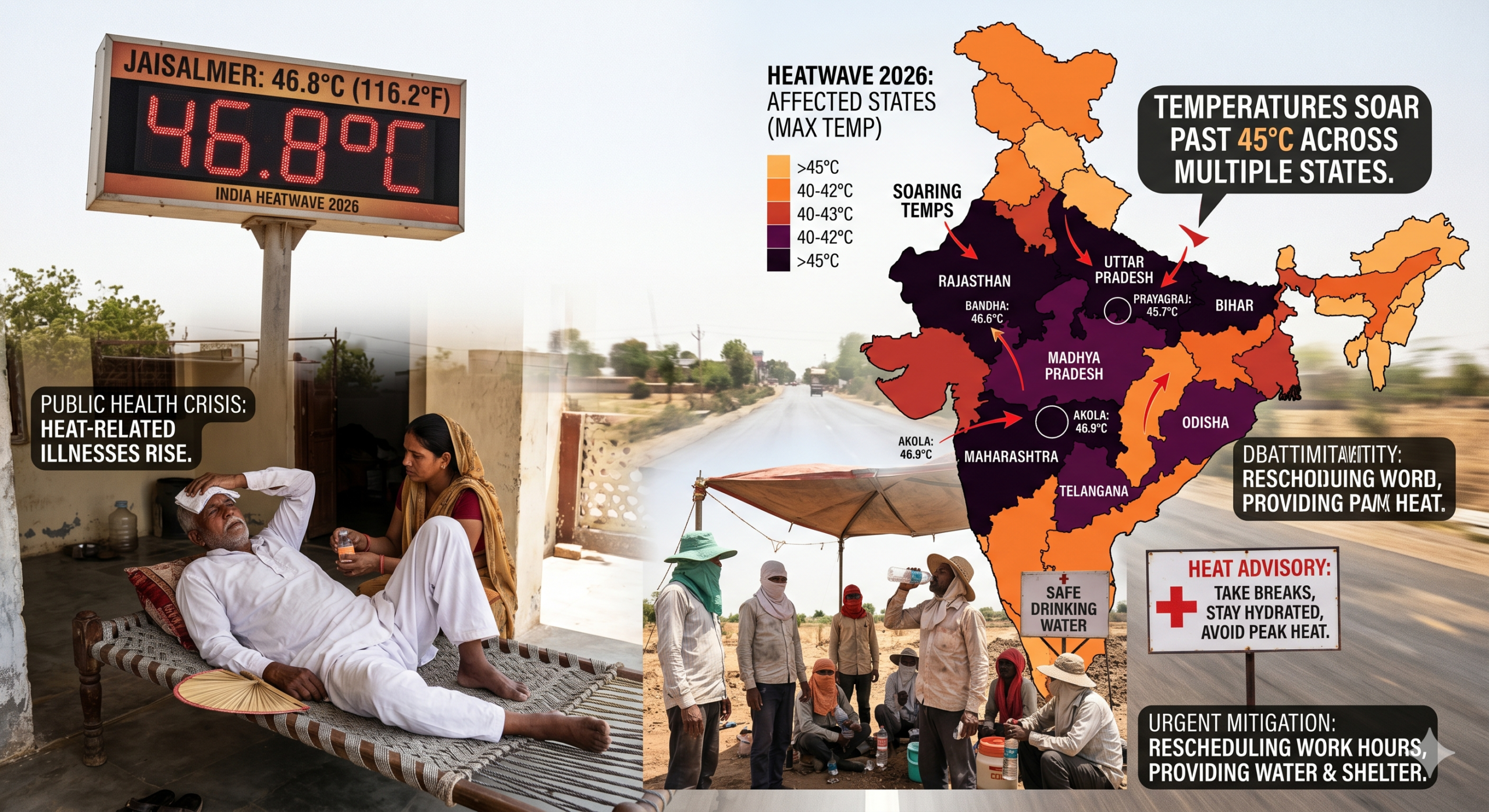
India is currently grappling with one of the most intense heatwaves of the year, as temperatures surge past 45°C in several regions, raising serious concerns about public health, water scarcity, and infrastructure stress. Major parts of North, Central, and Western India, including Delhi, Rajasthan, and Maharashtra, are witnessing extreme weather conditions that have disrupted daily life and prompted urgent government advisories.
What Is Happening?
According to weather observations and regional reports, a strong heatwave system has settled over large parts of India, pushing daytime temperatures significantly above normal levels. In cities like Delhi, the mercury has hovered around 44–46°C, while parts of Rajasthan have recorded even higher figures.
In Maharashtra, including urban centers and rural belts, temperatures have consistently crossed 40°C, with dry winds intensifying the discomfort. The heatwave conditions are expected to persist over the coming days, with little immediate relief forecast.
What Is a Heatwave?
A heatwave is declared when temperatures rise significantly above the normal average for a region. In India, a heatwave is typically announced when the temperature exceeds 40°C in plains or shows a sharp deviation from normal levels.
These conditions are not just uncomfortable—they can be dangerous, especially for vulnerable populations such as children, elderly individuals, and those with pre-existing health conditions.
Regions Most Affected
1. Delhi and NCR
The national capital Delhi is experiencing severe heat, with heat index levels making it feel even hotter than recorded temperatures. Roads appear deserted during peak afternoon hours as residents try to stay indoors.
2. Rajasthan
Known for its desert climate, Rajasthan is facing extreme heat conditions, with some areas nearing 47°C. Cities like Jaipur and Jodhpur are among the worst affected.
3. Maharashtra
In Maharashtra, rising temperatures combined with humidity in coastal areas have made conditions even more unbearable. Mumbai, while slightly moderated by the sea, is still experiencing high heat and humidity levels.
Health Risks and Concerns
Extreme heat can lead to serious health issues, including:
- Heatstroke
- Dehydration
- Sunburn
- Heat exhaustion
- Increased risk for heart patients
Hospitals in several cities have reported an increase in cases related to heat stress. Doctors are advising people to avoid stepping out during peak hours (12 PM – 4 PM) and to stay hydrated.
Government Advisory and Safety Measures
Authorities have issued several guidelines to help citizens cope with the heatwave:
- Drink plenty of water, even if not thirsty
- Avoid direct sunlight during afternoon hours
- Wear light, loose cotton clothes
- Use hats, umbrellas, or scarves when stepping out
- Check on elderly and children regularly
Local administrations are also ensuring water supply availability and setting up cooling centers in some high-risk areas.
Impact on Daily Life
The heatwave has disrupted normal routines across affected states:
- Schools in some regions are adjusting timings or declaring holidays
- Construction work is being limited during peak heat hours
- Power demand has surged due to increased use of air conditioners and coolers
- Water shortages are being reported in some rural and urban areas
Impact on Economy and Agriculture
The rising temperatures are also affecting agriculture, especially crops that are sensitive to heat stress. Farmers are worried about yield losses, particularly in states like Maharashtra and Rajasthan.
Additionally, the increase in electricity demand is putting pressure on power grids, raising concerns about potential outages.
Climate Change Connection
Experts believe that such extreme heatwaves are becoming more frequent and intense due to climate change. Rising global temperatures are contributing to unpredictable and severe weather patterns.
India has witnessed a growing number of heatwave days over the past decade, making it a recurring challenge for policymakers and citizens alike.
What Lies Ahead?
Weather departments suggest that the heatwave may continue in the short term, with possible relief only after pre-monsoon activity begins. However, isolated thunderstorms or dust storms may offer temporary respite in some regions.
Citizens are advised to stay updated with local weather forecasts and follow official guidelines strictly.
❓ Frequently Asked Questions (FAQs) – India Heatwave 2026
1. What is a heatwave in India?
A heatwave in India is declared when temperatures rise above 40°C in plains or significantly above normal levels for a region, making conditions dangerous for human health.
2. Which states are most affected by the current heatwave?
The most affected regions include Delhi, Rajasthan, and Maharashtra, where temperatures have crossed 44–46°C.
3. What are the main causes of the heatwave in India?
The heatwave is caused by high-pressure systems, dry winds, lack of rainfall, and increasing global temperatures linked to climate change.
4. How can heatwaves affect human health?
Heatwaves can cause heatstroke, dehydration, dizziness, fatigue, and even life-threatening conditions, especially in elderly people and children.
5. What precautions should people take during a heatwave?
People should drink plenty of water, avoid going out during peak afternoon hours, wear light cotton clothes, and stay in cool or shaded places.
6. What time of day is most dangerous during a heatwave?
The most dangerous time is between 12 PM and 4 PM when temperatures are at their highest and the sun is strongest.
7. How is the heatwave impacting daily life in India?
It is affecting work hours, school schedules, increasing electricity demand, and causing water shortages in several areas.
8. Is climate change responsible for frequent heatwaves?
Yes, experts believe that climate change is increasing the frequency and intensity of heatwaves in India and across the world.
9. When will the heatwave end in India?
Relief is expected only after pre-monsoon showers or weather changes, but exact timing depends on regional climate conditions.
10. What should you do if someone shows signs of heatstroke?
Immediately move the person to a cool place, give water if conscious, apply cool cloths, and seek medical help as soon as possible.
Conclusion
The ongoing heatwave in India is a stark reminder of the growing impact of extreme weather conditions. With temperatures soaring beyond safe limits in regions like Delhi, Rajasthan, and Maharashtra, it is crucial for individuals to take necessary precautions and for authorities to ensure adequate support systems.
As climate challenges intensify, awareness, preparedness, and responsible behavior will be key to minimizing risks and protecting lives