
By Weather & Environment Desk | April 25, 2026
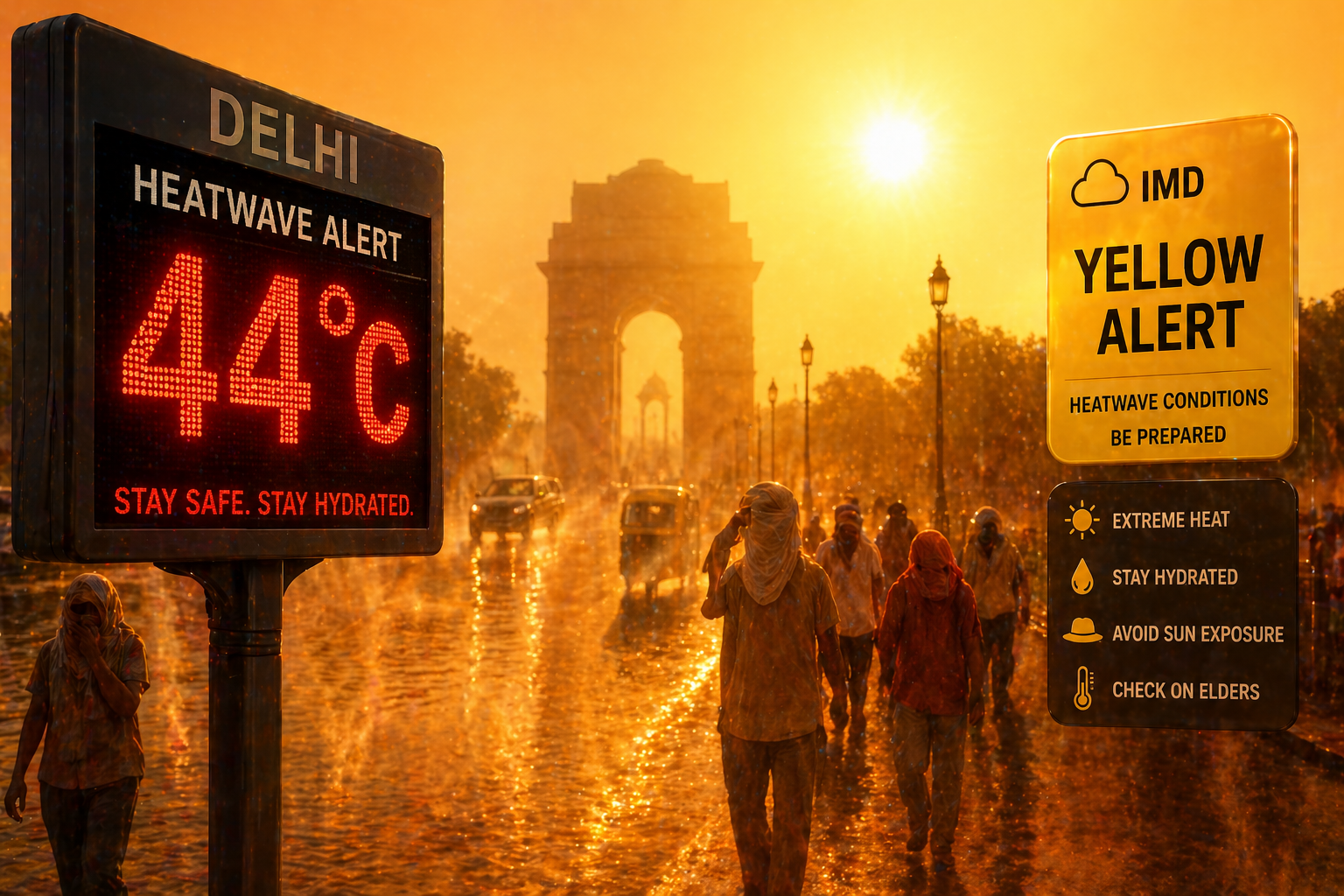
The India Meteorological Department (IMD) has officially sounded the alarm for North and Central India, issuing a Yellow Alert as a blistering heatwave grips the region. With temperatures already crossing the 40°C mark in several cities, the IMD has warned that the next 24 to 48 hours will be critical for residents of Delhi, Punjab, Haryana, and beyond.
While the heat is currently at its peak, there is a glimmer of hope as a Western Disturbance is expected to bring some relief starting late Sunday evening.
1. The Core Zones: Who is Affected?
The Yellow Alert covers a vast belt of the Indian plains where day temperatures are currently 3°C to 5°C above the seasonal normal.
- Primary Impact Zones: Delhi-NCR, Punjab, Haryana, Chandigarh, and Rajasthan.
- Extended Impact: Parts of West Uttar Pradesh, Madhya Pradesh, and Chhattisgarh are also witnessing severe “Warm Night” conditions, where minimum temperatures are not dropping enough to provide relief.
- Surface Winds: The IMD has noted strong surface winds (25-35 km/h) which are acting like a “Loo,” further dehydrating the air and increasing the risk of heatstroke.
2. Why the “Yellow Alert”?
A Yellow Alert from the IMD means “Be Aware.” It is a signal to the local administration and the public that while the heat is not yet at a “Red Alert” (catastrophic) level, it is high enough to cause health concerns for vulnerable groups.
- Vulnerable Groups: Infants, the elderly, and people with chronic respiratory or cardiac conditions are advised to stay indoors.
- Power Demand: The sudden surge in temperature has led to a record-breaking spike in electricity consumption across Delhi and Punjab as air conditioning units run at full capacity.
3. Relief on the Horizon: Rain Predicted
The heatwave is expected to be short-lived. According to the latest satellite imagery:
- Western Disturbance: A fresh weather system is approaching the Himalayas.
- Thunderstorms: Starting from the night of April 26 (Sunday), several parts of North India, including Delhi and Punjab, are likely to witness thunderstorms, light rain, and lightning.
- Temperature Drop: Temperatures are expected to fall by 3°C to 4°C by Monday, providing a much-needed break from the scorching sun.
Detailed Q&A: Surviving the April Heatwave
Q1. What is the difference between a ‘Heatwave’ and a ‘Severe Heatwave’? A heatwave is declared when the maximum temperature of a station reaches at least 40°C for plains and the departure from normal is 4.5°C to 6.4°C. It becomes “Severe” if the departure from normal exceeds 6.4°C or if the actual temperature crosses 47°C.
Q2. What are the specific safety precautions recommended by IMD?
- Hydration: Drink plenty of water, even if not thirsty. Use ORS, lassi, or lemon water.
- Clothing: Wear lightweight, light-colored, loose, cotton clothes.
- Timing: Avoid going out between 12:00 PM and 4:00 PM unless absolutely necessary.
- Protection: Always use a hat, umbrella, or a damp cloth to cover your head when outdoors.
Q3. Why are “Warm Nights” considered dangerous? When the night temperature remains high (above 28°C-30°C), the human body does not get a chance to recover from the daytime heat stress. This leads to increased fatigue, sleep deprivation, and a higher risk of heat exhaustion the following day.
Q4. Is this heatwave unusual for late April? While April is a summer month, having a sustained Yellow Alert across seven states simultaneously is a sign of increasing climate volatility. The IMD notes that “Above Normal” heatwave days are likely to be more frequent during the April-June 2026 season.
Copyright: © news.aambublog.com (2026)