
By National Security Desk | April 23, 2026
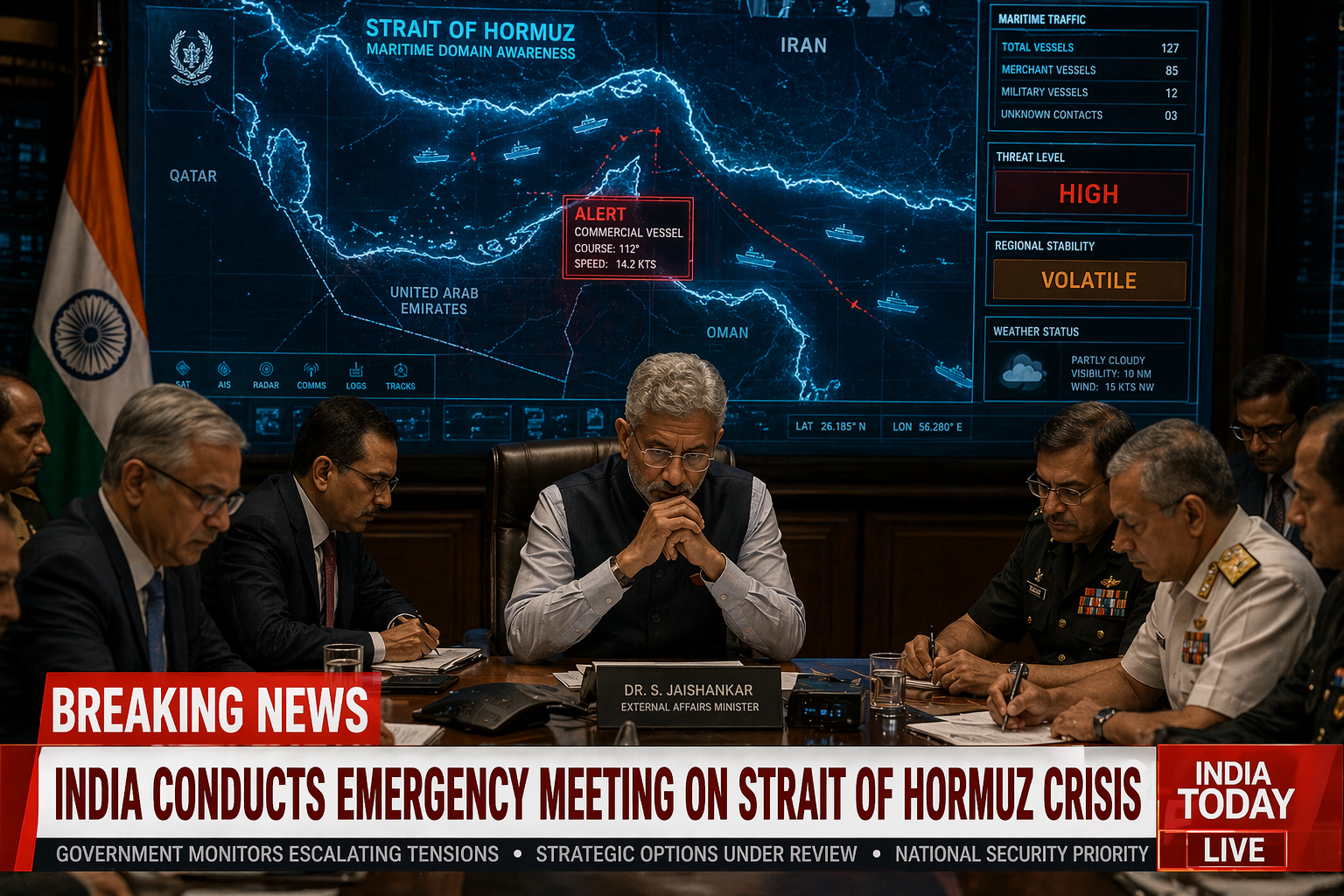
The Ministry of External Affairs (MEA) in New Delhi has moved into “war-room mode” following the seizure of the India-bound cargo ship by Iranian naval forces in the Strait of Hormuz. External Affairs Minister S. Jaishankar chaired an emergency high-level meeting this morning with top diplomats, security advisors, and maritime experts to coordinate a swift response to the crisis.
With over 20 Indian crew members reportedly on board the vessel, the government is under immense pressure to ensure their safety while navigating the complex geopolitical tensions between Iran and the West.
1. Direct Diplomatic Channels Activated
Within hours of the seizure, India activated its direct hotline with Tehran.
- The Call: Minister Jaishankar has already spoken with the Iranian Foreign Minister. India’s message is clear: the vessel was a commercial entity engaged in innocent transit, and its detention is a violation of international maritime law.
- Consular Access: The MEA has formally requested immediate consular access to the Indian nationals on board. Reports suggest that while the crew is safe, they are currently being held at a naval base near Bandar Abbas for questioning.
2. The Strategic Tightrope
India is in a unique position due to its “strategic autonomy.”
- Leveraging Ties: Unlike Western nations, India maintains a strong working relationship with Iran, particularly through the Chabahar Port project. New Delhi is using this leverage to convince Tehran that targeting India-bound trade will hurt mutual economic interests.
- The US Factor: Simultaneously, the MEA is in touch with the US State Department to ensure that any potential military “escort” operations by the West do not escalate the situation further, which could put the Indian crew in the line of fire.
3. Focus on Maritime Supply Chains
The meeting also focused on the economic fallout. The MEA is working closely with the Ministry of Shipping to advise all Indian-flagged vessels currently in the Arabian Sea.
- Rerouting Advice: Until a diplomatic breakthrough is achieved, the government is considering advising commercial ships to avoid the Strait of Hormuz or wait for naval protection, which could delay critical imports of electronics and chemicals.
Detailed Q&A: The Diplomatic Push
Q1. What is the current status of the Indian crew members? According to the latest briefing from the MEA, all Indian crew members are physically unharmed. They are currently on the vessel, which has been docked at an Iranian port. Indian diplomats in Tehran are waiting for official clearance to meet them in person to provide legal and emotional support.
Q2. Can India use the Chabahar Port connection to resolve this? Yes. Chabahar is a cornerstone of India-Iran relations. Diplomatic experts believe that India will likely remind Iran that a stable maritime environment is essential for the success of the International North-South Transport Corridor (INSTC), in which both countries are major stakeholders.
Q3. How long do such diplomatic negotiations usually take? In previous cases of ship seizures in the Gulf, diplomatic resolutions have taken anywhere from 48 hours to several weeks. However, given the high number of Indian nationals involved and the specific “India-bound” nature of the cargo, New Delhi is pushing for a resolution within the next 72 hours.
Q4. Is there any talk of a military rescue? Currently, no. The government is strictly pursuing a diplomatic path. A military rescue in Iranian territorial waters would be seen as an act of war. India’s strength lies in its ability to talk to both sides, and that is the primary tool being used right now.
Copyright: © news.aambublog.com (2026)