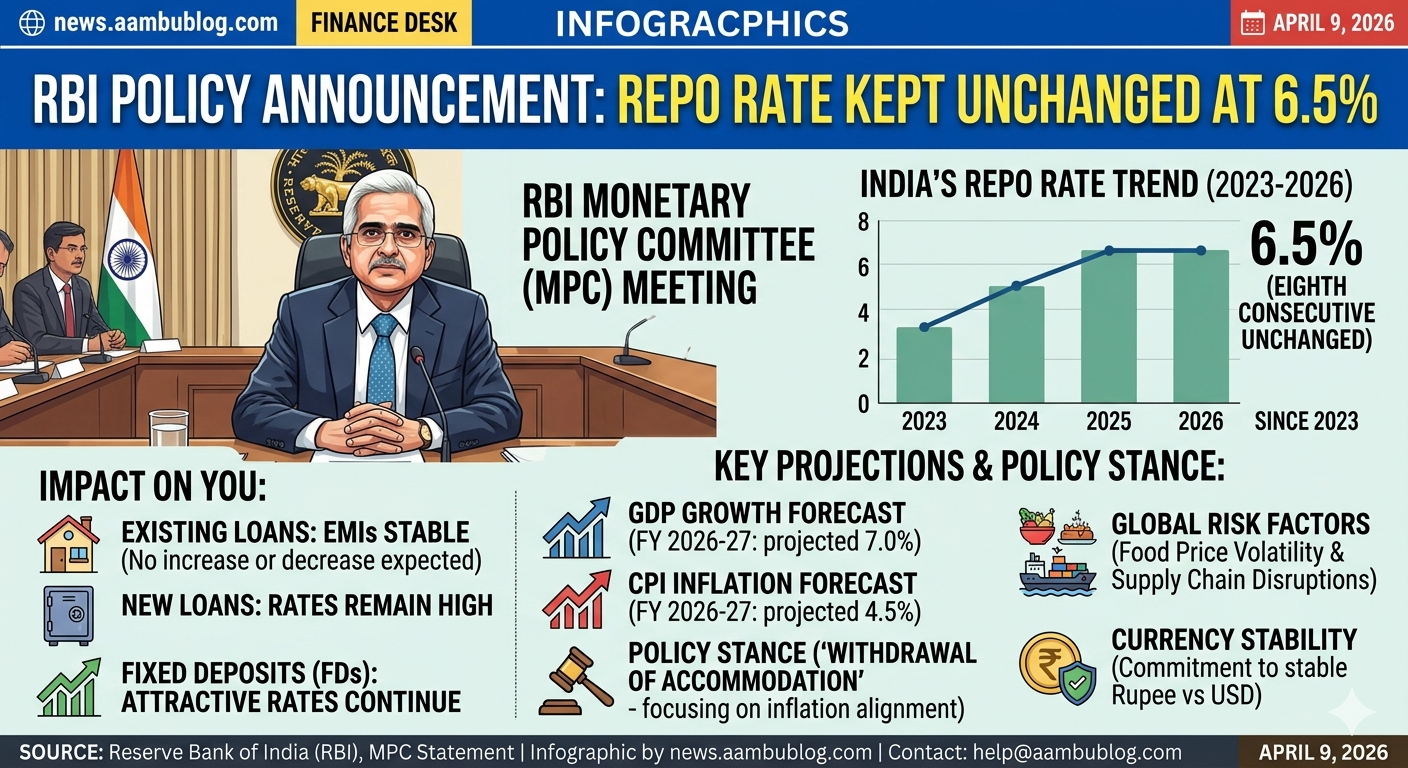
The Reserve Bank of India’s (RBI) Monetary Policy Committee (MPC) concluded its first meeting of the new fiscal year today, April 9, 2026. Governor Shaktikanta Das announced that the central bank has decided to keep the Repo Rate unchanged at 6.5% for the eighth consecutive time.
The decision comes as a strategic move to balance India’s robust economic growth with persistent global inflationary pressures.
1. Key Highlights of the RBI MPC Meeting
The MPC voted with a 5:1 majority to maintain the status quo on interest rates.
- Repo Rate: Remains at 6.50%.
- SDF & MSF Rates: The Standing Deposit Facility (SDF) remains at 6.25%, and the Marginal Standing Facility (MSF) rate stays at 6.75%.
- Policy Stance: The RBI continues its stance on ‘Withdrawal of Accommodation’ to ensure that inflation progressively aligns with the target while supporting growth.
2. Economic Projections: Growth vs. Inflation
Governor Das provided a positive outlook for the Indian economy while remaining “vigilant” about price stability.
- GDP Growth Forecast: The real GDP growth for FY 2026-27 is projected at 7.0%. This is driven by strong rural demand, a rebound in private consumption, and the government’s continued push on capital expenditure.
- CPI Inflation Forecast: Consumer Price Index (CPI) inflation for the current fiscal year is projected at 4.5%. However, the RBI warned that food price volatility and global supply chain disruptions remain a significant “upside risk.”
3. What This Means for the Common Man
While there were hopes for a rate cut, the “status quo” means:
- Stable EMIs: Existing home and car loan borrowers will not see an immediate increase in their monthly installments, but a decrease is also not on the cards for now.
- Bank FD Rates: Fixed Deposit rates are expected to remain at their current attractive levels, providing continued benefits for savers and senior citizens.
- Stock Market Impact: The market reacted positively to the growth projections, with banking and financial stocks seeing a steady rise following the announcement.
4. The “Global Factor” and Oil Prices
A major reason for the cautious approach is the international situation.
- US-Iran Ceasefire: While the recent 2-week ceasefire has brought crude oil prices down from $110 to $95 per barrel, the RBI noted that the market remains sensitive to geopolitical shifts.
- Currency Stability: The RBI expressed its commitment to maintaining the stability of the Indian Rupee, which has faced pressure against a strong US Dollar.
Frequently Asked Questions (FAQ)
Q1. When can we expect the first Repo Rate cut?
Most economists predict that the RBI might consider a 25 basis point (0.25%) cut in the August or October 2026 policy meetings, provided inflation stays below the 4.5% threshold.
Q2. Why is the RBI not cutting rates if the GDP is growing?
The RBI’s primary mandate is “Price Stability.” Cutting rates too early could trigger a surge in inflation, especially with high food and fuel costs, which would hurt the economy in the long run.
Q3. How does the “Withdrawal of Accommodation” stance affect me?
This technical phrase means the RBI is keeping money supply tight in the system to control inflation. For a common user, it simply means that interest rates will likely stay “higher for longer.”
For more banking and financial insights: help@aambublog.com