Introduction
Welcome to today’s exclusive global geopolitical update. The situation in the Middle East is currently impacting global markets and politics. While the threat of an all-out war was escalating, a sudden announcement of a “2-Week Ceasefire” between the US and Iran has taken everyone by surprise. Let’s dive into a detailed analysis of this new development, Iran’s 10-point plan, and the ongoing regional tensions.
1. The Breakthrough: A 2-Week US-Iran Ceasefire
After weeks of military tension and continuous strikes, US President Donald Trump has taken a major step by suspending military operations against Iran for two weeks. This has been termed a “double-sided ceasefire.”
- The Mediator: Pakistan has emerged as a key player behind this diplomatic breakthrough. Pakistan’s PM Shehbaz Sharif mediated between the two nations, paving the way for this temporary peace.
2. The Primary Condition: Keeping the Strait of Hormuz Open
This ceasefire comes with strings attached. The biggest concern for the US and global powers is the global oil supply chain.
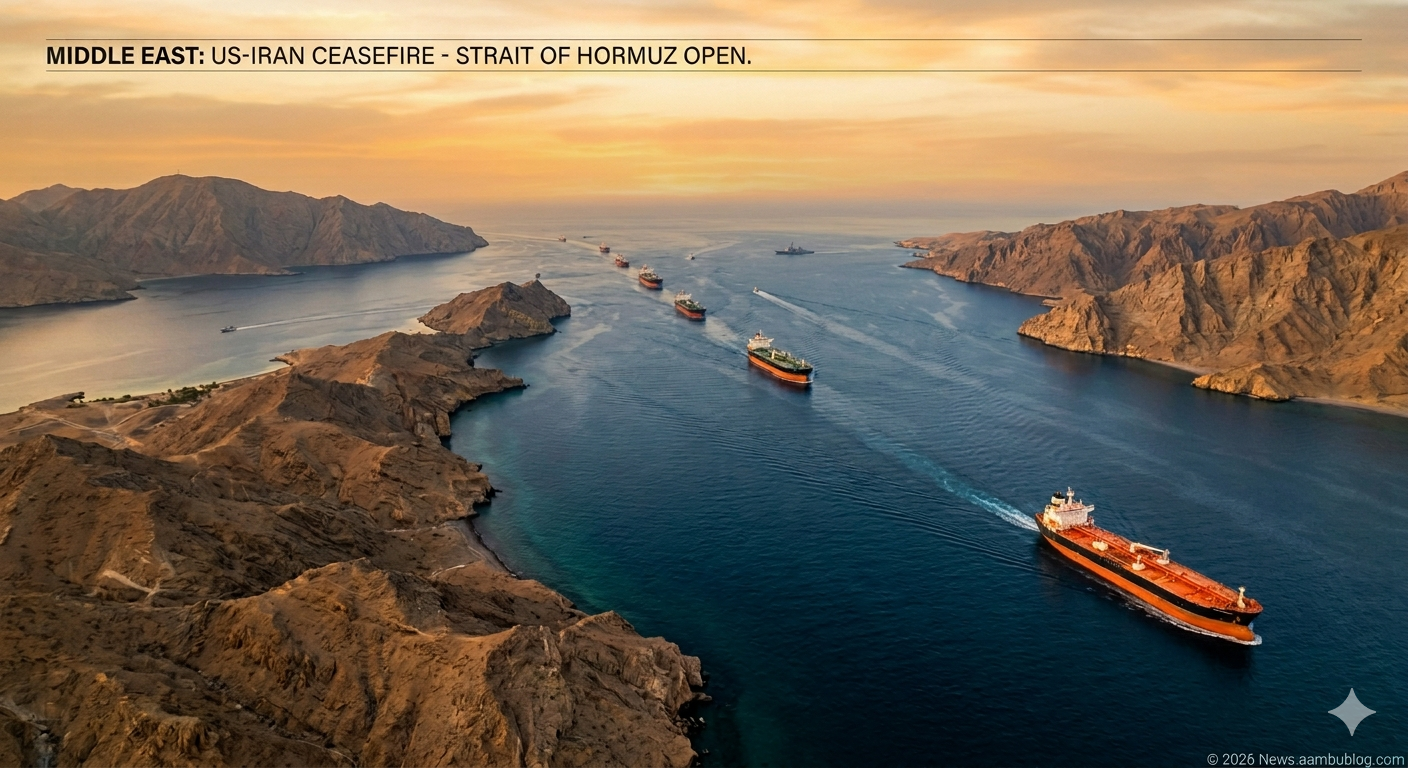
- The Condition: The main condition of the ceasefire is that Iran must keep the ‘Strait of Hormuz’ fully open for international commercial ships and oil tankers.
- Why is it Important? Roughly 20% to 30% of the world’s crude oil passes through this narrow maritime route. If Iran were to block it, global oil prices would skyrocket, directly impacting the global economy.
3. Iran’s 10-Point Plan and Demands
President Trump has described a ’10-point plan’ presented by Iran as “workable” for further negotiations. Iran has made its stance very clear in this proposal:
- Uranium Enrichment: Iran wants the US and the international community to legally recognize its peaceful uranium enrichment program.
- Sanctions Removal: The second major demand is the immediate lifting of all international economic sanctions that have severely damaged Iran’s economy.
4. Missiles Fired at Israel: Immediate Retaliation
Although the ceasefire was announced, the volatility in the Middle East remains at an extreme level.
- Shortly after the ceasefire news broke, the Israeli military officially reported that missiles were fired toward their territory from Iran.
- To counter this attack, Israel immediately activated its advanced defensive interception systems (such as the Iron Dome and Arrow). This incident proves that this 2-week ceasefire is highly fragile.
Geopolitical & Economic Impact (Expert Analysis)
- Crude Oil & Stock Markets: The news of the Strait of Hormuz remaining open has brought some relief to the oil markets, but volatility persists. Investors should keep a close eye on energy stocks and crude prices.
- Gold Prices: During such times of geopolitical uncertainty, gold is always considered a safe-haven asset. This is why gold prices are trading at historical highs in global markets.
Frequently Asked Questions (FAQs)
Q1. How long is the newly announced US-Iran ceasefire?
Ans: The ceasefire has currently been announced for a period of 2 weeks, pausing military strikes from both sides.
Q2. Which country mediated this ceasefire?
Ans: Pakistan played the role of mediator in this diplomatic process, helping the US and Iran reach this temporary agreement.
Q3. Why is the Strait of Hormuz crucial for the global economy?
Ans: The Strait of Hormuz is one of the world’s most important oil choke points. A massive portion of global crude oil is shipped through here, making its uninterrupted operation essential for maintaining stable global fuel prices.
Q4. What are Iran’s main demands?
Ans: Iran’s primary demands are to gain legal acceptance from the US for its uranium enrichment program and the immediate removal of all international economic sanctions.
Q5. Is the region completely peaceful after the ceasefire announcement?
Ans: No, immediately after the ceasefire announcement, Israel reported that missiles were fired at its territory from Iran, indicating that the situation remains highly tense and unpredictable.