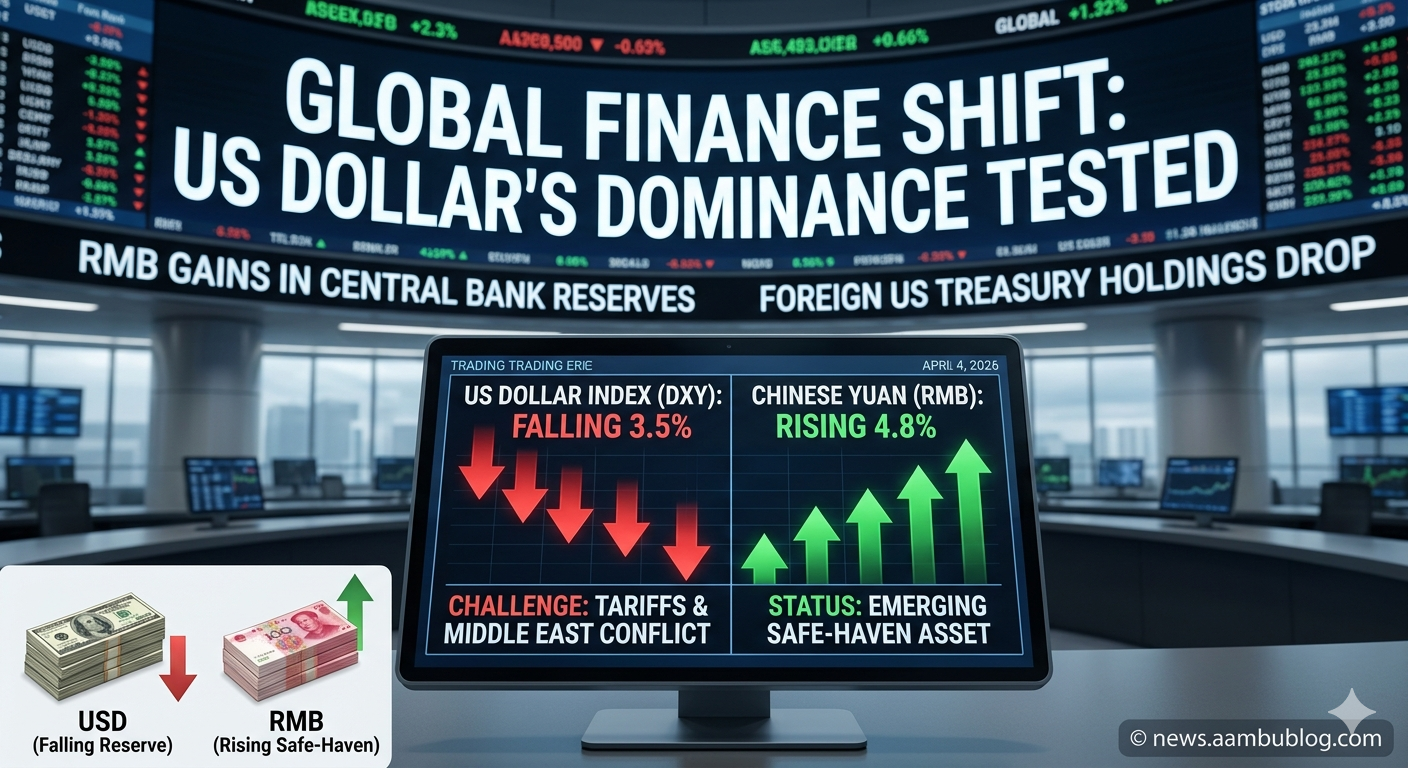
In a surprising turn for global markets, the undisputed dominance of the US Dollar (USD) is facing its toughest test in decades. As of April 4, 2026, a combination of aggressive US tariff policies and the ongoing conflict in the Middle East has led international investors and central banks to look toward the Chinese Yuan (RMB) as a potential ‘Safe-Haven’ asset.
Key Highlights
- The Trend: Foreign central banks’ holdings of US Treasury securities have hit their lowest levels since 2012.
- The Catalyst: Continued trade wars and military escalations near the Strait of Hormuz are chipping away at dollar credibility.
- Yuan Ascent: The offshore Yuan has seen a steady rise, recently hitting a benchmark of 6.88 per dollar.
- New System: Reports suggest the early stages of a ‘Petroyuan’ system as some oil transit fees are now being settled in Yuan instead of Dollars.
Why Investors are Moving Away from the Dollar
For over half a century, the US Dollar has been the world’s primary reserve currency, often called the “Exorbitant Privilege.” However, several factors in 2026 are disrupting this status:
- Weaponization of Currency: Heavy use of financial sanctions has led nations like China, Russia, and even some BRICS partners to seek “insurance” against dollar-centric finance.
- Trade Tariffs: New US tariffs have created a “double whammy” for global corporations, increasing costs and weakening the long-term outlook for the USD.
- Stability in the East: While Western markets face volatility due to the Iran conflict, the Chinese government has intervened to stabilize its mainland markets, offering a “shock-absorbing” alternative for global capital.
The Rise of the ‘Safe-Haven’ Yuan
While the Yuan still accounts for a smaller percentage of global reserves compared to the Dollar, its internationalization is paying off.
- CIPS Adoption: China’s Cross-Border Interbank Payment System (CIPS) is becoming a faster and lower-risk alternative for businesses in Africa, ASEAN, and parts of Europe.
- RMB Bonds: Chinese government bonds are having a “real moment” in 2026, attracting investors who are wary of the $40 trillion US national debt.
Tips
- Diversify Your Portfolio: If you hold significant assets in USD, consider diversifying into multiple currencies or gold to hedge against further geopolitical instability.
- Watch Oil Settlements: Keep an eye on news regarding the “Petroyuan”—if more oil-exporting nations start accepting Yuan, it could lead to a permanent shift in global inflation patterns.
- Check Exchange Rates: For businesses involved in import-export, it is a good time to review your currency swap agreements to minimize losses from dollar volatility.
Frequently Asked Questions (FAQs)
Question: Will the Yuan replace the US Dollar as the world’s primary currency in 2026?
Answer: While the Yuan is gaining ground as a ‘safe-haven,’ it is unlikely to fully replace the Dollar this year. The USD still represents over 50% of global reserves, whereas the Yuan is currently under 5%.
Question: What does ‘Safe-Haven’ status mean for a currency?
Answer: A ‘Safe-Haven’ currency is one that investors flock to during times of global crisis or uncertainty, expecting it to retain or increase its value while other assets fall.
Question: How do US tariffs affect the value of the Dollar?
Answer: While tariffs can sometimes strengthen a currency in the short term, prolonged trade wars often lead to reduced foreign investment and lower global trust, which can weaken the currency’s long-term dominance.
news.aambublog.com