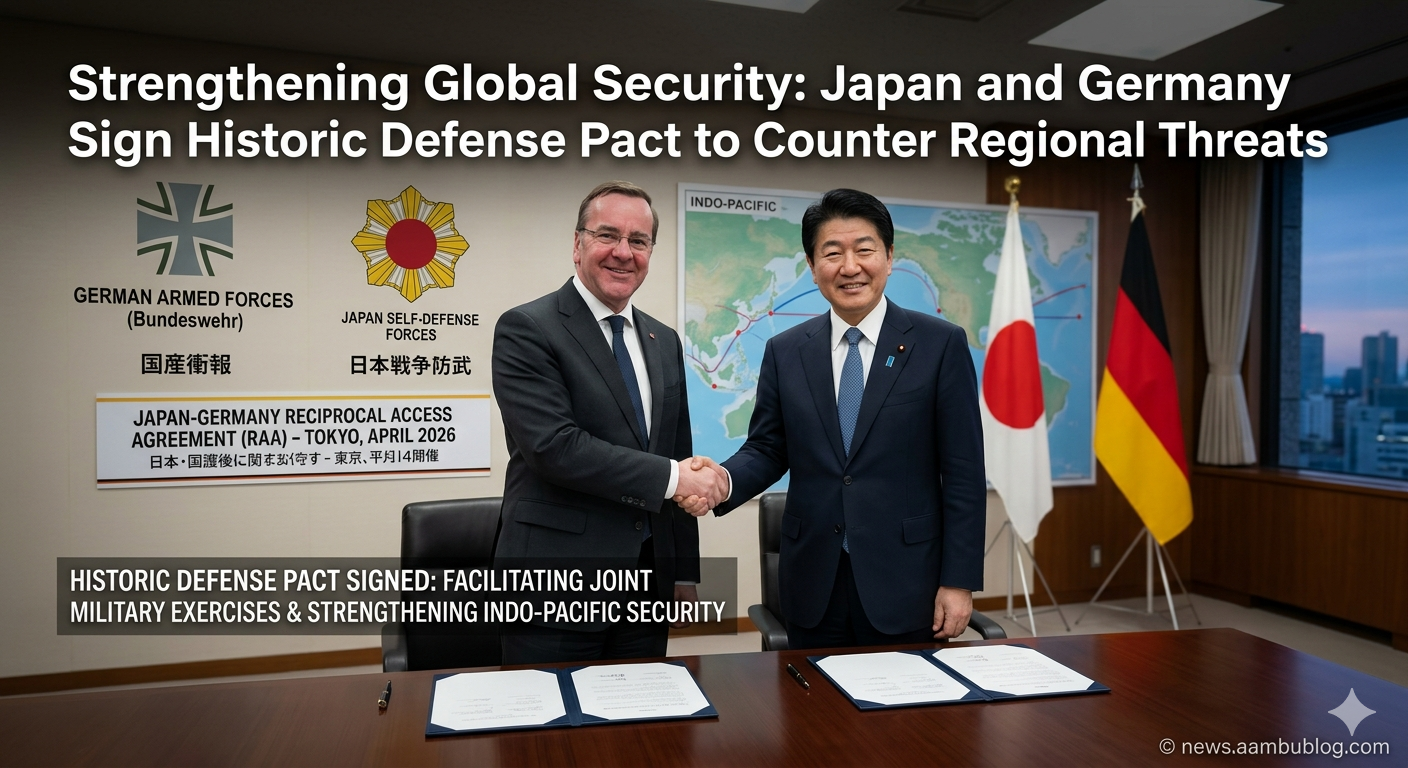
In a landmark move that signals a shift in international military cooperation, Japan and Germany have officially discussed and moved towards a ‘Reciprocal Access Agreement’ (RAA). On April 4, 2026, during a high-level meeting in Tokyo, the defense ministers of both nations outlined a framework to simplify joint military exercises and deepen security ties in the Indo-Pacific region.
Key Highlights
- The Agreement: Reciprocal Access Agreement (RAA) to facilitate easier deployment of troops for joint training.
- Strategic Focus: Strengthening the “Free and Open Indo-Pacific” (FOIP) vision.
- Mutual Interests: Both nations aim to diversify their security partners beyond their traditional reliance on the United States.
- Global Impact: This marks Germany’s most significant military engagement in Asia since the end of the Cold War.
Why the Japan-Germany Alliance Matters
Historically, Germany has focused on European security, while Japan concentrated on its immediate neighbors in East Asia. However, changing global dynamics have brought them together.
Key Drivers of the Pact:
- Supply Chain Security: Both are manufacturing giants that rely on stable maritime trade routes in the South China Sea.
- Technological Cooperation: The pact opens doors for joint development in defense technology, including AI-driven surveillance and naval hardware.
- Balancing Power: By working together, Tokyo and Berlin aim to provide a stabilizing force in the region, reducing the risk of unilateral military actions by other powers.
The Road Ahead: Joint Exercises in 2026
Under this new framework, the German Air Force (Luftwaffe) and the Japanese Air Self-Defense Force are expected to conduct their largest-ever joint drill later this year. This will involve advanced fighter jets and refueling aircraft, testing their ability to operate seamlessly from each other’s bases.
Tips
- Business Impact: If your business relies on imports from East Asia, this pact is a positive sign for long-term shipping stability.
- Academic Interest: Students of International Relations should note this as a classic example of “middle-power diplomacy” where non-superpowers build their own security networks.
- Language Skills: With increasing cooperation, professional opportunities for German-speaking experts in Japan (and vice versa) are expected to grow in the defense and tech sectors.
Frequently Asked Questions (FAQs)
Question: Does this pact mean Germany will have a permanent military base in Japan?
Answer: No, the RAA is not about permanent bases. It is a legal framework that makes it faster and easier for troops to enter each other’s country for temporary exercises and disaster relief missions.
Question: How does this agreement affect Japan’s relationship with China?
Answer: While Japan maintains that the pact is for general regional stability, it is widely viewed by analysts as a strategic move to balance the growing military influence of neighboring powers.
Question: Has Germany signed similar pacts with other Asian countries?
Answer: Germany has been increasing its presence in the region, having previously sent a frigate and fighter jets for drills with partners like Australia and India, but the pact with Japan is its most formalized legal defense agreement in Asia.
news.aambublog.com