By:Date: March 27, 2026
Category: Business / Economy / India News
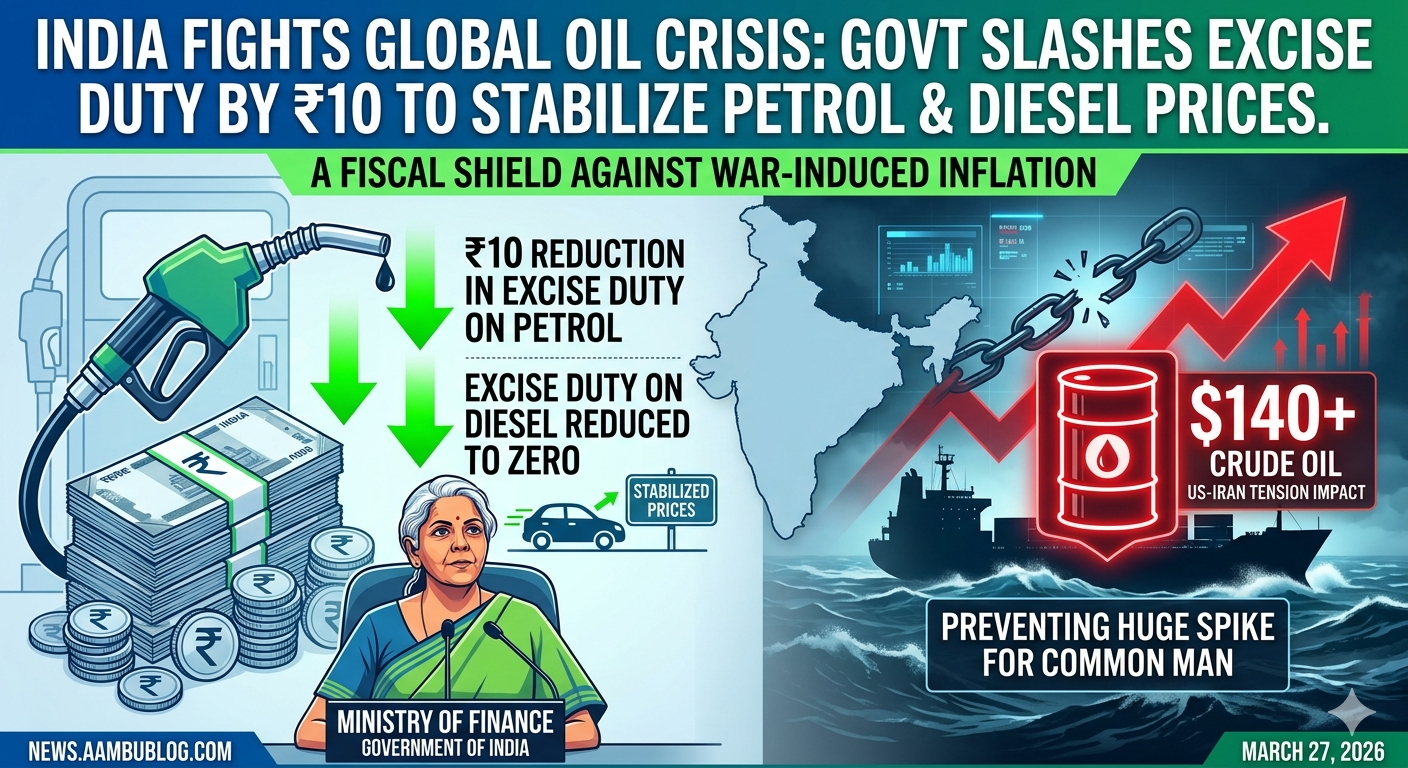
As the US-Iran conflict sends global crude oil prices soaring past $140 per barrel, the Indian government has stepped in with a massive fiscal shield for its citizens. In a late-night notification on Thursday, the Ministry of Finance announced a significant reduction in central excise duty on petrol and diesel to prevent a massive spike in retail prices.
The Big Announcement: What has changed?
Union Finance Minister Nirmala Sitharaman confirmed that the government has reduced the Special Additional Excise Duty (SAED) on fuel to cushion the impact of the West Asia crisis.
- Petrol: Excise duty slashed from ₹13 per litre to just ₹3 per litre (A reduction of ₹10).
- Diesel: Excise duty slashed from ₹10 per litre to ZERO (A total exemption).
These changes have come into effect immediately across all states in India.
Will Petrol Prices Drop Tomorrow?
This is the question every Indian is asking. While the tax cut is ₹10, consumers might not see an immediate ₹10 drop at the petrol pumps. Here’s why:
- OMC Losses: International crude prices have risen by nearly 50% in the last few weeks. Indian Oil Marketing Companies (IOCL, BPCL, HPCL) were losing nearly ₹24-₹30 per litre to keep prices steady.
- Price Stabilization: This excise cut is primarily aimed at absorbing those losses so that companies don’t have to hike the price for the general public.
- Private Retailers: Private players like Nayara Energy had already started increasing prices by ₹3-₹5; this move will help bring them back in line with state-run pumps.
New ‘Windfall Tax’ on Exports
To ensure that there is no shortage of fuel within India, the government has also played a masterstroke on the export front:
- Export Duty on Diesel: Set at ₹21.5 per litre.
- Export Duty on ATF (Jet Fuel): Set at ₹29.5 per litre.
The Strategy: By making exports expensive, the government is forcing private refiners (like Reliance and Nayara) to sell their fuel within India first, ensuring our tractors, trucks, and cars never run out of gas despite the global war.
The Fiscal Impact
This move is a “pro-people” step but comes at a high cost to the government treasury. Experts estimate a revenue loss of approximately ₹1.5 lakh crore annually. However, PM Narendra Modi’s administration has signaled that protecting the common man from “war-induced inflation” is the top priority right now.
Current Fuel Rates (Major Cities – March 27, 2026)
| City | Petrol (per litre) | Diesel (per litre) |
|---|---|---|
| New Delhi | ₹94.77 | ₹87.67 |
| Mumbai | ₹103.54 | ₹90.03 |
| Bangalore | ₹102.96 | ₹90.99 |
| Hyderabad | ₹107.50 | ₹95.70 |