By: [sakshi] Date: March 27, 2026
Category: Global Politics / Economy
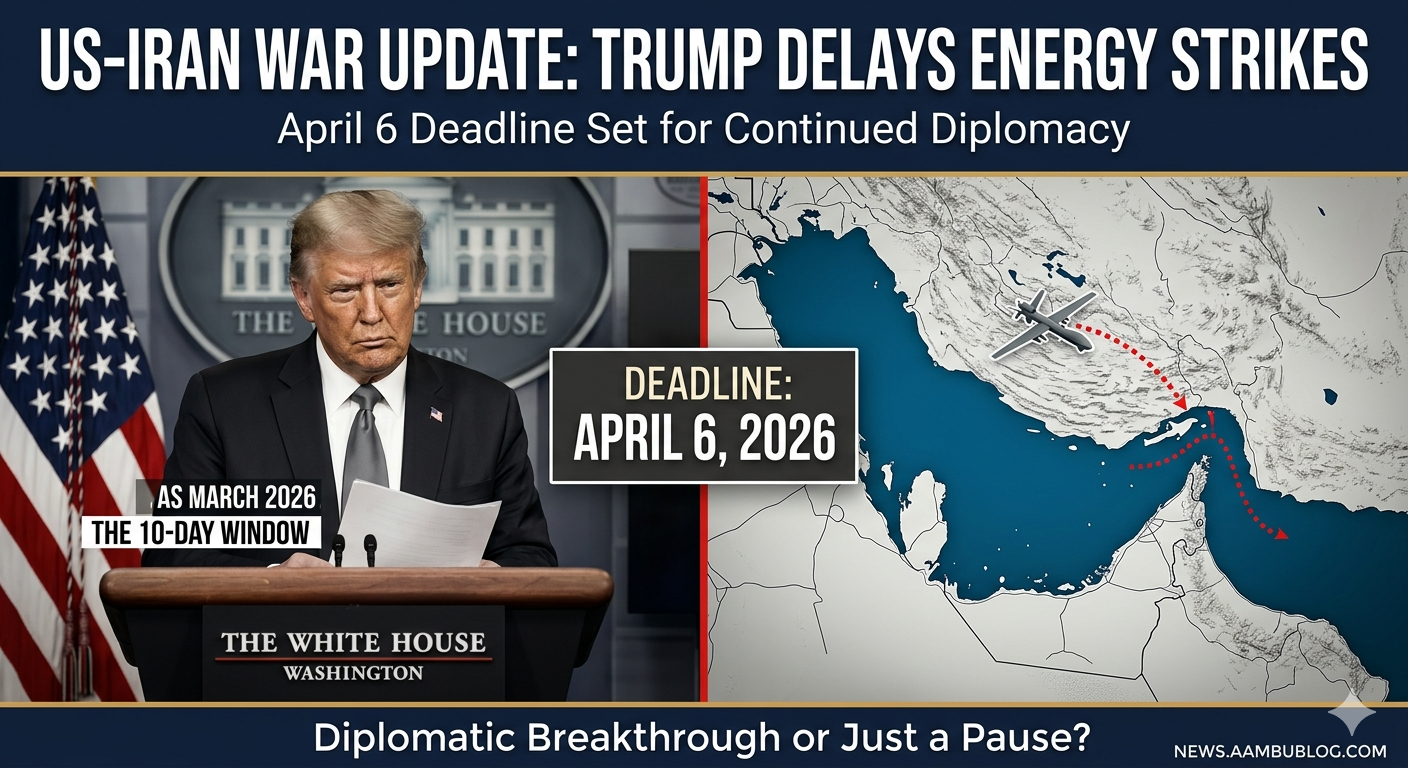
The world is watching with bated breath as the ongoing conflict between the U.S.-led coalition and Iran reaches a critical diplomatic crossroads. In a move that has temporarily calmed global oil markets, U.S. President Donald Trump announced a 10-day extension to his deadline for striking Iran’s energy infrastructure.
The 10-Day ‘Window of Opportunity’
Originally, the U.S. had issued a 48-hour ultimatum demanding that Tehran immediately reopen the Strait of Hormuz—the world’s most vital oil chokepoint—or face the total destruction of its power plants and oil refineries.
However, in a statement released on Truth Social, President Trump confirmed that he is pausing “Energy Plant destruction” until Monday, April 6, 2026, at 8:00 PM Eastern Time.
“As per Iranian Government request, I am pausing the period of Energy Plant destruction by 10 days… Talks are ongoing and they are going very well,” the President stated.
Why the Delay? Key Factors Behind the Decision
- Tehran’s Request for Time: According to reports, the Iranian government requested more time to review a 15-point peace proposal sent by Washington through Pakistani intermediaries.
- The “Hormuz Present”: Trump mentioned that Iran allowed several oil tankers to pass through the Strait as a “show of good faith,” which likely influenced the decision to hold off on immediate bombardment.
- Economic Pressure: Wall Street recently saw its biggest loss of the war, and global oil prices have been hovering near $112 per barrel. A strike on energy plants would have sent prices into an uncontrollable spiral.
The “15-Point” Peace Plan
U.S. envoy Steve Witkoff has signaled that there are “strong signs” Tehran might be ready to negotiate. While the full details remain classified, the proposal reportedly includes:
- Immediate reopening of the Strait of Hormuz to all international traffic.
- A freeze on Iran’s nuclear enrichment activities.
- Guarantees for the safety of regional maritime routes.
On the other hand, Iranian officials have publicly called the proposal “one-sided,” demanding reparations for recent strikes and an end to U.S.-Israeli military operations as a precondition for a permanent deal.
What This Means for the Global Economy
For countries like India, this pause is a massive relief. As a major oil importer, India has already seen the government slash excise duties to manage rising costs. If the April 6 deadline passes without a deal, we could see:
- Energy Crisis: Potential destruction of Iran’s 14+ major power plants.
- Supply Chain Rupture: A complete halt of Gulf oil shipments.
- Stock Market Volatility: Continued instability in Sensex and Nifty as investors remain wary of the 10-day countdown.
Final Word
While the 10-day “mohlata” (reprieve) provides a glimmer of hope for a ceasefire, the situation remains extremely volatile. Thousands of U.S. troops remain stationed in the region, and military operations in Lebanon and Northern Iran continue.
Stay tuned to news.aambublog.com for live updates as we approach the April 6 deadline.