By Weather & Environment Desk | April 23, 2026
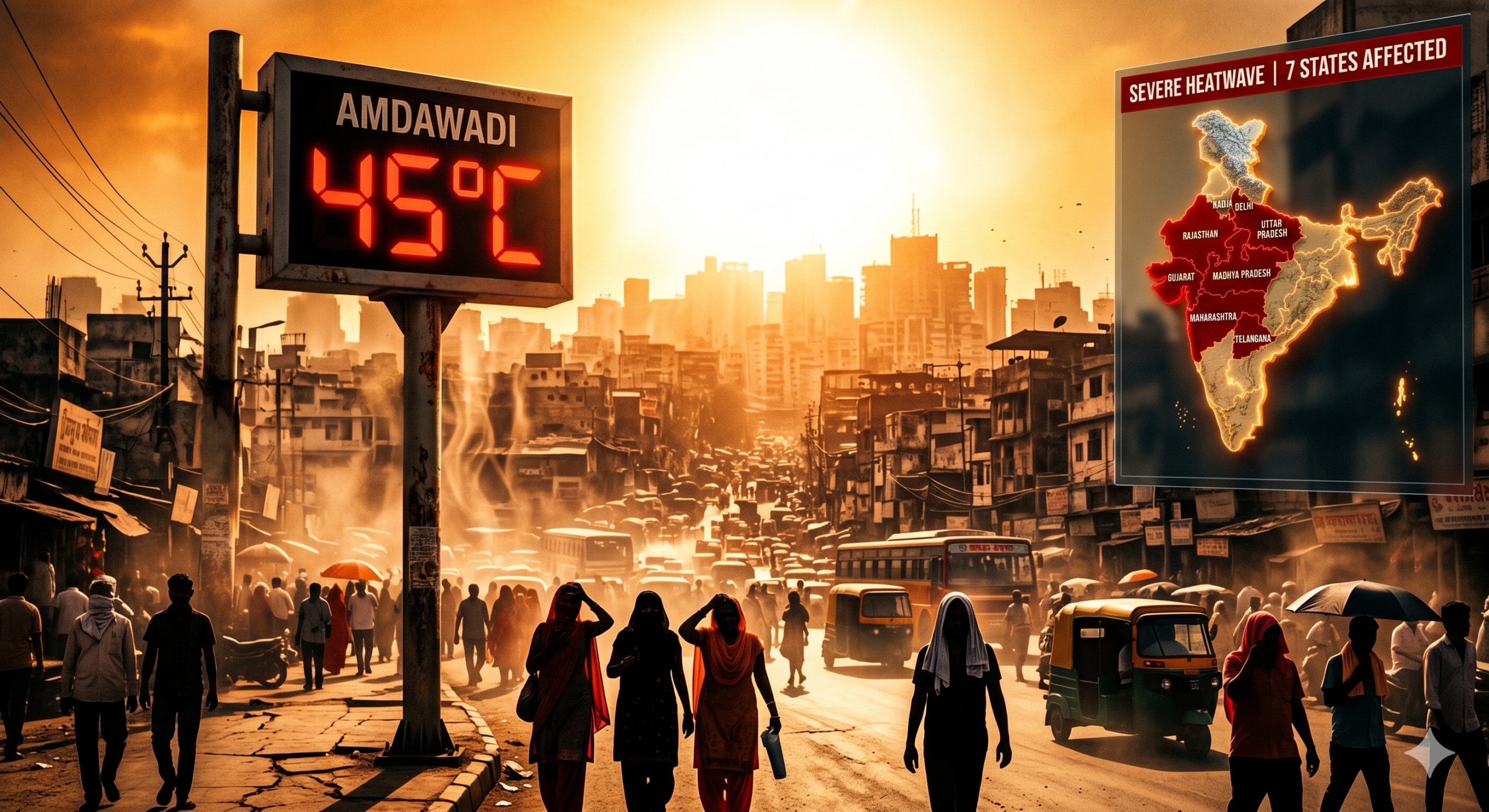
The India Meteorological Department (IMD) has sounded a high-level ‘Red Alert’ for seven states across North, Central, and East India today. A massive high-pressure system has trapped hot air over the plains, leading to “severe heatwave” conditions that are expected to persist for the next 72 hours.
With the sun beating down mercilessly, several cities in the Hindi heartland have already reported temperatures touching the 45°C mark, making this one of the harshest April spells in recent history.
1. The States Under Red Alert
The IMD has categorized the heat as “severe” in the following seven high-risk states:
- Rajasthan & Madhya Pradesh: Desert winds are pushing mercury levels to 45.5°C in regions like Churu and Gwalior.
- Uttar Pradesh & Bihar: Severe heat is impacting both Western and Eastern UP, with Allahabad and Gaya reporting extreme daytime heat.
- Delhi, Punjab, & Haryana: The National Capital Region (NCR) and its neighbors are witnessing temperatures 5-7 degrees above the normal seasonal average.
- West Bengal (Gangetic region): Cities like Panagarh have already recorded record-breaking 43.8°C, with high humidity making it feel like 50°C.
2. The ‘Warm Night’ Phenomenon
Meteorologists are particularly concerned about “Warm Night” conditions in Delhi, Odisha, and Haryana.
- No Relief: Usually, temperatures drop at night, giving the body a chance to recover. However, tonight, minimum temperatures are expected to stay above 28-30°C in urban areas.
- Urban Heat Island: Concrete buildings in cities are absorbing heat all day and releasing it slowly at night, making it impossible for the environment to cool down naturally.
3. Health Advisory: ‘Take Action’
The Red Alert is not just a warning; the IMD explicitly states it means “Take Action.”
- Peak Hours: Citizens are strictly advised to stay indoors between 11:00 AM and 4:30 PM.
- Vulnerable Groups: Infants, the elderly, and people with pre-existing heart or kidney conditions are at extreme risk of heatstroke.
- Hydration: Health officials recommend drinking ORS (Oral Rehydration Salts), lassi, or lemon water even if you don’t feel thirsty, to maintain electrolyte balance.
Detailed Q&A: Surviving the 2026 Heatwave
Q1. Why is the IMD calling it a ‘Red Alert’ instead of just a ‘Heatwave’? A ‘Heatwave’ is declared when temperatures are 4.5°C above normal. A ‘Red Alert’ (Severe Heatwave) is issued when the deviation is more than 6.5°C or when temperatures cross the 45°C mark for two consecutive days. It signifies a high probability of heatstroke for all age groups.
Q2. When will we get relief from this heat? According to the latest satellite data, a fresh Western Disturbance is expected to hit the Himalayan region around April 26. This might bring some light rain and dust storms to the plains of Punjab, Haryana, and Delhi, which could bring the temperature down by 2-3 degrees by early next week.
Q3. Is it safe to exercise outdoors in the morning? Only if you finish before 8:00 AM. Even early morning temperatures are higher than usual. If you feel dizzy, have a headache, or feel nauseous, stop immediately and move to a cool place.
Q4. Does high humidity make the heat more dangerous? Yes. In states like West Bengal and Odisha, the “Heat Index” (Real Feel) is much higher because of humidity. When it’s humid, your sweat doesn’t evaporate, which means your body cannot cool itself down, leading to faster exhaustion and heatstroke.
Copyright: © news.aambublog.com (2026)