
By Finance & Markets Desk | April 23, 2026
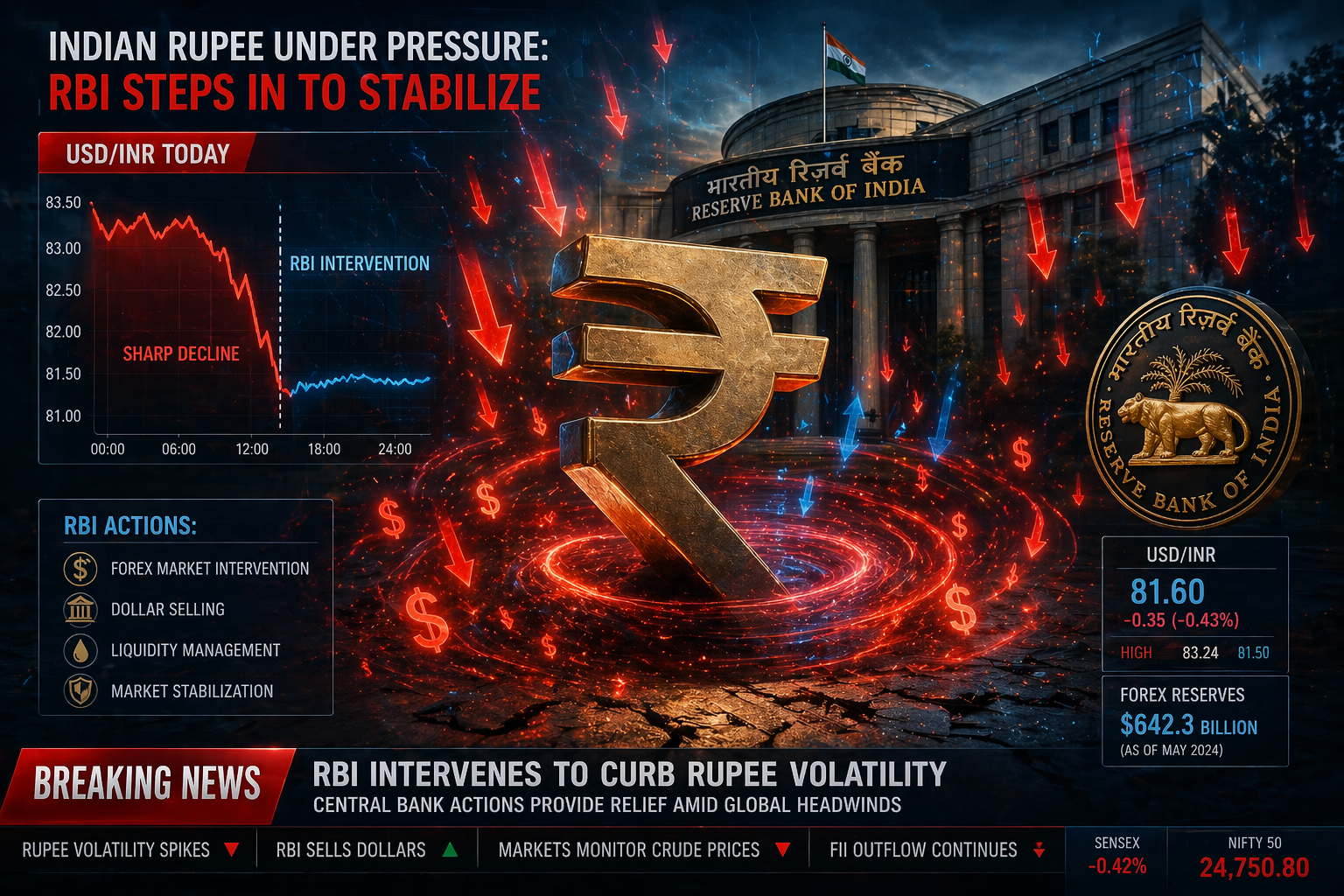
The Indian Rupee experienced a historic collapse in early trading today, plummeting to an all-time low of 86.40 against the US Dollar. The sharp decline was triggered by a perfect storm of global factors, primarily the escalating maritime crisis in the Strait of Hormuz and a sudden surge in US Treasury yields.
In response to the extreme volatility, the Reserve Bank of India (RBI) was forced to step in aggressively to stabilize the national currency and prevent a total market panic.
1. The Factors Behind the Crash
The Rupee’s fall is not an isolated event but a reaction to the high-tension geopolitical climate.
- Flight to Safety: As the threat of a prolonged conflict in the Middle East grows, global investors are pulling capital out of “emerging markets” like India and moving it into the “safe haven” of the US Dollar.
- Oil Import Pressure: India is a major importer of crude oil. With global oil prices surging due to the Gulf blockade, India’s demand for Dollars to pay for these expensive imports has spiked, putting immense downward pressure on the Rupee.
2. RBI’s Aggressive Market Intervention
To prevent a “free-fall” of the currency, the RBI utilized its massive foreign exchange reserves.
- Selling Dollars: Traders reported that the RBI began selling US Dollars heavily in both the spot and non-deliverable forward (NDF) markets. By increasing the supply of Dollars, the central bank was able to pull the Rupee back from its 86.40 low to a slightly more stable 86.15 by mid-afternoon.
- Liquidity Management: Along with selling Dollars, the RBI is also monitoring the liquidity in the domestic banking system to ensure that the sudden currency fluctuation does not lead to a spike in short-term interest rates.
3. Impact on the Common Man and Businesses
A record-low Rupee has direct consequences for the Indian economy beyond the stock market.
- Imported Inflation: Everything India imports, from electronic components and mobile parts to edible oils, will now become more expensive. This “imported inflation” is expected to hit the retail market within the next few weeks.
- Education and Travel: For Indian students studying abroad and families planning international travel, the cost of converting Rupee to Dollars has jumped significantly, forcing many to reconsider their budgets.
Detailed Q&A: The Rupee Crisis and RBI’s Role
Q1. Why is 86.40 considered a “danger zone” for the Rupee? 86.40 is a psychological and technical barrier. Once the currency crosses such record lows, it can trigger “stop-loss” orders for many traders, leading to an even faster, uncontrolled slide. The RBI intervenes specifically to break this momentum and bring “orderly” movement back to the market.
Q2. Does the RBI have enough reserves to keep protecting the Rupee? Yes. India currently holds one of the largest foreign exchange reserves in the world (over $640 Billion). While the RBI cannot fight the global trend forever, it has more than enough “firepower” to stop speculative attacks and manage a gradual, controlled depreciation.
Q3. How does a weak Rupee affect Indian exporters? In theory, a weak Rupee is good for exporters (like IT companies and textile manufacturers) because they earn in Dollars, which now convert to more Rupees. However, because the global economy is currently unstable and shipping costs are rising, many exporters are finding that their increased earnings are being eaten up by higher operational costs.
Q4. Should I buy Dollars now if I am traveling next month? Currency markets are extremely volatile right now. While the Rupee is at a record low, the RBI’s intervention might cause a temporary recovery. Most financial experts suggest “averaging” your purchase—buy half of what you need now and wait to see if the situation in the Middle East improves before buying the rest.
Copyright: © news.aambublog.com (2026)