By news.aambublog.com Editorial Desk
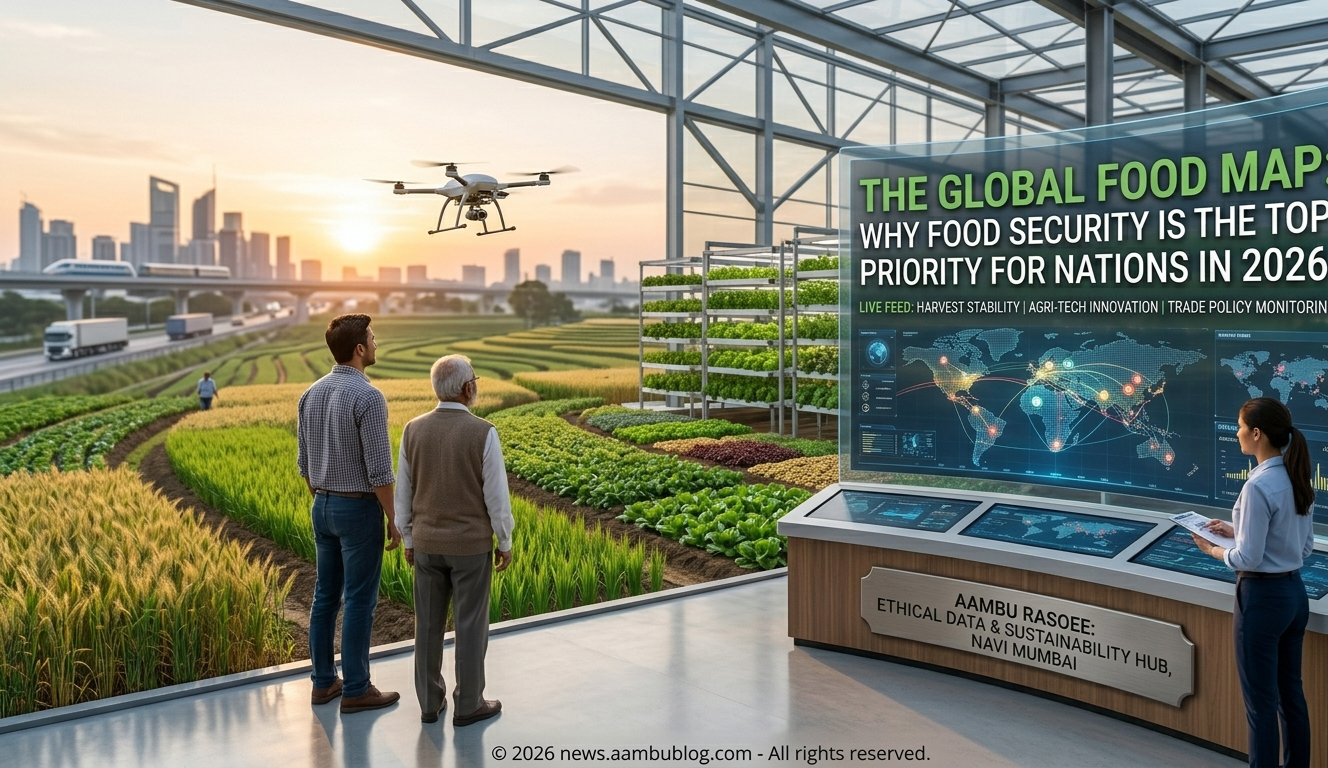
As we move through 2026, a new challenge has taken center stage in global politics: Food Security. No longer just a regional concern, the stability of the global food supply chain has become a matter of national security for every country, from the smallest islands to the largest continents.
The Impact of Extreme Weather
Unpredictable weather patterns in 2026 have disrupted traditional harvest cycles in major “breadbasket” regions. From unexpected droughts in South America to heavy floods in Southeast Asia, the global production of staples like wheat, rice, and corn is facing unprecedented volatility. This has led to a surge in global food prices, forcing nations to rethink their import-export strategies.
Innovation in Agriculture (Agri-Tech)
To combat these challenges, the world is turning to technology. Smart Farming—using AI, drones, and precision irrigation—is helping farmers maximize yields even in difficult conditions. Vertical farming in urban centers is also becoming a reality, reducing the dependence on long-distance transportation.
Economic Transparency & Trade Policy
The economics of food is shifting. Countries are now forming new “Food Alliances” to ensure a steady supply for their citizens. At news.aambublog.com, we analyze these trade agreements through a lens of corporate and national accountability.
Consistent with our Ecosy Sub-Total transparency standards, we monitor the financial investments made into sustainable agriculture. We believe that transparency in how food is sourced and priced is essential for a stable global economy.
A Call for Global Cooperation
The message for 2026 is clear: No nation can achieve food security alone. International cooperation in sharing agricultural technology and maintaining open trade routes is the only way to ensure that the global population remains fed and stable.