While the world’s attention is focused on the massive geopolitical standby in the Strait of Hormuz, the economic shockwaves are now directly choking the streets of India’s capital. The cascading effect of rising international crude oil and gas prices has triggered a acute domestic shortage, leaving the core of Delhi’s informal food economy—the street vendors—struggling to survive.
From Old Delhi’s bustling chaat corners to the busy corporate hubs where office-goers line up for lunch, a silent crisis is unfolding that threatens the livelihoods of thousands.
The Plight of the Blue Flame: Commercial LPG Costs Explode
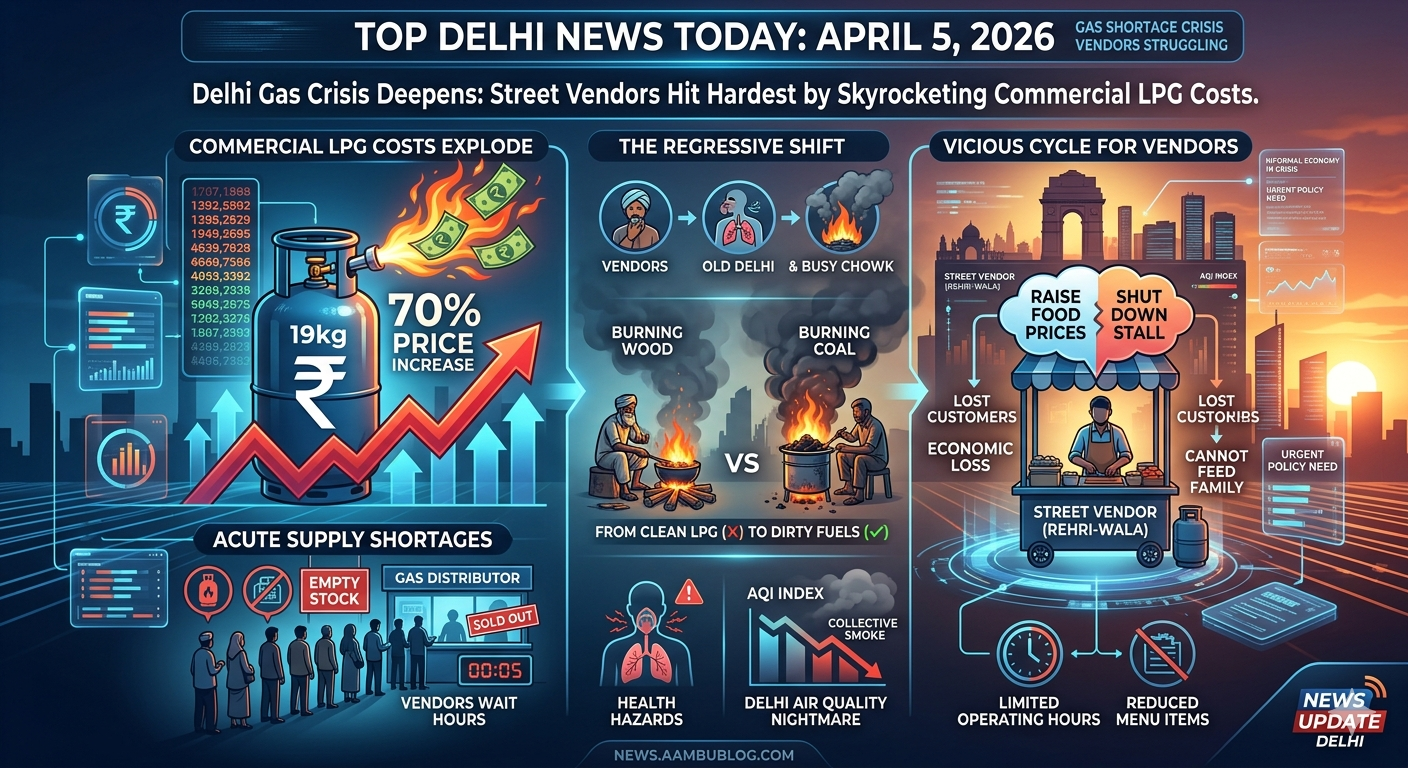
For Delhi’s Rehri-wala (street vendors), the humble 19kg blue commercial LPG cylinder is as essential as the food they cook. However, over the past few weeks, obtaining these cylinders has become a monumental challenge.
- Skyrocketing Prices: Vendors are reporting a nearly 70% increase in the cost of commercial LPG cylinders compared to just last year. For small businesses operating on thin margins, this cost hike alone wipes out their entire daily profit.
- Acute Supply Shortages: Money isn’t the only issue; the supply itself has become erratic. Vendors often spend hours in queues at distributors, losing valuable working time, only to return empty-handed as stocks dry up.
The Vicious Cycle: Raise Prices or Shut Down?
The dilemma facing vendors is agonizing. If they raise the prices of their momos, parathas, or chai, they risk losing their customers, who are often low-income workers themselves also feeling the pinch of inflation.
If they do not raise prices, they operate at a loss, unable to pay for essential ingredients or even feed their own families. Many dhabas and food stalls have already began limiting their operating hours or reducing their menu items to conserve precious fuel.
The Regressive Shift: Burning Wood and Coal Out of Desperation
Perhaps the most worrying consequence of this gas crisis is the forced regressive shift away from clean energy. Lacking affordable access to LPG, many vendors, particularly in Outer Delhi and the chowks of Central Delhi, are reverting to burning wood, charcoal, and even rubber.
- Health Hazards: This shift is immediately visible in the thick smoke choking street corners. Vendors themselves are breathing this toxic air for 12 hours a day, leading to immediate respiratory issues and severe long-term health risks.
- The Delhi Air Quality Nightmare: This environmental degradation directly sabotages Delhi’s long, expensive fight against air pollution. The collective smoke from thousands of new coal and wood fires is already contributing noticeably to the declining Air Quality Index (AQI) as the city enters the warmer months.
Urgent Call for Policy Intervention
The street food sector is not just a source of food; it is a vital economic engine providing employment to the city’s most vulnerable. The current crisis highlights the fragile nature of this informal economy.
There is an urgent need for the Delhi and Central governments to implement a dedicated, subsidized gas distribution scheme for registered vendors, protecting them from the volatility of global energy markets and preventing a catastrophic revert to polluting fuels.
Frequently Asked Questions (FAQs)
Q1: Why is there a gas crisis in Delhi right now?
Ans: The localized shortage in Delhi is a direct ripple effect of the Middle East geopolitical conflict, which has blocked the Strait of Hormuz. Because India imports a massive percentage of its natural gas, the disruption in global supply has caused international prices to soar and domestic stocks to drop acutely.
Q2: Are household gas connections affected by this crisis in Delhi?
Ans: While the immediate shortage has hit the 19kg commercial cylinders used by vendors the hardest, the continued pressure on natural gas supplies is beginning to impact Piped Natural Gas (PNG) pressure in some areas of Delhi. The cost of domestic (14.2kg) LPG refills has also seen minor upward adjustments.
Q3: How much has the price of commercial LPG increased in Delhi?
Ans: Street vendors are reporting that the price of a single 19kg commercial LPG cylinder has skyrocketed by nearly 70% in the last 12 months, making it economically unviable for many informal food businesses to operate.
Q4: Will food prices at street stalls increase in Delhi?
Ans: Yes. Most street vendors have unfortunately been forced to pass on the increased operating costs to their customers. Expect to pay 10% to 20% more for your favorite street foods like momos, chole bhature, or chai as long as the fuel crisis persists.
Author: Swapnil
Category: Local Delhi News / Economy / Environmental Impact
Read Time: 5 Minutes
Tips for your blog: * Internal Linking: Link the words “Strait of Hormuz” or “Middle East conflict” back to your comprehensive world news analysis about the US-Iran ultimatum to provide your readers with deep context.